Track record
Source: Jolpica F1 API- Starts
- 8
- Wins
- 1
- Podiums
- 2
- Best finish
- P1
- DNFs
- 1
- Points
- 78
Won here in: 2024
Every appearance
| Year | Team | Grid | Finish | Pts |
|---|---|---|---|---|
| 2015 |
Driver × Circuit · permanent
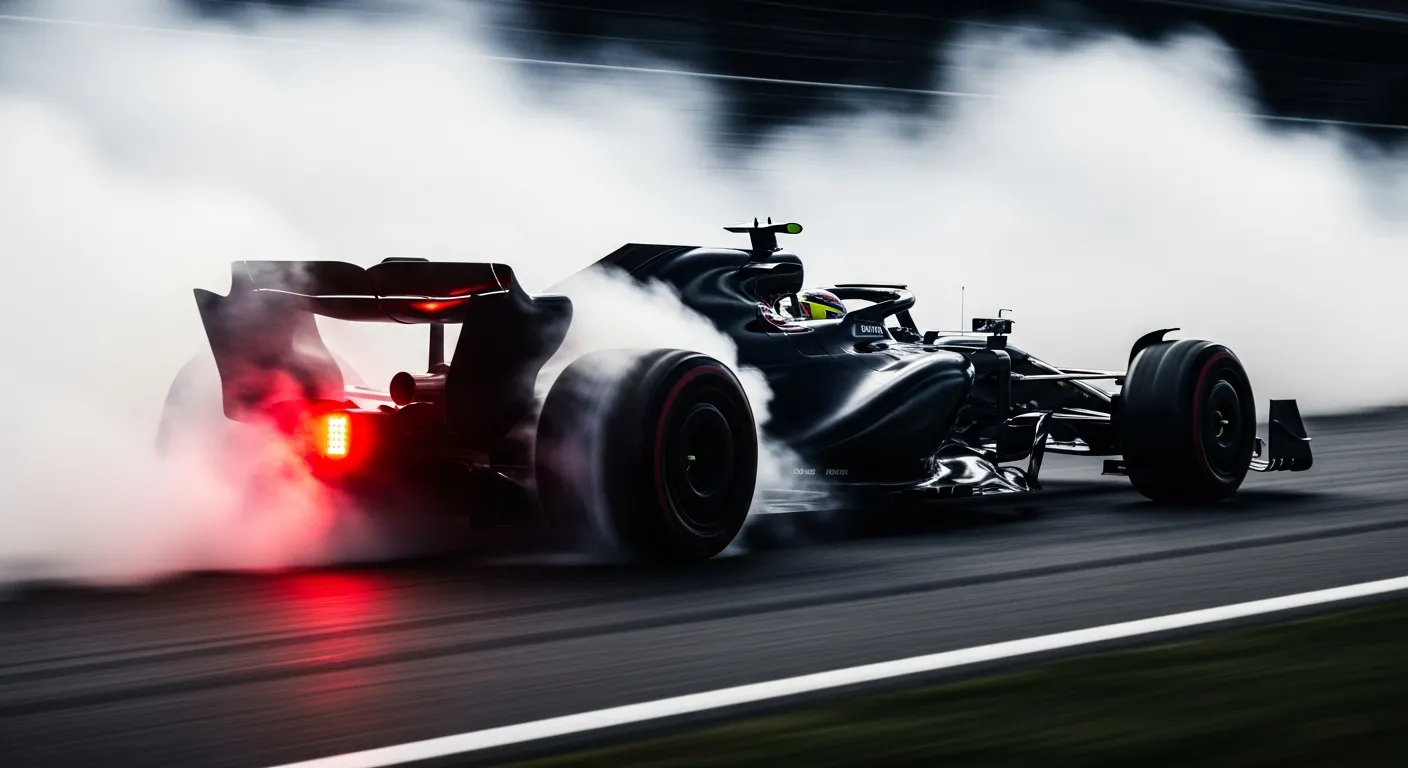
Max Verstappen's journey at the Chinese Grand Prix evolved from early struggles and a 2017 podium to a dominant maiden victory in 2024, reshaping his narrative at Shanghai.
Won here in: 2024
| Year | Team | Grid | Finish | Pts |
|---|---|---|---|---|
| 2015 |
One email a day, ahead of every session. Race results, paddock signal, and the calls the explainer sites miss.
By subscribing, you agree to receive daily F1 news and updates from The F1 Formula. No spam. Unsubscribe anytime. Privacy Policy
Continue reading
Max Verstappen secured a dominant victory at the 2024 Chinese Grand Prix, converting his pole position into a commanding first-place finish and adding 25 points to his championship tally.
Max Verstappen delivered a remarkable performance at the 2017 Chinese Grand Prix, climbing from a 16th-place grid start to secure a third-place podium finish for Red Bull.
| Scuderia Toro Rosso |
| P13 |
| P17 |
| 0 |
| 2016 | Scuderia Toro Rosso | P9 | P8 | 4 |
| 2017 | Red Bull Racing | P16 | P3 | 15 |
| 2018 | Red Bull Racing | P5 | P5 | 10 |
| 2019 | Red Bull Racing | P5 | P4 | 12 |
| 2024 | Red Bull Racing | P1 | P1 | 25 |
| 2025 | Red Bull Racing | P4 | P4 | 12 |
| 2026 | Red Bull Racing | P8 | Coolant leak | 0 |
Max Verstappen's relationship with the Shanghai International Circuit has been a compelling study in evolving performance, culminating in a dominant victory in 2024 that finally cemented his authority at a track that once presented a unique challenge. His initial appearances at the Chinese Grand Prix, a permanent fixture on the Formula 1 calendar, were a testament to his raw talent but also the steep learning curve of the sport. Debuting in 2015 with Scuderia Toro Rosso, Verstappen finished 17th after a drivetrain issue, scoring no points. The following year, still with Toro Rosso, he improved to an 8th-place finish, securing 4 points.
The narrative began to shift in 2017, his first full season with Red Bull Racing. Despite starting from 16th on the grid, Verstappen navigated the complex Shanghai layout to secure his first podium at the circuit, finishing 3rd and earning 15 points. This performance underscored his ability to recover positions and maximize opportunities, a trait that would become a hallmark of his career. The subsequent years saw consistent, strong finishes: a 5th place in 2018 and a 4th in 2019, both from 5th on the grid. While these results demonstrated Red Bull's growing competitiveness and Verstappen's consistent pace, a win at Shanghai remained elusive, a contrast to his burgeoning success at other circuits.
The prolonged absence of the Chinese Grand Prix from the calendar due to various global factors meant a significant gap in Verstappen's record here. When Formula 1 returned to Shanghai in 2024, Verstappen arrived as a multi-world champion, and his performance was unequivocal. He secured pole position and converted it into his maiden victory at the circuit, collecting a full 25 points. This win was not merely a statistic; it was a statement, demonstrating his and Red Bull's adaptability and sheer pace on a track that demands both high-speed prowess and precise technical execution through its unique corner sequences. For a deeper dive into the broader context of Formula 1, the Wikipedia: Formula One page offers comprehensive historical and technical information.
Shanghai's long, sweeping turns and its equally lengthy back straight require a finely balanced car, capable of both aerodynamic efficiency and mechanical grip. Verstappen's driving style, characterized by his aggressive yet precise approach, often thrives on circuits where a car's overall performance envelope can be fully exploited. His ability to manage tire degradation while pushing the limits, especially through the demanding Turns 1-4 complex, is crucial here. While other drivers, like Fernando Alonso at the Spanish Grand Prix, have demonstrated mastery over their home circuits, Verstappen's 2024 win at Shanghai marked a new chapter in his relationship with this specific venue, turning a consistent but winless record into a victorious one. The official Formula 1 — official site provides detailed race reports and analysis of such pivotal moments.
Looking ahead, the verified data shows a 4th place finish in 2025 and a DNF due to a coolant leak in 2026. These later results, as detailed by Jolpica/Ergast — 2026 season data, underscore that even for a driver of Verstappen's caliber, consistency is a constant battle against mechanical reliability and the competitive landscape. Much like how Fernando Alonso at the Canadian Grand Prix has faced varying fortunes at a circuit demanding precision near walls, Verstappen's journey at Shanghai illustrates the unpredictable nature of F1, even after achieving a breakthrough win. His adaptability, however, remains a key factor in his sustained success across diverse permanent circuits, a trait also evident in performances at tracks like Fernando Alonso at the British Grand Prix.