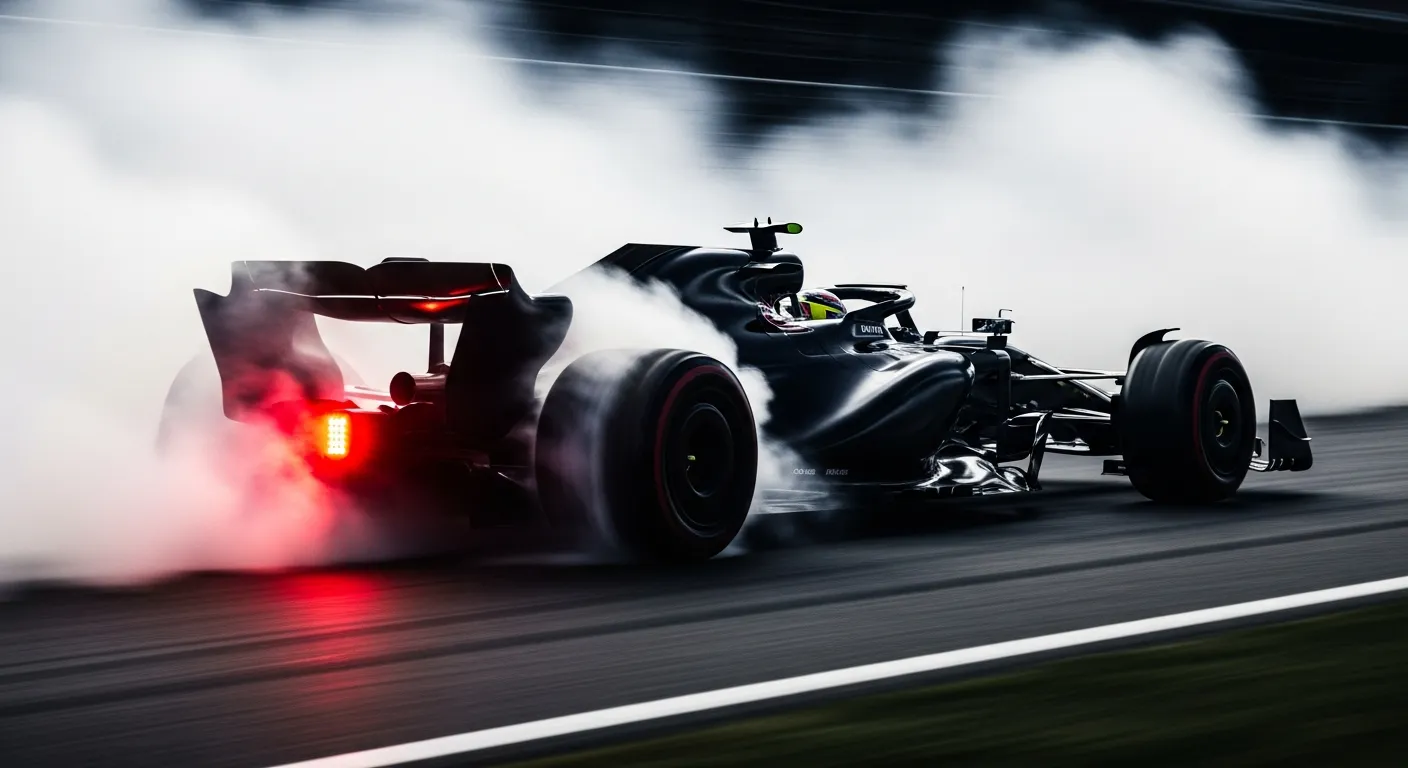
Nico Hülkenberg's 2014 Formula 1 season opener at the Melbourne Grand Prix Circuit saw him deliver a composed and effective drive, marking a significant points haul for the Force India F1 Team. Starting from seventh on the grid, Hülkenberg maintained a strong pace throughout the 57-lap race, ultimately crossing the finish line in sixth position with a total time of 1:33:49.428. This result immediately placed him sixth in the Drivers' Championship standings, a promising start for the German driver.
The 2014 season introduced significant technical regulation changes, particularly concerning power units, which reshaped the competitive landscape. Hülkenberg's ability to navigate these new challenges and secure a top-six finish underscored both his skill and the Force India VJM07's early potential. His fastest lap of the race, a 1:33.210 on lap 56, ranked eighth overall, demonstrating consistent performance even in the closing stages. This performance contrasted sharply with some of the struggles faced by other teams adapting to the new hybrid era, highlighting Force India's effective preparation. For a broader understanding of the sport's technical evolution, one can consult the [Formula 1 — official site](https://www.formula1.com/en).
Hülkenberg's teammate, Sergio Pérez, also finished in the points, securing tenth position after starting from 16th on the grid. This dual points finish for Force India underscored a robust team effort and a positive outlook for the season ahead. The combined performance provided the Indian-owned constructor with a valuable early points tally. The Australian Grand Prix often sets the tone for the season, and Hülkenberg's drive demonstrated a clear intent to compete within the midfield. Reflecting on similar opening races, drivers like [Lance Stroll at the 2024 Australian Grand Prix](/results/2024-albert-park-lance-stroll) have also aimed to maximize early season opportunities at Albert Park, albeit a decade later.
The race itself was a test of reliability as much as pace, with several high-profile retirements, including reigning champion Sebastian Vettel and polesitter Lewis Hamilton, both due to power unit issues. Hülkenberg's ability to bring his car home "Finished" after 57 laps, avoiding the mechanical pitfalls that plagued others, was crucial. This reliable performance secured 8 points, establishing a solid foundation for his championship bid. The intricacies of Formula One racing and its historical data are well-documented on [Wikipedia: Formula One](https://en.wikipedia.org/wiki/Formula_One), offering further context to such race weekends.
Comparing this to more recent events at the same circuit, the challenges of Albert Park remain consistent, demanding precision and strategic execution from drivers like [Pierre Gasly at the 2024 Australian Grand Prix](/results/2024-albert-park-pierre-gasly) or [Alexander Albon at the 2024 Australian Grand Prix](/results/2024-albert-park-alex-albon) who also navigated the circuit in their respective seasons. Hülkenberg's 2014 Australian Grand Prix performance was a testament to his consistent driving and the Force India team's operational efficiency in the nascent stages of a new regulatory cycle. For detailed historical race results and data, resources like the [Jolpica/Ergast — F1 data archive](https://api.jolpi.ca/ergast/f1/2026.json) provide comprehensive records.
Verified race record · Ergast
Grid
P7
Finish
P6
Points
8
Laps
57
Constructor
Force India F1 Team
Status
Finished
Teammate that weekend
Sergio Pérez
Grid P16 · Finish P10 · 1 pts
Championship · before vs after
Before round 1
P60 pts
After round 1
P68 pts