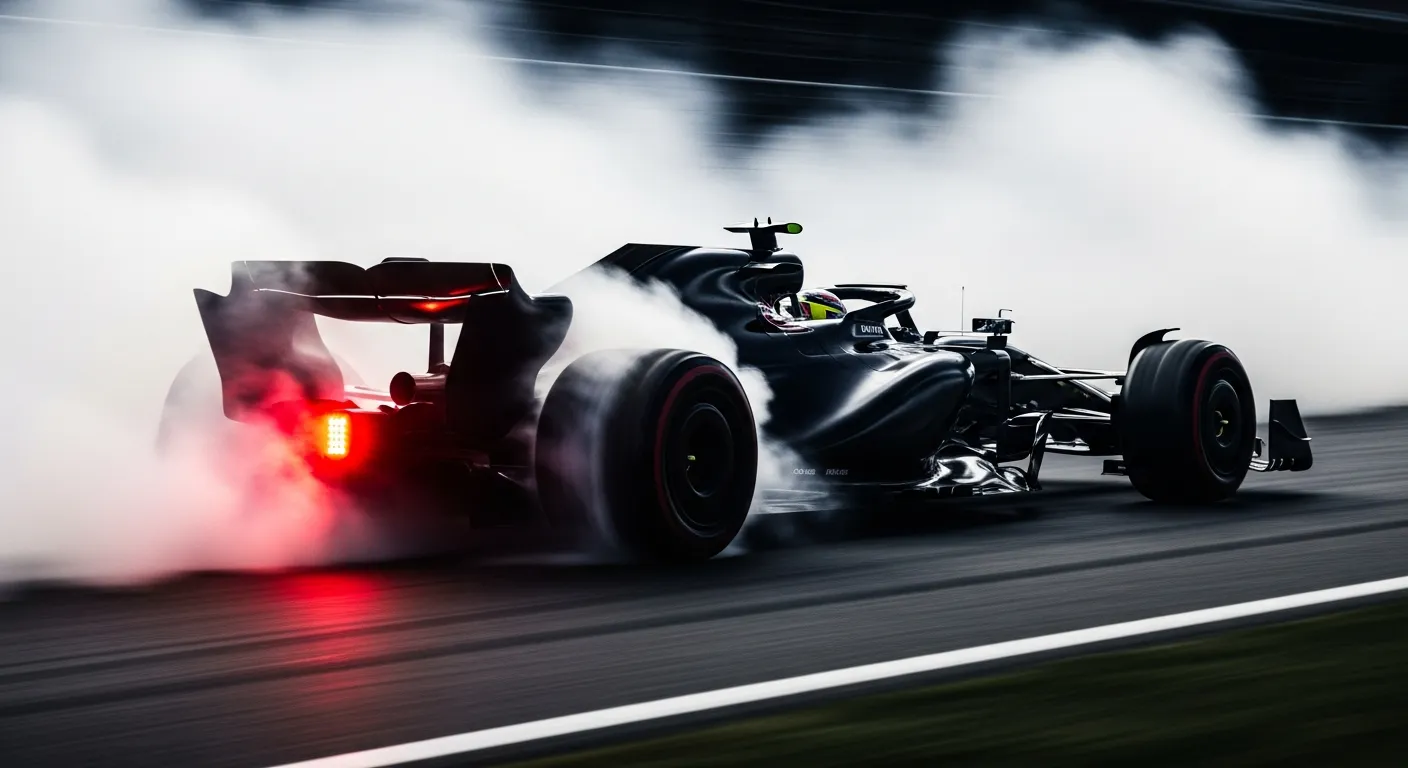
The 2014 Australian Grand Prix at the Albert Park Circuit in Melbourne inaugurated Formula 1's turbo-hybrid era, a technical shift that immediately redefined the competitive landscape with its complex power unit regulations.
Qualifying
Qualifying for the season opener revealed the initial pecking order, though not without its own drama. Lewis Hamilton, starting from pole position, demonstrated the raw pace of the Mercedes package. However, the grid was already a testament to the new era's challenges, with several teams grappling with the intricate new power unit systems. Daniel Ricciardo, in his home race, qualified strongly on the front row, hinting at Red Bull's potential despite the technical overhaul. The midfield saw a mix of established names and rookies, with Kevin Magnussen securing a commendable fourth place on the grid for his debut.
Race
The race itself was a stark illustration of the reliability hurdles introduced by the new regulations. Lewis Hamilton's promising start from pole was cut short by an early engine failure, a significant setback for the Mercedes team. Reigning champion Sebastian Vettel also retired early due to engine issues, signaling a difficult start to the season for Red Bull. Nico Rosberg, starting from third, executed a faultless drive, taking the lead early and maintaining a commanding advantage throughout the 57 laps. His pace was consistent, and his Mercedes W05 appeared robust, setting the fastest lap on lap 19. The race saw a high attrition rate, with many cars failing to finish due to various technical issues, predominantly related to the new power units. This race offered a glimpse into the complexities of the new regulations, which the FIA — F1 World Championship had introduced to push technological boundaries. For more on the technical evolution of F1, one can consult resources like Wikipedia: Formula One.
Strategic Story
The strategic narrative of the 2014 Australian Grand Prix was largely dictated by managing the new power units and their associated fuel efficiency requirements. With fewer laps completed by many during pre-season testing, teams entered Melbourne with limited data on tire degradation and optimal fuel usage under race conditions. Rosberg's victory was a masterclass in managing these new variables, demonstrating not just raw speed but also the reliability and efficiency of the Mercedes power unit. McLaren's strategy, coupled with the robust performance of their car, allowed Kevin Magnussen to secure a remarkable second place in his Formula 1 debut, followed closely by teammate Jenson Button in third. This double podium was a strong statement for the British outfit. The race also saw Valtteri Bottas, starting from 15th, climb to fifth, showcasing the potential of the Williams package and his own racecraft, despite a grid penalty. The post-race disqualification of Daniel Ricciardo for exceeding the mandated fuel flow rate underscored the strict interpretation of the new technical rules, a decision that sent ripples through the paddock and highlighted the fine margins teams were operating within. Such incidents often lead to debates, as seen in the discussions around similar technicalities in races like the 2018 Italian Grand Prix.
Championship Impact
Nico Rosberg's dominant victory immediately positioned him at the top of the Drivers' Championship standings, a clear early indicator of Mercedes' formidable package. The double podium for McLaren, with Kevin Magnussen and Jenson Button, placed them second in the Constructors' standings, a strong start for the team. Ferrari and Force India also secured valuable points, while the early retirements of key contenders like Lewis Hamilton and Sebastian Vettel meant they started their championship campaigns with zero points. This race set a precedent for the season, where reliability and power unit management would be as crucial as outright pace. For current F1 news and analysis, the Formula 1 — official site is a primary source, and historical data can be explored via platforms like Jolpica/Ergast — 2026 season data, which provides comprehensive F1 statistics. The unfolding season would see teams continuously refine their understanding of these new regulations, much like the strategic adjustments seen in the 2018 Hungarian Grand Prix or the 2018 Belgian Grand Prix.
Full classified results
Every driver's verified grid-to-flag result from the 2014 Australian Grand Prix — grid, finish, points, teammate H2H, and championship swing.