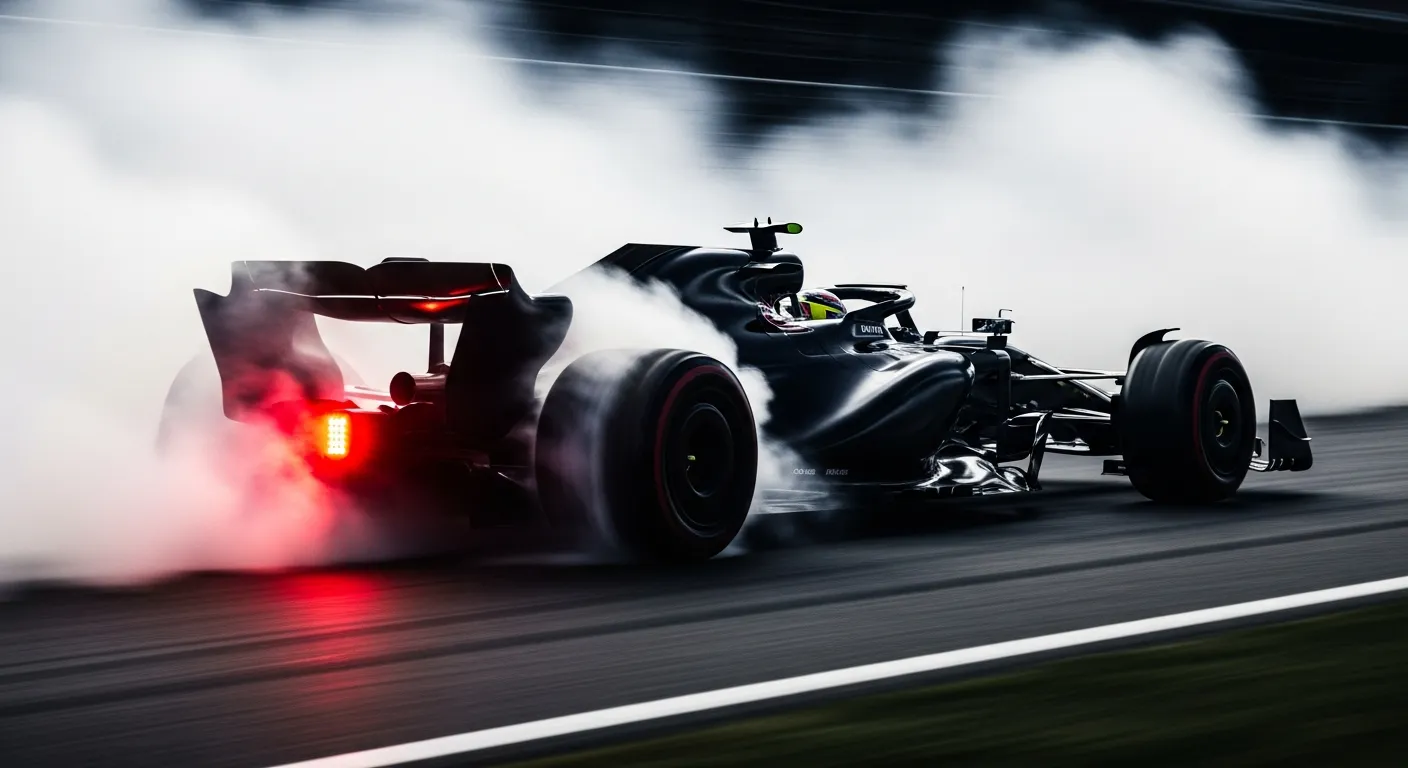
The 2014 Singapore Grand Prix at the Marina Bay Street Circuit saw Lewis Hamilton seize a crucial championship lead with a commanding lights-to-flag victory, dramatically capitalizing on a debilitating technical failure for his primary title rival, Nico Rosberg. This race underscored the brutal reliability demands of the nascent turbo-hybrid era and the strategic complexities of a demanding street circuit under lights.
Qualifying
Qualifying for the 2014 Singapore Grand Prix delivered a familiar front row, with Mercedes-AMG F1 locking out the top two positions. Lewis Hamilton secured pole position, demonstrating the W05's formidable pace around the challenging Marina Bay circuit. His teammate, Nico Rosberg, qualified in second, setting the stage for another direct battle between the two title protagonists. The Red Bull Racing duo of Daniel Ricciardo and Sebastian Vettel lined up third and fourth respectively, indicating their potential to challenge the Silver Arrows, especially if strategy or incidents came into play on this tight street track, a characteristic often seen in races like the 2022 Singapore Grand Prix.
Race
From the start, Hamilton maintained his lead, but the race quickly took a dramatic turn for his teammate. Rosberg's Mercedes suffered an electrical issue on the formation lap, leaving him stranded on the grid and forcing him to start from the pit lane. Despite attempts to rectify the problem, the issue persisted, ultimately leading to his retirement after just 13 laps. This incident reshaped the championship narrative in an instant. Hamilton, now free from direct pressure from his teammate, controlled the race, managing his tires and pace effectively. Behind him, the Red Bulls of Sebastian Vettel and Daniel Ricciardo executed a strong performance, holding off the Ferrari of Fernando Alonso, who had started fifth. The demanding nature of the Marina Bay circuit, with its high temperatures and humidity, tested both machinery and drivers, a common theme at street circuits globally, including the 2022 Azerbaijan Grand Prix.
Strategic Story
The strategic landscape of the 2014 Singapore Grand Prix was heavily influenced by tire degradation and the potential for safety cars, though the race ran largely uninterrupted by major incidents until later stages. Hamilton's strategy was dictated by managing his gap and tire wear, allowing him to maintain a comfortable lead throughout. His fastest lap on lap 39 demonstrated his ability to push when required. The Red Bull team's choice of strategy enabled both Vettel and Ricciardo to secure podium finishes, a testament to their car's performance and their drivers' ability to navigate the demanding conditions. Meanwhile, strong drives from Jean-Éric Vergne of Toro Rosso and Sergio Pérez of Force India saw them climb significantly from their grid positions, finishing sixth and seventh respectively, highlighting effective tire management and opportunistic racing. Kevin Magnussen also secured a point for McLaren, showcasing a strong recovery drive and setting the second fastest lap of the race, a feat of pace often crucial in championship battles, as seen in the 2022 United States Grand Prix.
Championship Impact
This race was a pivotal moment in the 2014 Drivers' Championship. With Rosberg's retirement, Hamilton not only took the victory but also reclaimed the lead in the standings, a significant psychological advantage at this late stage of the season. The points swing was substantial, providing Hamilton with a critical buffer as the season approached its conclusion. Mercedes-AMG F1 continued its dominant march in the Constructors' Championship, further solidifying its position as the class of the field in this new era of Formula 1 racing, as regulated by the FIA. The reliability issues faced by Rosberg underscored the technical challenges of the new turbo-hybrid power units, a defining characteristic of the 2014 season. For more detailed insights into F1 data, resources like Jolpica/Ergast provide extensive historical records. The outcome in Singapore set the stage for a tense final few races, as detailed by various motorsport news outlets at the time, with both Mercedes drivers knowing every point would count. Hamilton's performance here was a clear statement of intent, reinforcing his championship ambitions for the year, a season that would ultimately culminate in his second world title, a significant moment in the history of Formula 1.
Read the full editorial
Full classified results
Every driver's verified grid-to-flag result from the 2014 Singapore Grand Prix — grid, finish, points, teammate H2H, and championship swing.