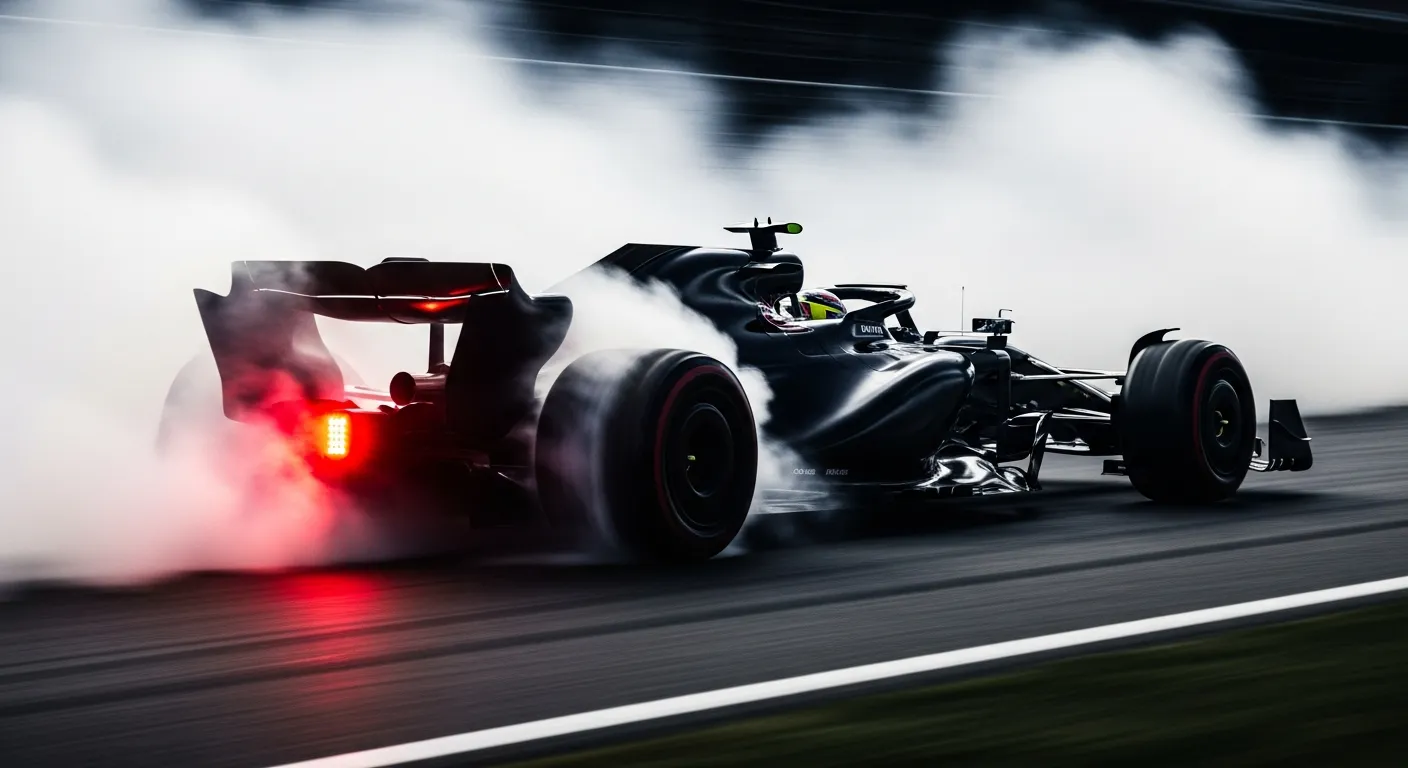
The 2014 Monaco Grand Prix saw Lewis Hamilton navigate a challenging race on the Circuit de Monaco, ultimately securing a P2 finish for Mercedes amidst a contentious qualifying session and a Safety Car interruption. Starting from grid position 2, Hamilton found himself immediately behind his teammate, Nico Rosberg, who had claimed pole position under controversial circumstances that morning. The tight confines of Monaco demand precision from the outset, and Hamilton held his P2 through the initial laps, focusing on managing tire degradation and maintaining pressure on the leader.
The race unfolded with its characteristic Monaco drama. An early Safety Car deployment on lap 23, following Adrian Sutil's accident, presented a strategic inflection point. While such incidents can reshuffle the order, the Mercedes team opted for a consistent strategy for both drivers. Hamilton, driving the formidable W05, maintained a strong pace throughout the 78 laps, demonstrating the car's capabilities on a circuit where driver skill is paramount. His fastest lap of 1:19.361 on lap 34 underscored his persistent effort to close the gap, a lap time that was actually quicker than his teammate's best effort on lap 33. This consistent performance is a hallmark of top-tier [Formula 1 racing](https://www.formula1.com/en), where every millisecond counts, much like the strategic battles seen in races such as the [2018 Hungarian Grand Prix with Carlos Sainz](/results/2018-hungaroring-carlos-sainz).
Despite his strong individual lap times and completing all 78 laps, Hamilton crossed the finish line +9.210 seconds behind Rosberg, securing 18 points for his efforts. The race also saw Daniel Ricciardo secure third place, just +9.614 seconds behind Hamilton, highlighting the competitive margins at the front of the field. The precision required for such results is often meticulously tracked through [comprehensive F1 race data archives](https://api.jolpi.ca/ergast/f1/2026.json). The nuances of Monaco, with its unforgiving barriers, often lead to incidents, as seen with Sebastian Vettel's early retirement due to a turbo issue on lap 5, a stark reminder of the technical demands on these machines. Understanding the historical context of these events is crucial for fans, often found in resources like [Wikipedia's Formula One overview](https://en.wikipedia.org/wiki/Formula_One).
This P2 finish was a solid points haul for Hamilton, contributing to Mercedes' constructor championship aspirations and showcasing the team's dominant package in the 2014 season. The challenges of a street circuit like Monaco are unique within the [FIA F1 World Championship](https://www.fia.com/events/fia-formula-one-world-championship) calendar, demanding a different approach compared to purpose-built tracks. Hamilton's drive demonstrated both pace and resilience, even if the top step of the podium remained just out of reach on this particular Sunday. The intensity of such a championship battle can be compared to the pressure on drivers like [Max Verstappen at the 2018 Dutch Grand Prix](/results/2018-zandvoort-max-verstappen) when competing for critical points. The strategic decisions made by teams and drivers at Monaco are always under scrutiny, reflecting the high stakes of every round. Even in the midfield, drivers like [Nico Hülkenberg at the 2018 Hungarian Grand Prix](/results/2018-hungaroring-nico-hulkenberg) demonstrate the constant fight for every position and point.
Verified race record · Ergast
Grid
P2
Finish
P2
Points
18
Laps
78
Constructor
Mercedes AMG F1
Status
Finished
Teammate that weekend
Nico Rosberg
Grid P1 · Finish P1 · 25 pts
Championship · before vs after
Before round 6
P1100 pts
After round 6
P2118 pts