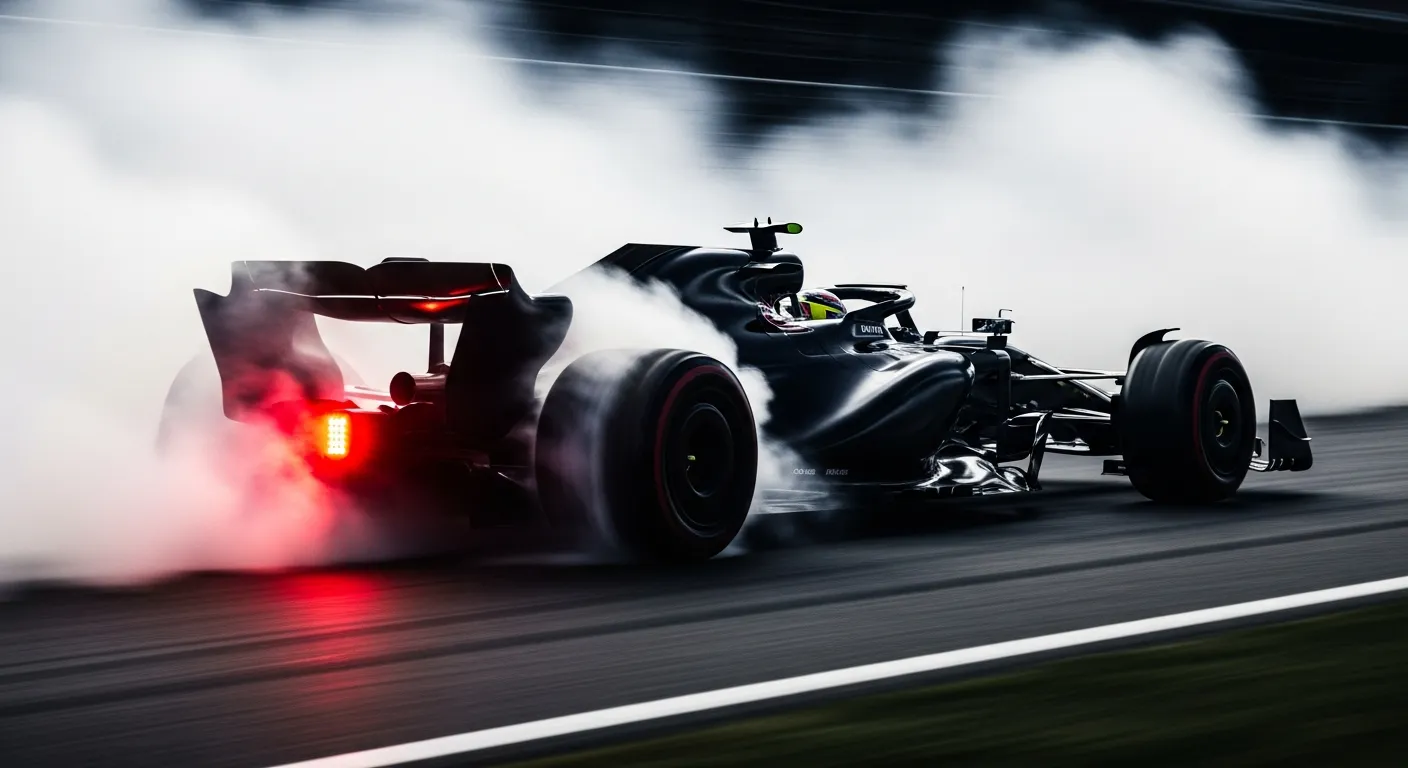
The 2014 Chinese Grand Prix at the Shanghai International Circuit underscored Mercedes' early dominance in the turbo-hybrid era, particularly through Lewis Hamilton's performance. From the outset, Hamilton converted his pole position into a lead he would not relinquish, demonstrating a significant pace advantage over the entire field. This race was a clear indicator of the engineering prowess Mercedes had brought to the new regulations.
Qualifying Dynamics
Qualifying set the stage for Mercedes' strength, with Hamilton securing pole position. While the front row was completed by Daniel Ricciardo in the Red Bull, and Sebastian Vettel started P3, Nico Rosberg, Hamilton's teammate, qualified P4 after a telemetry issue in Q3. This grid order hinted at a competitive race behind Hamilton, but the underlying Mercedes pace was already evident. The grid also saw Fernando Alonso start P5 for Ferrari, showcasing a glimmer of potential for the Scuderia in what would be a challenging season.
Race Execution and Incidents
From the lights, Hamilton established control, managing his tires and the challenging Shanghai circuit with precision. His ability to maintain a gap was crucial, especially as his teammate Rosberg navigated a recovery drive from P4, ultimately finishing P2. The race was largely a strategic affair, though not without its quirks. A premature waving of the checkered flag by a marshal meant the race was officially shortened by one lap, with results taken from the end of lap 54 instead of the planned 56. This unusual incident, while not impacting the podium order, highlighted the need for stringent race management protocols by the FIA — F1 World Championship.
Fernando Alonso delivered a strong performance to secure P3 for Ferrari, a welcome result for the team. Meanwhile, the Red Bull garage saw an interesting dynamic unfold as Daniel Ricciardo, starting P2, outpaced his four-time world champion teammate Sebastian Vettel, who finished P5. This was an early sign of Ricciardo's emerging talent and adaptability to the new power units, contrasting with Vettel's struggles to find comfort with the RB10's characteristics. Similar competitive intra-team battles would later define races such as the 2021 British Grand Prix.
Strategic Story
The strategic narrative of the 2014 Chinese Grand Prix revolved around tire management and the new V6 turbo-hybrid power units. Mercedes' superior efficiency allowed Hamilton to push harder and maintain consistent pace, even with a two-stop strategy. Rosberg, despite a poor start, showcased the W05's raw speed by setting the fastest lap of the race on lap 39, demonstrating the car's potential when unleashed. Teams like Force India, with Nico Hülkenberg finishing P6, and Williams, with Valtteri Bottas P7, also showed strong strategic execution to secure valuable points. The race provided valuable data for teams adapting to the new Formula 1 — official site regulations, which significantly altered the racing landscape, a theme that continued into events like the 2021 Austrian Grand Prix.
Reliability also played a role, with Romain Grosjean retiring due to a gearbox issue and Adrian Sutil's race ending early with an engine problem. These early-season retirements underscored the steep learning curve for all constructors in the new era of Formula One technology. The data from this race, and indeed the entire 2014 season, is meticulously recorded, providing a rich source for analysis, much like the Jolpica/Ergast — 2026 season data will for future seasons. The early turbo-hybrid era demanded a different approach to race management, a shift from the V8 era that would see new strategic challenges, including those faced at circuits like the 2021 Canadian Grand Prix.
Championship Impact
Hamilton's victory extended his lead in the Drivers' Championship, solidifying Mercedes' position at the top of the Constructors' standings. This result further highlighted the formidable challenge facing rivals like Red Bull and Ferrari in closing the performance gap to the dominant Silver Arrows.
Full classified results
Every driver's verified grid-to-flag result from the 2014 Chinese Grand Prix — grid, finish, points, teammate H2H, and championship swing.