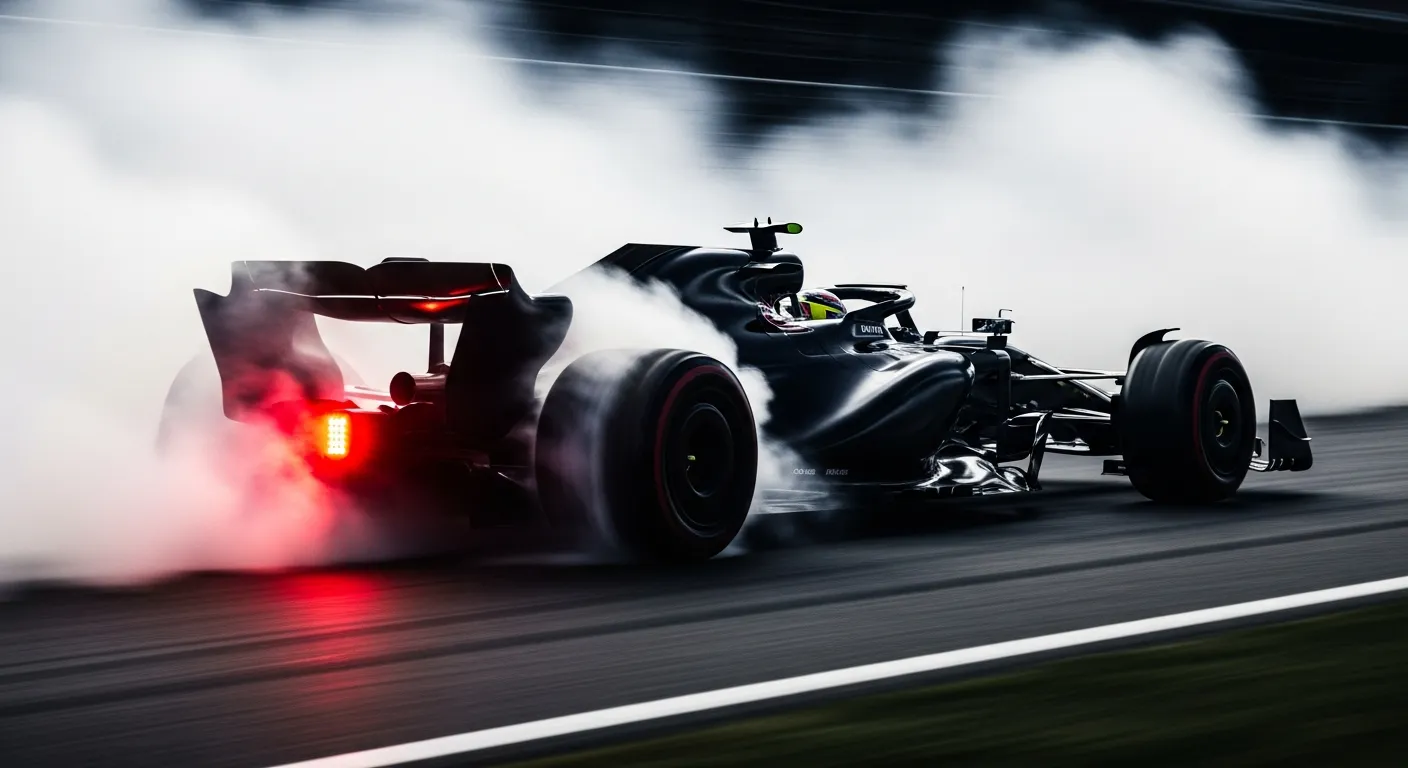
Lewis Hamilton's performance at the 2015 Brazilian Grand Prix on November 15, 2015, at the Autódromo José Carlos Pace in São Paulo, was a demonstration of consistent pace, though ultimately not enough to convert his second-place grid start into a victory against his Mercedes teammate. Starting from the front row, Hamilton maintained a strong presence throughout the 71-lap event, completing the full race distance. His drive was characterized by a relentless pursuit of the lead, culminating in him setting the fastest lap of the race on lap 51, clocking a 1:14.832 at an average speed of 207.296 kph. This raw speed underscores the competitive edge he sought, even when the top step of the podium proved elusive. Despite his efforts, he crossed the finish line in second position, 7.756 seconds behind his Mercedes colleague, Nico Rosberg, who started from pole and secured the win. This result added 18 points to Hamilton's already secured championship tally.
The race unfolded as a direct battle between the two Mercedes drivers, a common theme in the 2015 season. While Hamilton pushed hard, making multiple attempts to close the gap and challenge Rosberg, the German driver managed to hold his ground. The strategic decisions around pit stops and tire management played a crucial role, with both drivers on similar strategies, limiting opportunities for significant overtakes. Ferrari's Sebastian Vettel, starting third, finished in the same position, 14.244 seconds adrift of Rosberg, indicating the clear performance advantage held by the Mercedes-AMG Petronas F1 Team at this circuit. The gap to the rest of the field was substantial, a testament to the dominant W06 Hybrid package. For context on how challenging it can be to convert grid position to a strong finish, one might look at [Carlos Sainz at the 2024 Miami Grand Prix](/results/2024-miami-carlos-sainz), who faced a retirement, highlighting the fine margins in Formula 1. The detailed [Formula 1 — official site](https://www.formula1.com/en) race reports often delve into these strategic nuances.
Hamilton's fastest lap, a key metric for individual performance, was notably quicker than Rosberg's second-ranked fastest lap of 1:14.957. This demonstrates that while the race win eluded him, the underlying pace was certainly present. The Autódromo José Carlos Pace, known for its undulating layout and passionate Brazilian crowd, demands precision and consistent performance over its 71 laps, a challenge Hamilton met by completing every lap. The [FIA — F1 World Championship](https://www.fia.com/events/fia-formula-one-world-championship) regulations govern such events, ensuring fair competition. Further down the order, drivers like [Alexander Albon at the 2024 Miami Grand Prix](/results/2024-miami-alex-albon) often battle intensely for points, a different kind of pressure than the front-running Mercedes. The comprehensive [Wikipedia: Formula One](https://en.wikipedia.org/wiki/Formula_One) page provides historical context for such dominant eras. Even seasoned competitors like [Nico Hülkenberg at the 2024 Miami Grand Prix](/results/2024-miami-nico-hulkenberg), who finished sixth in this 2015 Brazilian Grand Prix, understand the importance of extracting every bit of performance. For those interested in the raw statistics, sites like [Jolpica/Ergast — 2026 season data](https://api.jolpi.ca/ergast/f1/2026.json) provide extensive historical race data. The consistent performance of Mercedes in 2015, as evidenced by this 1-2 finish, was a hallmark of their championship campaign, a detailed analysis of which can be found on the [Formula 1 — official site](https://www.formula1.com/en).
Verified race record · Ergast
Grid
P2
Finish
P2
Points
18
Laps
71
Constructor
Mercedes AMG F1
Status
Finished
Teammate that weekend
Nico Rosberg
Grid P1 · Finish P1 · 25 pts
Championship · before vs after
Before round 18
P1345 pts
After round 18
P1363 pts