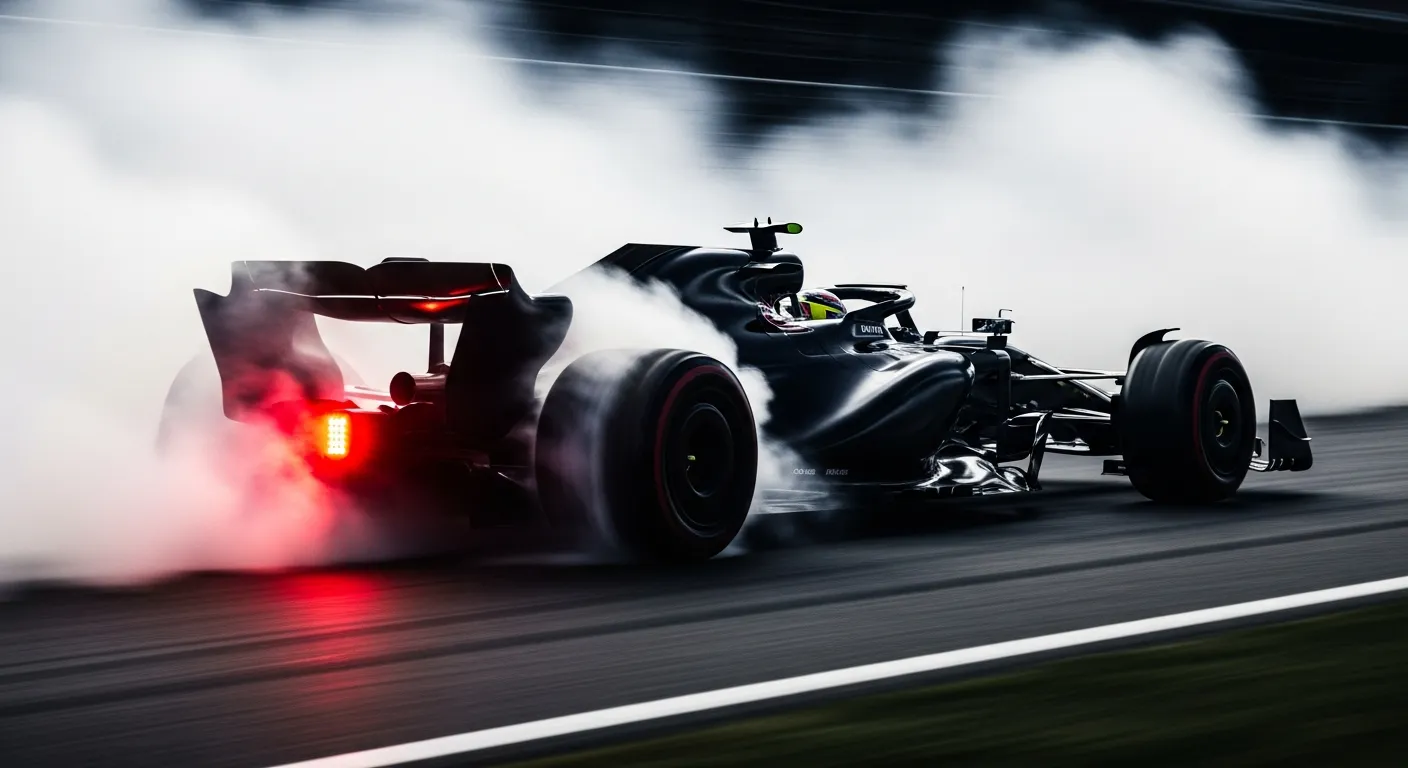
The 2015 Singapore Grand Prix on the Marina Bay Street Circuit stood as a pivotal moment in the turbo-hybrid era, offering a rare glimpse of vulnerability from the dominant Mercedes team as Sebastian Vettel and Ferrari claimed a decisive victory.
Qualifying
Qualifying for the 2015 Singapore Grand Prix set the stage for a weekend that defied the season's established order. Sebastian Vettel secured pole position for Ferrari, demonstrating the SF15-T's strong performance characteristics on the demanding street circuit. Daniel Ricciardo placed his Red Bull alongside Vettel on the front row, just ahead of Kimi Räikkönen in the second Ferrari. Notably, the Mercedes cars of Lewis Hamilton and Nico Rosberg qualified P5 and P6 respectively, a significant deviation from their usual front-row lockout. This grid suggested a more open race than many had anticipated, particularly on a circuit where track position is often paramount. The qualifying session itself was a testament to Ferrari's strategic and technical execution, allowing them to extract maximum performance when it mattered most.
Race
The race itself unfolded with a controlled precision from Sebastian Vettel, who converted his pole position into a victory. He maintained a strong pace throughout the 61 laps, managing the challenging conditions and multiple safety car interruptions effectively. Daniel Ricciardo, starting from P2, delivered a robust performance for Red Bull, consistently challenging Vettel and ultimately finishing a close second, securing the fastest lap of the race on lap 52. Kimi Räikkönen completed the podium for Ferrari, reinforcing the team's strong showing. The event was marked by several incidents, including a collision involving Nico Hülkenberg on lap 12. More significantly, Lewis Hamilton, who had started P5, retired on lap 32 due to a throttle issue, a rare mechanical failure for the Mercedes W06 and a significant moment in his championship campaign. Fernando Alonso and Jenson Button also faced reliability issues, both retiring their McLarens with gearbox problems after 33 and 52 laps respectively.
Strategic Story
The strategic narrative of the Singapore Grand Prix was heavily influenced by the nature of the street circuit and the unexpected pace of Ferrari and Red Bull. With Mercedes struggling to find their rhythm, the focus shifted to tire management and capitalizing on safety car periods, which are a common feature of racing at Marina Bay. Vettel's ability to control the pace from the front, coupled with Ferrari's pit stop execution, allowed him to maintain his lead through the various race phases. Red Bull's strategy with Ricciardo was equally effective, enabling him to stay within striking distance of the leader and ultimately secure second place. The race highlighted the importance of a well-balanced car on high-downforce circuits, where mechanical grip and tire degradation are critical factors. This performance was a stark contrast to the dominant displays Mercedes had shown at other venues, such as the 2018 Spanish Grand Prix or the 2018 British Grand Prix, where their car's inherent speed was often unassailable. For a deeper dive into F1 racing strategy, the Formula 1 — official site offers comprehensive insights.
Championship Impact
This race had a tangible, if not decisive, impact on the 2015 World Championship standings. Lewis Hamilton's retirement meant he failed to score points, allowing Nico Rosberg to gain ground by finishing P4. Crucially, Sebastian Vettel's victory brought him closer to the championship leaders, injecting new life into the drivers' title fight. This disruption underscored the competitive nature of the FIA — F1 World Championship and the unpredictable elements that can shape a season. For historical context on the sport's evolution, Wikipedia: Formula One provides a detailed overview. The performance also served as a strong statement from Ferrari, proving their capability to challenge Mercedes, particularly on circuits that play to their strengths. Teams are always looking for an edge, and understanding past race data, like that available from Jolpica/Ergast — 2026 season data, helps in future development. The 2015 season, despite Mercedes' overall strength, demonstrated that no team is entirely immune to the unique challenges each circuit presents, a lesson that continues to resonate in races like the 2018 Monaco Grand Prix. The race also saw strong performances from the Toro Rosso drivers, with Max Verstappen finishing P8 and Carlos Sainz P9, both securing points for their team after starting P8 and P14 respectively. This kind of data-driven analysis is crucial for understanding team dynamics and driver performance, as often discussed in motorsport news outlets covering the sport.
Full classified results
Every driver's verified grid-to-flag result from the 2015 Singapore Grand Prix — grid, finish, points, teammate H2H, and championship swing.
- P1Sebastian VettelFerrari25 pts
- P2Daniel RicciardoRed Bull18 pts
- P3Kimi RäikkönenFerrari15 pts
- P4Nico RosbergMercedes12 pts
- P5Valtteri BottasWilliams10 pts
- P7Sergio PérezForce India6 pts
- P8Max VerstappenToro Rosso4 pts
- P9Carlos SainzToro Rosso2 pts
- —Fernando AlonsoMcLarenGearbox
- —Lewis HamiltonMercedesThrottle
- —Nico HülkenbergForce IndiaCollision