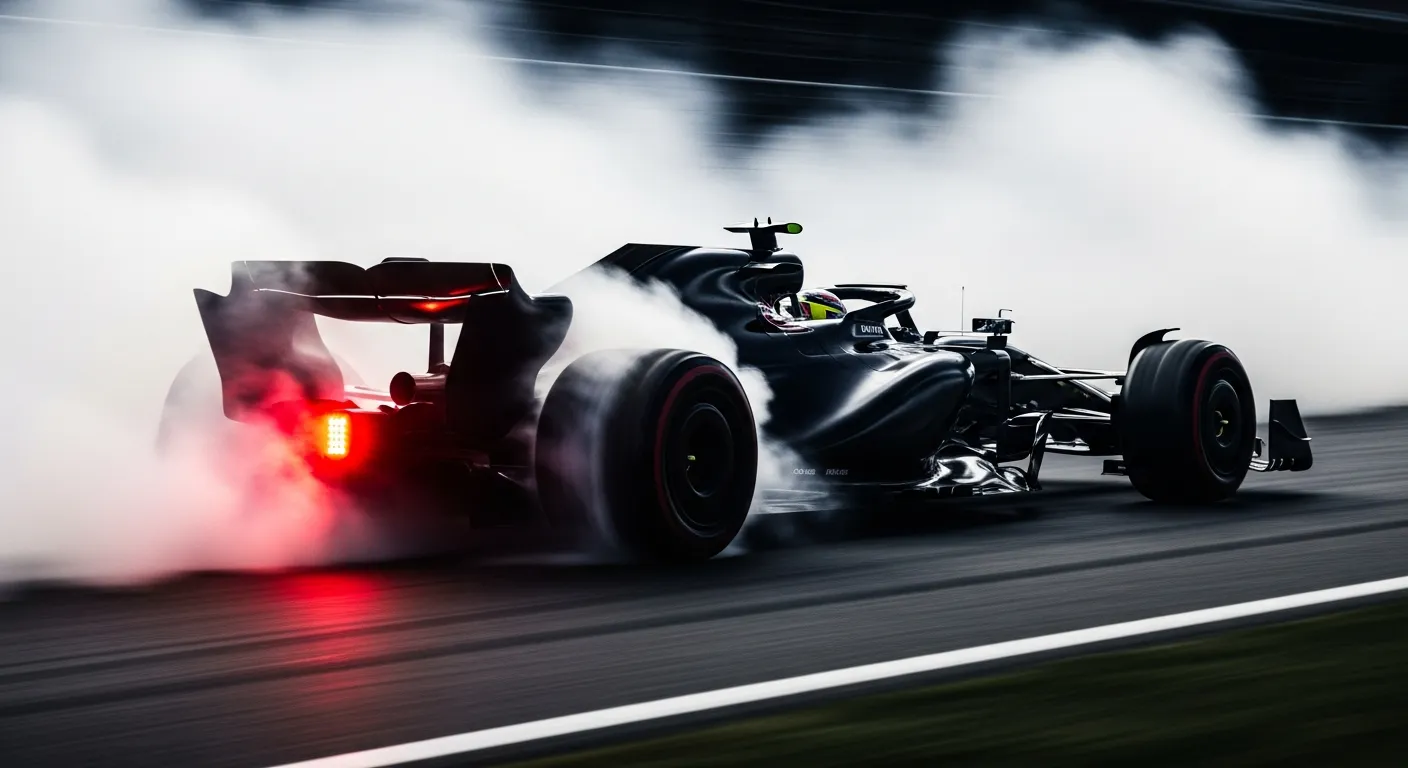
Fernando Alonso's outing at the 2015 Italian Grand Prix at the Autodromo Nazionale di Monza was a stark illustration of the profound challenges McLaren faced during their nascent Honda engine partnership, culminating in a finish significantly adrift of the main field. Starting from 16th on the grid, Alonso's race was characterized by a persistent lack of outright pace and horsepower, a recurring and frustrating theme for the McLaren-Honda package throughout that season. The legendary high-speed nature of Monza, a circuit demanding not only peak power but also exceptional aerodynamic efficiency for its long straights and fast chicanes, brutally exposed the inherent limitations of their power unit. This particular race, held on September 6, 2015, saw Alonso battling not for points, but for position against cars with considerably more performance headroom. Throughout the 53-lap event, Alonso completed 47 laps, ultimately being classified in 18th position, a full six laps down on race winner Lewis Hamilton. This classification placed him even further back than his teammate Jenson Button, who managed to finish 14th, one lap down, underscoring the individual struggles Alonso contended with on the day within the same machinery. The performance deficit was starkly evident in his fastest lap time of 1:29.285, recorded on lap 42. This time ranked 15th overall among all competitors, a position that belied the two-time world champion's talent. Crucially, this lap was nearly three seconds slower than the fastest lap of the race, set by Lewis Hamilton, highlighting the immense chasm in performance between McLaren and the front-running Mercedes-powered teams. The 2015 season, Alonso's first back with McLaren after his initial stint, proved to be a deeply challenging chapter, a period where the team consistently struggled to find a competitive balance, much like the intense competition seen in modern [Formula 1 — official site](https://www.formula1.com/en) racing. Drivers like [Charles Leclerc at the 2026 British Grand Prix](/results/2026-silverstone-charles-leclerc) and [Max Verstappen at the 2026 British Grand Prix](/results/2026-silverstone-max-verstappen) now compete with far more developed power units, a testament to the sport's continuous evolution as detailed by [Wikipedia: Formula One](https://en.wikipedia.org/wiki/Formula_One). The comprehensive data from this era, available through resources like the [Jolpica/Ergast — 2026 season data](https://api.jolpi.ca/ergast/f1/2026.json), provides a granular look at the performance landscape. Despite his best efforts and characteristic aggressive driving, Alonso was unable to convert his grid position into any championship points, a common outcome for the team during this challenging phase. The regulatory framework of the [FIA — F1 World Championship](https://www.fia.com/events/fia-formula-one-world-championship) ensures a level playing field, but the complexities of engine development can lead to such disparities. The sheer speed required at Monza meant any power deficiency was magnified, making it a particularly arduous event for the McLaren team. Even in later years, drivers such as [Lando Norris at the 2026 British Grand Prix](/results/2026-silverstone-lando-norris) still face unique challenges at high-speed circuits, albeit with much more competitive machinery. The 2015 Italian Grand Prix was a race where McLaren's focus shifted from competition at the front to simply bringing both cars to the checkered flag, a stark contrast to their historical dominance. Further insights into the sport's technical regulations and historical results can be found on the [Formula 1 — official site](https://www.formula1.com/en) and the [FIA — F1 World Championship](https://www.fia.com/events/fia-formula-one-world-championship).
Verified race record · Ergast
Grid
P16
Finish
P18
Points
0
Laps
47
Constructor
McLaren Racing
Status
Electrical
Teammate that weekend
Jenson Button
Grid P15 · Finish P14 · 0 pts
Championship · before vs after
Before round 12
P1511 pts
After round 12
P1511 pts