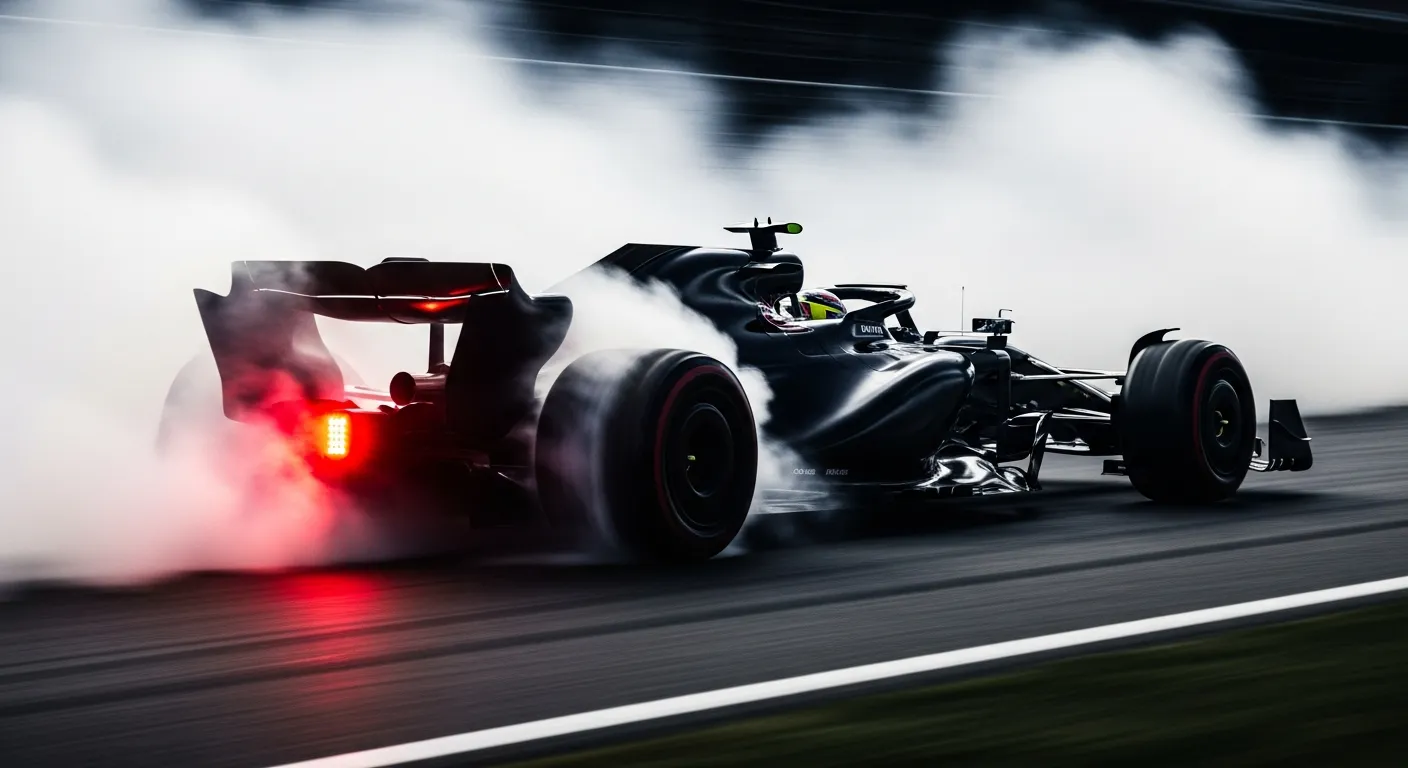
Fernando Alonso's outing at the 2016 Italian Grand Prix was a stark illustration of McLaren's performance deficit that season, yet it was punctuated by a remarkable individual achievement: setting the fastest lap of the race. Starting from 12th on the grid at the high-speed [Autodromo Nazionale di Monza](https://en.wikipedia.org/wiki/Autodromo_Nazionale_di_Monza) on September 4, 2016, Alonso in the McLaren-Honda faced the inherent power struggles of a circuit that heavily favored engine performance. Despite these limitations, his renowned race craft was on full display as he navigated the 53-lap race, ultimately completing 52 laps and finishing 14th, one lap down from race winner Nico Rosberg. This result, while not yielding points, highlighted the ongoing challenges for [McLaren](https://www.formula1.com/en/teams/McLaren.html) during the Honda engine partnership era, a period often characterized by power unit struggles as documented by the [Formula 1 — official site](https://www.formula1.com/en).
The most notable aspect of Alonso's performance was his late-race surge, culminating in the fastest lap of the entire Grand Prix on lap 51. His time of 1:25.340, achieved at an average speed of 244.373 kph, demonstrated his enduring skill and determination to extract maximum performance from his package, even when competing outside the points. This lap was quicker than any set by the front-running Mercedes and Ferrari cars, a testament to his raw speed. His teammate, Jenson Button, finished 12th, also a lap down, with a fastest lap of 1:26.354 on lap 40, further underscoring Alonso's individual pace advantage in Monza. The broader context of the 2016 season saw many drivers, including [Max Verstappen at the 2017 São Paulo Grand Prix](/results/2017-interlagos-max-verstappen) and [Lewis Hamilton at the 2017 São Paulo Grand Prix](/results/2017-interlagos-lewis-hamilton), pushing their machinery to its absolute limit in challenging circumstances. For detailed historical race statistics, resources like [Jolpica/Ergast — 2026 season data](https://api.jolpi.ca/ergast/f1/2026.json) provide comprehensive data. The [FIA — F1 World Championship](https://www.fia.com/events/fia-formula-one-world-championship) outlines the official regulations governing these events. This era was a test of resilience for drivers like [Carlos Sainz at the 2017 Mexico City Grand Prix](/results/2017-mexico-city-carlos-sainz), who also navigated competitive midfield battles. Alonso's fastest lap, though not contributing to his championship points, served as a powerful reminder of his undiminished talent and competitive spirit within the demanding world of [Formula One](https://en.wikipedia.org/wiki/Formula_One).
Verified race record · Ergast
Grid
P12
Finish
P14
Points
0
Laps
52
Constructor
McLaren Racing
Status
+1 Lap
Teammate that weekend
Jenson Button
Grid P14 · Finish P12 · 0 pts
Championship · before vs after
Before round 14
P1130 pts
After round 14
P1130 pts