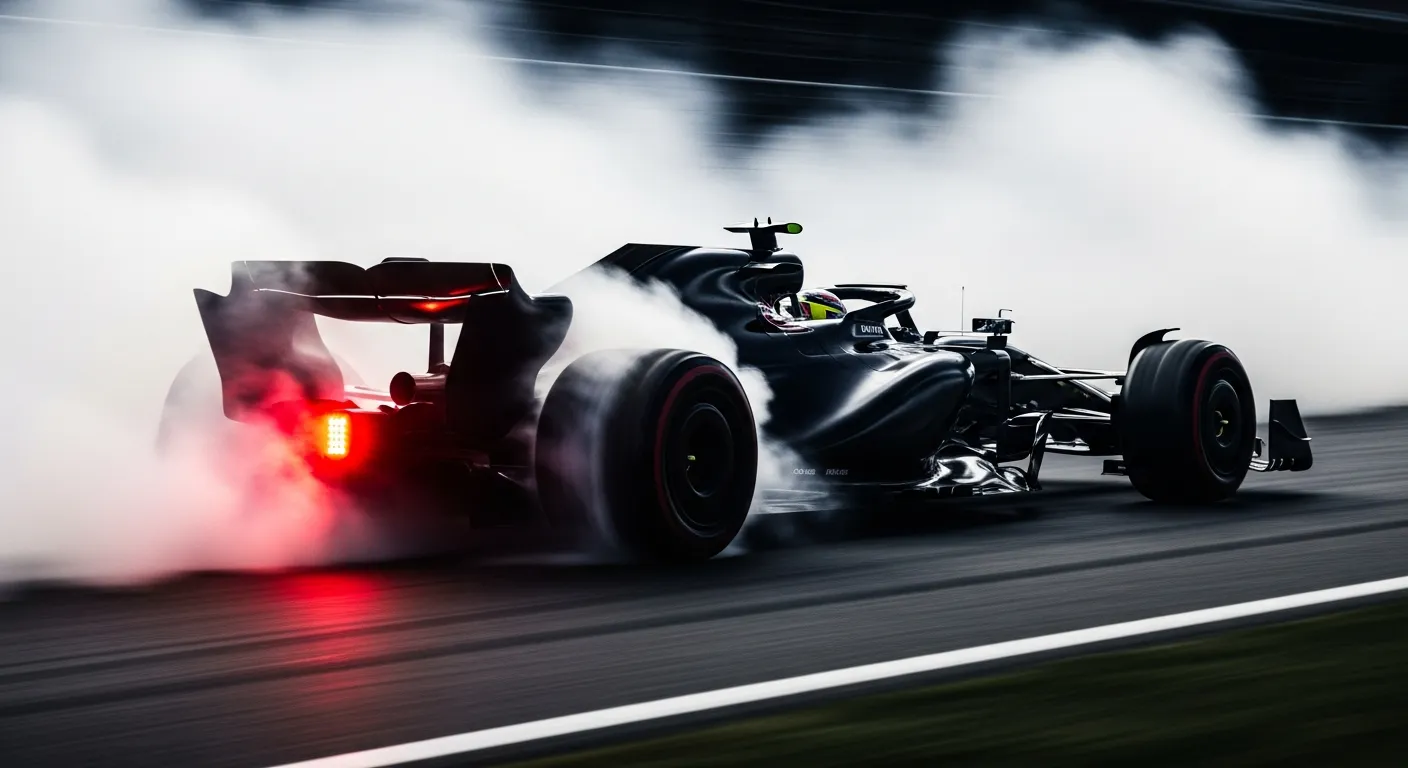
Lewis Hamilton's performance at the 2016 Bahrain Grand Prix on April 3, 2016, was a testament to recovery and damage limitation, converting a pole position into a third-place finish despite an eventful opening lap. Having secured the lead from the grid, Hamilton's start was compromised by contact with Valtteri Bottas, dropping him down the order early in the race. This incident forced the British driver to embark on a strategic recovery drive through the field at the Bahrain International Circuit. His Mercedes W07 demonstrated its inherent pace, allowing him to steadily regain positions over the 57 laps. The early contact meant a significant loss of track position, turning what should have been a front-running battle into a calculated chase from the midfield.
Despite the early setback, Hamilton maintained a competitive pace, recording his fastest lap on lap 43 with a time of 1:34.677, which was the second-fastest lap of the race overall, only behind his teammate Nico Rosberg's 1:34.482 on lap 41. This consistent speed, even while managing the race from a compromised position, underlines the capabilities of both driver and machine. Ultimately, Hamilton crossed the finish line 30.148 seconds behind the race winner, Nico Rosberg. This result, while not a victory, was a significant points haul, preventing a more substantial loss in the championship standings. Such recovery drives are not uncommon in Formula 1; we've seen similar tenacity from drivers like [Carlos Sainz at the 2019 Austrian Grand Prix](/results/2019-red-bull-ring-carlos-sainz), who also demonstrated a strong comeback through the field. For a broader understanding of the sport's structure and rules, the [FIA — F1 World Championship](https://www.fia.com/events/fia-formula-one-world-championship) provides comprehensive information on the governing body.
The strategic decisions made by the Mercedes pit wall were crucial in Hamilton's climb back to the podium. Managing tire degradation in the Sakhir heat is always a challenge, and the team executed a strategy that allowed Hamilton to maximize his car's performance throughout the grand prix. His ability to push when needed, as evidenced by his second-ranked fastest lap, was key to securing the 15 points. This race highlighted the critical interplay between driver skill, car performance, and strategic acumen. Comparing this to other races where drivers had to fight through the pack, such as [Max Verstappen at the 2019 British Grand Prix](/results/2019-silverstone-max-verstappen), emphasizes the blend of driver instinct and team strategy required to convert challenging circumstances into valuable championship points. The official [Formula 1 — official site](https://www.formula1.com/en) offers detailed race reports and historical data for further context on such performances. This particular grand prix underscored the competitive intensity within the Mercedes garage, with Rosberg taking the win and establishing an early lead in the drivers' championship. The dynamic between teammates often defines a season's narrative, a compelling element also present in battles like [Charles Leclerc at the 2019 British Grand Prix](/results/2019-silverstone-charles-leclerc). For those interested in the technical specifications and historical data that underpin these high-stakes competitions, resources like [Wikipedia: Formula One](https://en.wikipedia.org/wiki/Formula_One) offer a deep dive into the sport's evolution, while specific race data can be explored via platforms like [Jolpica/Ergast — 2026 season data](https://api.jolpi.ca/ergast/f1/2026.json). The consistency required to perform at this level, even under pressure, is a hallmark of top-tier [Formula 1 — official site](https://www.formula1.com/en) drivers navigating the complexities of a grand prix weekend.
Verified race record · Ergast
Grid
P1
Finish
P3
Points
15
Laps
57
Constructor
Mercedes AMG F1
Status
Finished
Teammate that weekend
Nico Rosberg
Grid P2 · Finish P1 · 25 pts
Championship · before vs after
Before round 2
P218 pts
After round 2
P233 pts