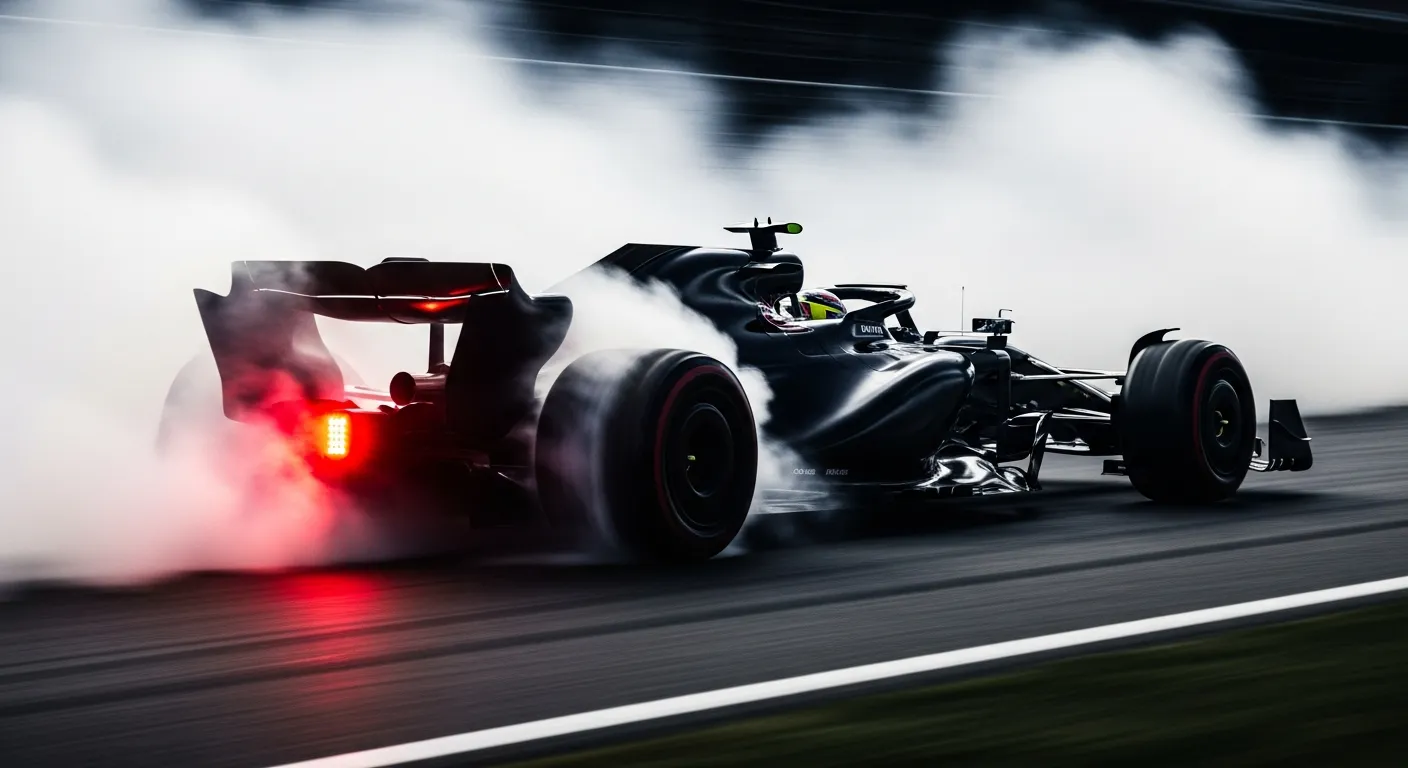
Fernando Alonso's inaugural European Grand Prix at the Baku City Circuit in 2016 was cut short by a gearbox failure, preventing McLaren from capitalizing on any potential points-scoring opportunities. Starting from 13th on the grid, Alonso navigated the initial phase of the race on the challenging new street circuit, a layout known for its extreme contrasts between high-speed straights and the tight, technical castle section. The McLaren-Honda package, still in its developmental phase, faced inherent limitations against the dominant machinery of the era.
Alonso completed 42 laps before the mechanical issue forced his retirement, a "Gearbox" status recorded in the official results. His fastest lap of the race, a 1:49.101 recorded on lap 27, placed him 18th overall in terms of single-lap pace, underscoring the performance deficit McLaren was working to overcome. This contrasted with the strong pace shown by front-runners, including Nico Rosberg who ultimately won the race. Teammate Jenson Button, starting further back in 19th, managed to complete the full 51 laps, finishing 11th, albeit outside the points. This demonstrated the car's capacity for reliability to reach the checkered flag, a feat Alonso's machine could not replicate on this occasion.
The retirement meant zero points for Alonso, a setback in a season where every opportunity to score was critical for McLaren's progress. The demands on the power unit and transmission at a circuit like Baku are considerable, and the gearbox failure highlighted areas for continued development. Such technical challenges are a constant in [Formula 1](https://www.formula1.com/en), where the engineering limits are continually pushed. Drivers like Alonso, known for their analytical approach, often provide critical feedback to their teams, influencing future car designs and strategies. For a deeper dive into the sport's structure, the [FIA — F1 World Championship](https://www.fia.com/events/fia-formula-one-world-championship) offers comprehensive oversight. The detailed performance metrics for all drivers, including specific lap times and speeds, are meticulously tracked by various [F1 data sources](https://api.jolpi.ca/ergast/f1/2026.json).
This particular race was a stark reminder of the complexities of the 2016 season for McLaren, a period marked by both glimmers of potential and frustrating mechanical setbacks. The competitive landscape of F1 demands constant evolution, a truth that remains relevant for drivers competing today, such as [Fernando Alonso at the 2025 United States Grand Prix](/results/2025-cota-fernando-alonso), [Lewis Hamilton at the 2025 United States Grand Prix](/results/2025-cota-lewis-hamilton), and [George Russell at the 2025 United States Grand Prix](/results/2025-cota-george-russell). Understanding the historical context of these challenges is key to appreciating the sport's narrative, as detailed in resources like [Wikipedia: Formula One](https://en.wikipedia.org/wiki/Formula_One). The specific nature of the gearbox failure on lap 42 meant that Alonso's efforts to climb through the field were ultimately curtailed, leaving him without a classified finish for the European Grand Prix.
Verified race record · Ergast
Grid
P13
Finish
Gearbox
Points
0
Laps
42
Constructor
McLaren Racing
Status
Gearbox
Teammate that weekend
Jenson Button
Grid P19 · Finish P11 · 0 pts
Championship · before vs after
Before round 8
P1218 pts
After round 8
P1318 pts