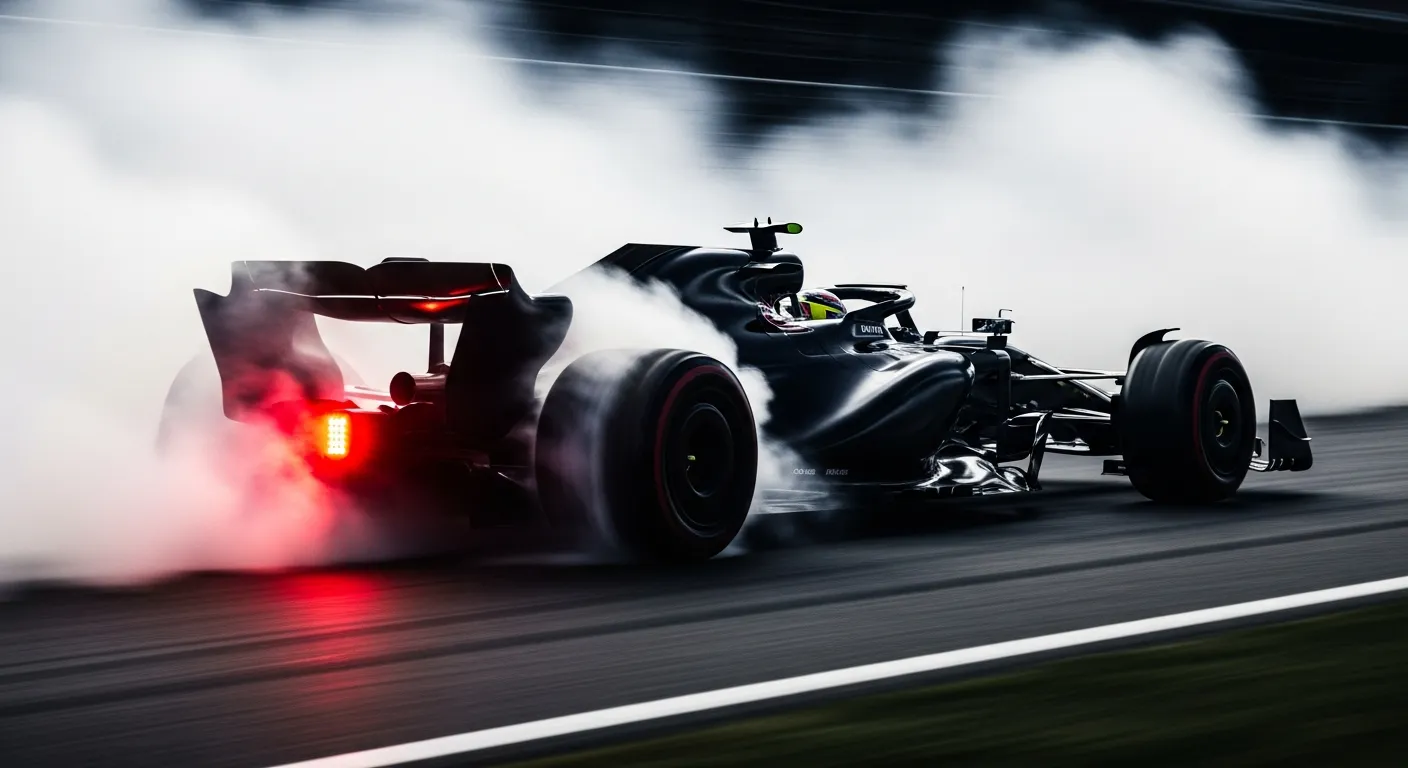
The 2016 United States Grand Prix saw Max Verstappen's promising run cut short by a gearbox failure, forcing his retirement from the Circuit of the Americas event on lap 28.
Starting from the fourth position on the grid, Verstappen had demonstrated competitive pace in his Red Bull RB12. His early race performance included a notable pit stop miscommunication where he unexpectedly entered the pit lane, only to be told to "keep pushing" by his engineer, leading to a brief moment of confusion before he rejoined the track. This incident, while quickly resolved, underscored the dynamic nature of race strategy. Despite this, Verstappen was running strongly, even recording his fastest lap of 1:42.424 on lap 28, just before the mechanical issue emerged. Such detailed race data, including lap times and speeds, is often compiled by [Formula 1 — official site](https://www.formula1.com/en) and accessible through [historical F1 data archives](https://api.jolpi.ca/ergast/f1/2026.json). The intricacies of a Formula 1 car's design and operation, particularly the gearbox, are subject to stringent [FIA technical regulations](https://www.fia.com/events/fia-formula-one-world-championship), which aim to ensure fair competition and safety.
The gearbox failure meant Verstappen scored no points, a stark contrast to his Red Bull teammate Daniel Ricciardo, who secured a podium finish in third. This DNF shifted Verstappen's championship standing from fifth to sixth, though his points total remained at 165. For a broader understanding of how such incidents impact a season, one might look at the challenges faced by drivers like [Pierre Gasly at the 2025 United States Grand Prix](/results/2025-cota-pierre-gasly) or the strategic considerations for [Carlos Sainz at the 2025 United States Grand Prix](/results/2025-cota-carlos-sainz) in future seasons. While Verstappen's race ended early, his raw speed was evident, a characteristic that would become a hallmark of his career, as chronicled on [Wikipedia: Formula One](https://en.wikipedia.org/wiki/Formula_One). The race, ultimately won by Lewis Hamilton, highlighted the reliability demands on every component, a lesson that would inform Red Bull's development moving forward. Even in a challenging race like this, the performance of a driver's chassis, as seen with [Alexander Albon at the 2025 United States Grand Prix](/results/2025-cota-alex-albon), is always under scrutiny. Understanding the full scope of [F1 seasons and their outcomes](https://www.formula1.com/en/results.html) requires deep dives into individual race results. Furthermore, the evolution of [Formula One technology](https://en.wikipedia.org/wiki/Formula_One_car) is a continuous process, with teams constantly pushing the boundaries of engineering.
Verified race record · Ergast
Grid
P4
Finish
Gearbox
Points
0
Laps
28
Constructor
Red Bull Racing
Status
Gearbox
Teammate that weekend
Daniel Ricciardo
Grid P3 · Finish P3 · 15 pts
Championship · before vs after
Before round 18
P5165 pts
After round 18
P6165 pts