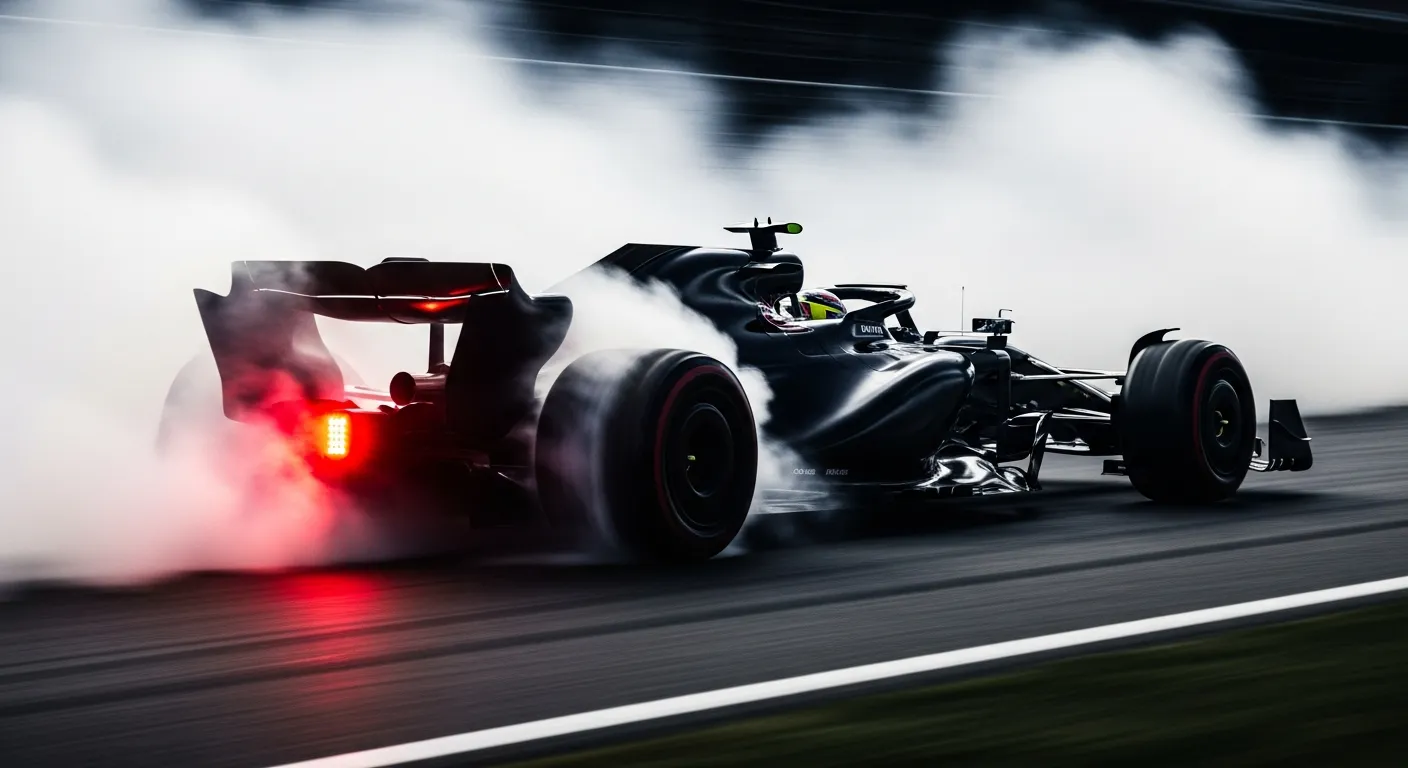
Carlos Sainz navigated the 2016 British Grand Prix at Silverstone to secure a points finish, demonstrating consistent pace in his Toro Rosso. Starting from 7th on the grid, Sainz maintained a position within the top ten throughout much of the 52-lap race, ultimately crossing the line in 8th position. His race time of "+1:25.858" behind winner Lewis Hamilton underscores the gap to the front-runners, yet his performance was a solid midfield effort. Sainz's fastest lap, a 1:37.401 on lap 43, ranked 10th overall, indicating the STR11's potential at certain stages of the race. This result was particularly significant as it placed him ahead of his teammate Daniil Kvyat, who finished 10th, securing a double points finish for the Italian constructor. The British Grand Prix is a staple on the [Formula 1 calendar](https://www.formula1.com/en), known for its high-speed corners and unpredictable weather, which often tests driver skill and team strategy. Sainz's ability to manage these conditions and bring home points was a testament to his developing racecraft in his second season under the [FIA's regulations](https://www.fia.com/events/fia-formula-one-world-championship) for the 2016 season.
The race saw a mix of strategies and incidents, particularly early on with a safety car period due to difficult conditions. Sainz's drive was largely clean, avoiding the pitfalls that caught out others like Romain Grosjean and Pascal Wehrlein, both of whom retired. His consistent lap times, as detailed in [F1 race data archives](https://api.jolpi.ca/ergast/f1/2026.json), allowed him to hold his ground against seasoned competitors. This steady performance in the midfield is a common theme for drivers in developing teams, much like how [Fernando Alonso at the 2021 Italian Grand Prix](/results/2021-monza-fernando-alonso) or [Pierre Gasly at the 2021 Italian Grand Prix](/results/2021-monza-pierre-gasly) have often maximized their car's potential. The [history of Formula One](https://en.wikipedia.org/wiki/Formula_One) is replete with examples of drivers building their reputation through consistent points finishes. His performance at Silverstone, a circuit with a rich [motorsport heritage](https://www.formula1.com/en/racing/2024/Great_Britain.html), marked another step in his career progression for the [2016 season](https://en.wikipedia.org/wiki/2016_Formula_One_season). Comparing his race to others in the midfield, such as [Alexander Albon at the 2021 Italian Grand Prix](/results/2021-monza-alex-albon), highlights the consistent pressure to perform and extract every bit of performance from the machinery.
Verified race record · Ergast
Grid
P7
Finish
P8
Points
4
Laps
52
Constructor
Scuderia Toro Rosso
Status
Finished
Teammate that weekend
Daniil Kvyat
Grid P15 · Finish P10 · 1 pts
Championship · before vs after
Before round 10
P1222 pts
After round 10
P1226 pts