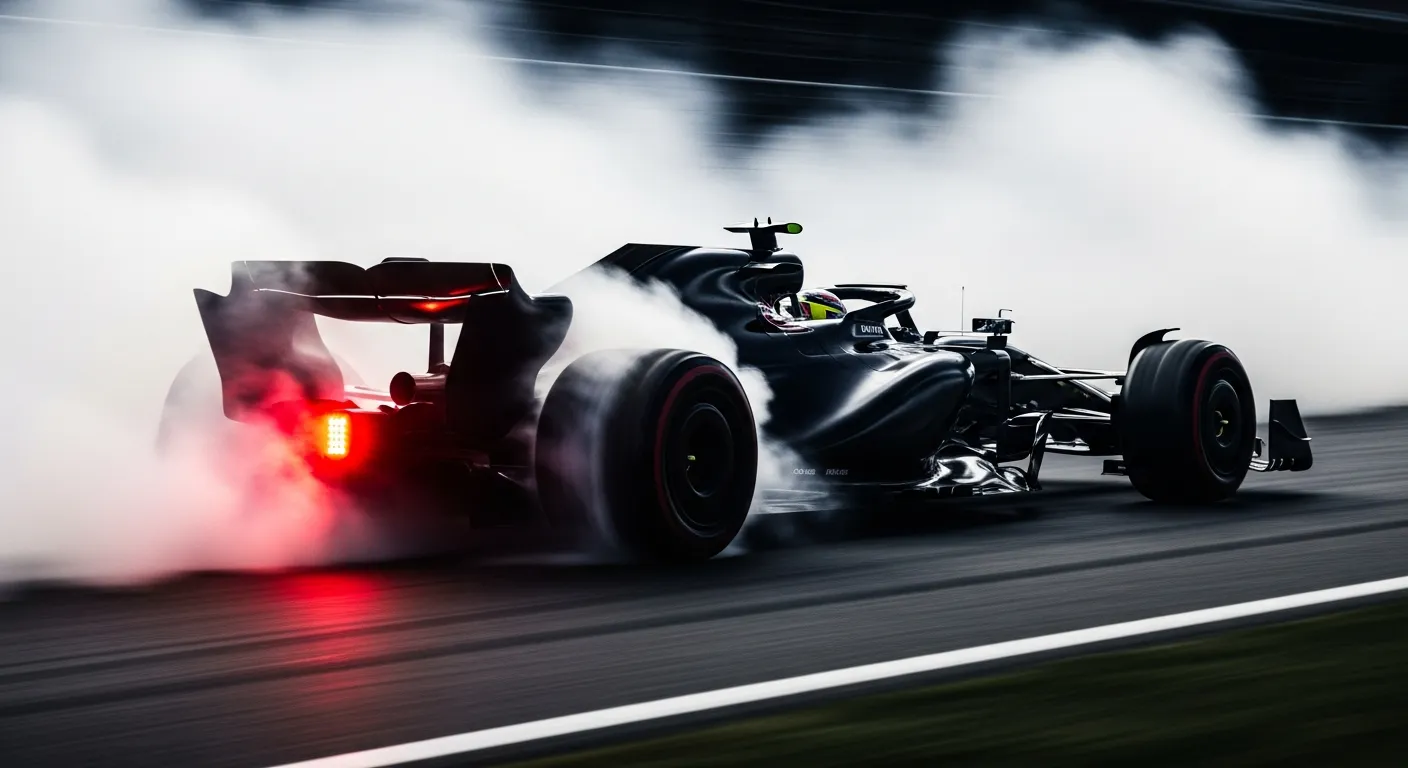
Lewis Hamilton's 2016 Japanese Grand Prix campaign at the Suzuka Circuit was defined by a recovery drive after a difficult initial phase, culminating in a third-place finish for Mercedes AMG F1. Starting from grid position 2, the British driver encountered a poor start, dropping several positions early in the race. This immediate setback meant Hamilton had to navigate through the field, a task made challenging by the high-speed nature of Suzuka and its limited overtaking opportunities. His teammate, Nico Rosberg, who started from pole position, maintained his lead throughout the race, ultimately securing the victory.
Hamilton's race pace proved strong as he settled into a rhythm, demonstrating the capabilities of the Mercedes W07. He completed all 53 laps, recording a total race time of "1:26:49.109". A notable moment came on lap 36, where he posted his fastest lap of "1:35.152", ranking him second overall for fastest laps during the event. This pursuit saw him engage in a late-race battle with Max Verstappen of Red Bull Racing, who ultimately held on to second place. The strategic decisions and Hamilton's on-track execution allowed him to climb back to a podium position, securing 15 crucial points. For a deeper dive into Formula 1 history and regulations, the [FIA — F1 World Championship](https://www.fia.com/events/fia-formula-one-world-championship) provides comprehensive resources. The dynamic of championship battles often sees drivers pushing limits, as seen with [Max Verstappen at the 2019 Chinese Grand Prix](/results/2019-shanghai-max-verstappen), where similar strategic battles unfolded. Understanding the statistical underpinnings of these races can be gleaned from various sources, including [Jolpica/Ergast — 2026 season data](https://api.jolpi.ca/ergast/f1/2026.json) archives. Hamilton's resilience in Japan was a testament to his persistent approach, a characteristic often observed in top-tier drivers across different seasons, including his own performance at the [Lewis Hamilton at the 2019 Chinese Grand Prix](/results/2019-shanghai-lewis-hamilton). The broader context of Formula One racing can be explored on [Wikipedia: Formula One](https://en.wikipedia.org/wiki/Formula_One), offering an encyclopaedic overview of the sport. Even drivers like [Charles Leclerc at the 2019 Chinese Grand Prix](/results/2019-shanghai-charles-leclerc) have faced similar challenges requiring strategic recovery drives.
Verified race record · Ergast
Grid
P2
Finish
P3
Points
15
Laps
53
Constructor
Mercedes AMG F1
Status
Finished
Teammate that weekend
Nico Rosberg
Grid P1 · Finish P1 · 25 pts
Championship · before vs after
Before round 17
P2265 pts
After round 17
P2280 pts