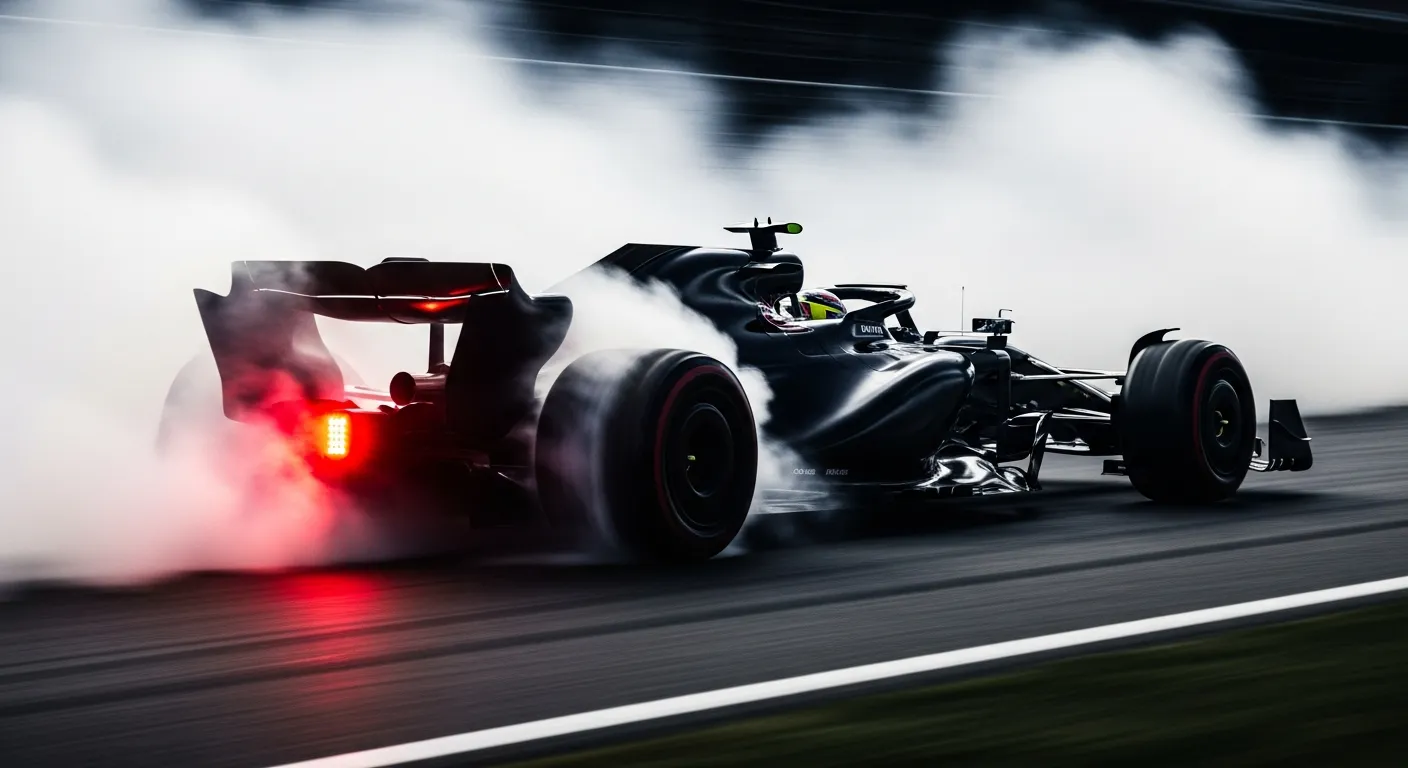
The 2016 Japanese Grand Prix at Suzuka was a pivotal moment in the championship narrative, witnessing Nico Rosberg's controlled victory and Mercedes-AMG Petronas F1 Team's third consecutive Constructors' Championship.
Qualifying
Qualifying set the stage for a familiar Mercedes front-row lockout, though the margins were incredibly fine. Nico Rosberg secured pole position, demonstrating precision around the demanding Suzuka Circuit. His teammate, Lewis Hamilton, lined up alongside him in second, just fractions of a second adrift. The Red Bull of Max Verstappen started from third, showcasing the team's strong form and hinting at their potential to challenge the Silver Arrows. Ferrari's Kimi Räikkönen qualified third, but a gearbox change penalty relegated him to eighth on the grid, elevating Sebastian Vettel and Daniel Ricciardo. This grid shuffle ultimately impacted the race's early dynamics, particularly for the Ferrari drivers who had to navigate traffic.
Race
From the moment the lights went out, Rosberg executed a flawless start, converting his pole position into an immediate lead. In contrast, Lewis Hamilton suffered a significant loss of traction, dropping several places by the first corner. This early setback forced Hamilton into a recovery drive through the midfield, a scenario reminiscent of his charge at the 2015 Hungarian Grand Prix. Rosberg, meanwhile, managed his pace and tires with characteristic composure, maintaining a comfortable gap to the chasing pack, primarily led by Max Verstappen. The Red Bull driver delivered a mature performance, holding off Hamilton's relentless pursuit in the latter stages of the race. The battle for second became a highlight, with Verstappen's defensive driving proving impenetrable. Mercedes' strategic calls and the car's inherent pace allowed Rosberg to dictate terms, securing a victory that was as much about controlled execution as raw speed. The official results and further race details can be reviewed on the Formula 1 — official site.
Strategic Story
The strategic landscape at Suzuka often revolves around tire degradation, given the circuit's high-energy demands. Most teams opted for a two-stop strategy, primarily utilizing the hard and medium compound Pirelli tires. Rosberg's strategy was straightforward: manage the gap, make clean pit stops, and maintain tire life. Hamilton's race, however, became a masterclass in strategic adaptation. After his poor start, the Mercedes pit wall had to recalibrate, using undercut and overcut opportunities to help him climb back through the field. His late-race charge, enabled by a well-timed second pit stop, put him in contention for second, but Verstappen's defense on older tires proved too strong. The data from events like the 2015 Italian Grand Prix often shows how crucial tire management is, and Suzuka was no exception. Teams continuously monitor tire wear and performance, a critical aspect of modern F1 as detailed by the FIA — F1 World Championship technical regulations.
Championship Impact
Nico Rosberg's victory was immensely significant for his 2016 World Drivers' Championship aspirations. It extended his lead over Lewis Hamilton, providing a crucial buffer as the season entered its final races. This result further solidified his momentum, which had been building through the latter half of the season, contrasting with some of Hamilton's more challenging weekends, such as at the 2015 United States Grand Prix where the championship was decided. Crucially, the combined points from Rosberg's win and Hamilton's third-place finish were sufficient for Mercedes to clinch their third consecutive Constructors' Championship, an impressive feat that underscored their dominance in the turbo-hybrid era. For a comprehensive overview of the season's standings, historical F1 data can be accessed via sources like Jolpica/Ergast — 2026 season data. More general information about the sport's history is available on Wikipedia: Formula One.
Read the full editorial
Full classified results
Every driver's verified grid-to-flag result from the 2016 Japanese Grand Prix — grid, finish, points, teammate H2H, and championship swing.
- P1Nico RosbergMercedes25 pts
- P2Max VerstappenRed Bull18 pts
- P3Lewis HamiltonMercedes15 pts
- P4Sebastian VettelFerrari12 pts
- P5Kimi RäikkönenFerrari10 pts
- P6Daniel RicciardoRed Bull8 pts
- P7Sergio PérezForce India6 pts
- P8Nico HülkenbergForce India4 pts
- P10Valtteri BottasWilliams1 pts
- P16Fernando AlonsoMcLaren0 pts
- P17Carlos SainzToro Rosso0 pts
- P21Esteban OconManor Marussia0 pts