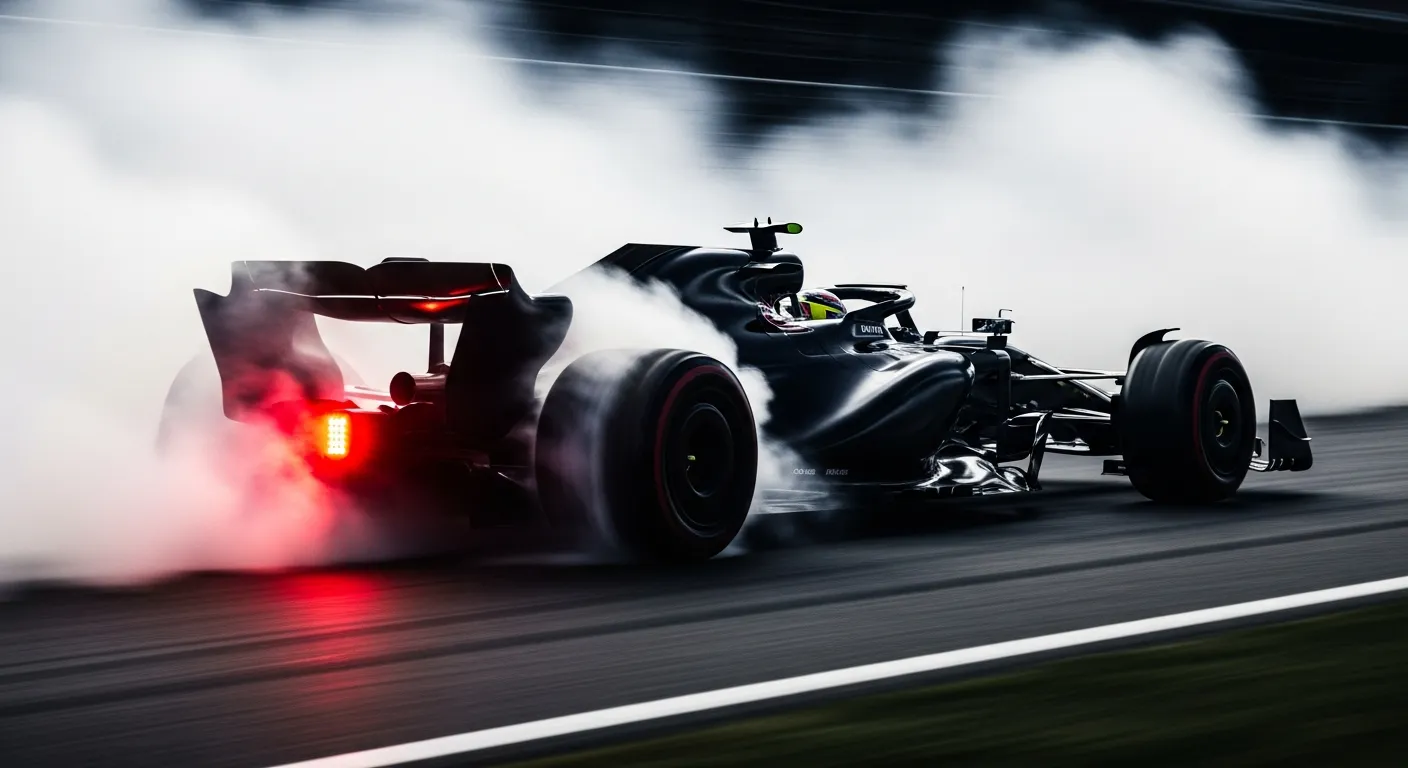
Fernando Alonso's outing at the 2017 Bahrain Grand Prix on April 16th was another chapter in McLaren's challenging season, concluding with a power unit failure that forced his retirement after 54 laps. Starting from 15th on the grid, Alonso demonstrated his characteristic tenacity, navigating the early stages of the race amidst a competitive field. Despite the inherent limitations of his McLaren-Honda package, he maintained a presence in the mid-pack, pushing the car to its limits before the mechanical issue surfaced. The eventual classification of 14th, despite not completing the full 57 laps, underscored the attrition rate of the race, which saw several other drivers also fail to finish. For a deeper look into Formula 1's intricate technical regulations, the [FIA — F1 World Championship](https://www.fia.com/events/fia-formula-one-world-championship) provides comprehensive documentation.
The persistent power unit issues plagued McLaren throughout the 2017 season, and Bahrain was a stark illustration. Notably, Alonso's teammate, Stoffel Vandoorne, also retired from the race due to a power unit failure, having completed zero laps from his 17th grid position. This dual retirement highlighted the systemic reliability concerns facing the team. Even with these challenges, Alonso managed to record a fastest lap of 1:35.595 on lap 47, ranking 14th among all drivers, a testament to his persistent efforts to extract performance. This period for McLaren stood in contrast to drivers like [Nico Hülkenberg at the 2019 Italian Grand Prix](/results/2019-monza-nico-hulkenberg), who consistently brought his car home in the points. Understanding the broader landscape of driver performance and race outcomes can be explored through historical [Formula 1 — official site](https://www.formula1.com/en) archives. The 2017 season was particularly tough for many, with unexpected retirements, a situation [Carlos Sainz at the 2019 Italian Grand Prix](/results/2019-monza-carlos-sainz) would later experience due to mechanical issues. For a comprehensive overview of the sport's history and technical evolution, [Wikipedia: Formula One](https://en.wikipedia.org/wiki/Formula_One) offers extensive details. The sheer volume of data involved in F1, from lap times to component failures, is immense, with platforms like [Jolpica/Ergast — F1 data](https://api.jolpi.ca/ergast/f1/2026.json) providing detailed race results. Examining individual race statistics, such as those for [Max Verstappen at the 2019 Azerbaijan Grand Prix](/results/2019-baku-max-verstappen), often reveals the fine margins between success and mechanical misfortune. Such incidents are a regular feature of a Formula 1 season, where the demands on power units are extreme.
Verified race record · Ergast
Grid
P15
Finish
P14
Points
0
Laps
54
Constructor
McLaren Racing
Status
Power unit
Teammate that weekend
Stoffel Vandoorne
Grid P17 · Water pressure · 0 pts
Championship · before vs after
Before round 3
P190 pts
After round 3
P190 pts