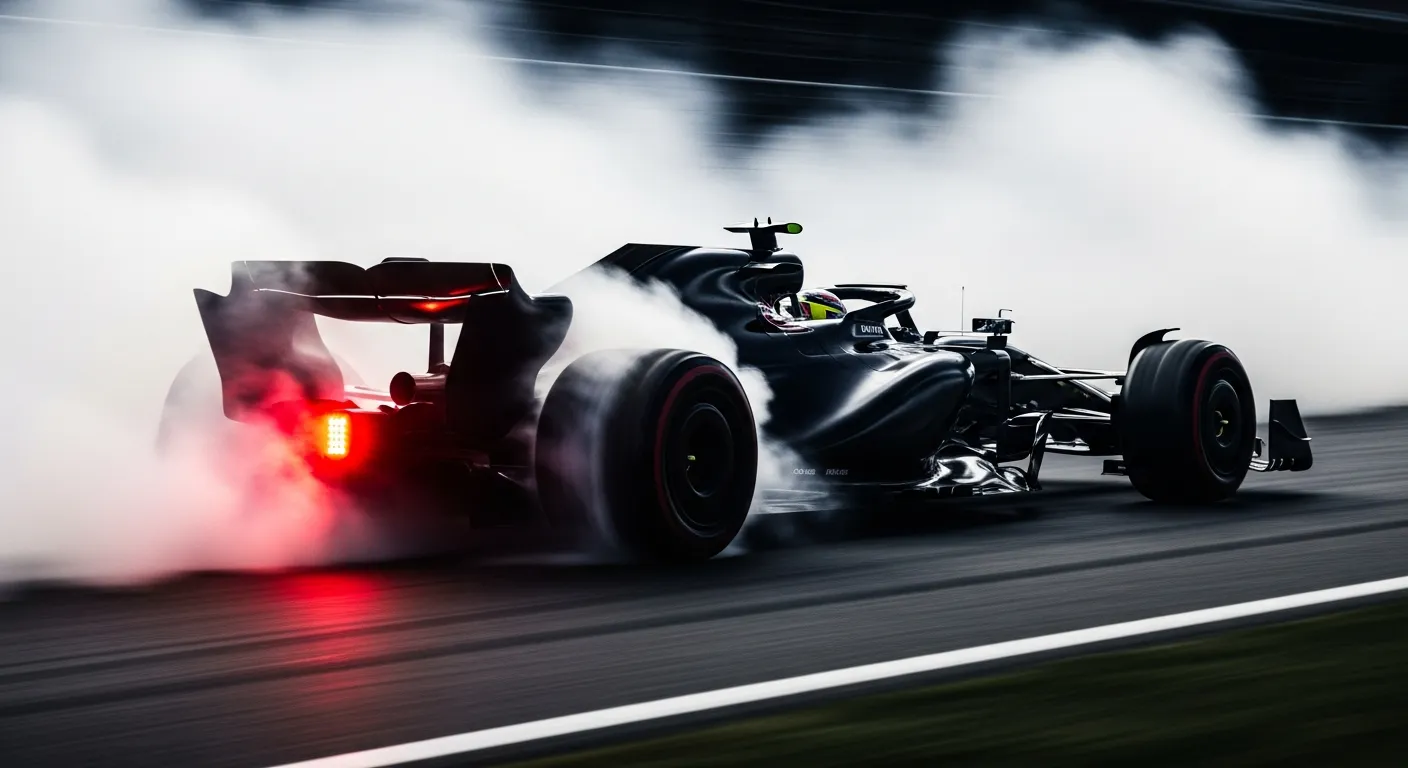
The 2017 Mexican Grand Prix presented Lewis Hamilton with an unexpected challenge, culminating in a ninth-place finish after an early-race incident reshaped his trajectory from a third-place grid start. The Autódromo Hermanos Rodríguez, known for its high-altitude characteristics, often produces unpredictable races, a factor detailed by the [Formula 1 — official site](https://www.formula1.com/en). Hamilton, driving for Mercedes, found himself in contact with Sebastian Vettel's Ferrari on the opening lap, an incident that forced both drivers to pit for repairs. This early setback dropped Hamilton to the back of the field, a significant departure from his initial grid position.
From that point, Hamilton embarked on a determined recovery drive. Despite the damage and the loss of track position, he maintained a consistent pace, completing 70 laps and ultimately finishing one lap down from the race winner, Max Verstappen. His resilience was evident in his fastest lap, a 1:19.945 on lap 69, ranking fifth overall, demonstrating the underlying pace of the Mercedes W08 even in compromised conditions. Such incidents often fall under the purview of the [FIA — F1 World Championship](https://www.fia.com/events/fia-formula-one-world-championship) stewards, though no further action was taken. While his teammate Valtteri Bottas secured a strong second place for Mercedes, Hamilton's recovery highlighted the team's depth and strategic capabilities, a characteristic also observed with drivers like [George Russell at the 2022 United States Grand Prix](/results/2022-cota-george-russell) in challenging scenarios. Hamilton's drive to secure points, even after significant setbacks, is a testament to the competitive spirit that defines [Formula One](https://en.wikipedia.org/wiki/Formula_One) racing. Examining [F1 historical race data](https://api.jolpi.ca/ergast/f1/2026.json) reveals that recovery drives from early contact are not uncommon, though securing points can be difficult. This resilience echoes drives seen in later seasons, such as [Lewis Hamilton at the 2022 United States Grand Prix](/results/2022-cota-lewis-hamilton), where strategic decisions were paramount. The fight through the field, navigating traffic and managing tire wear, is a common thread in F1, reminiscent of [Fernando Alonso at the 2022 United States Grand Prix](/results/2022-cota-fernando-alonso)'s determined efforts. Despite the difficult race, Hamilton's two points were crucial, as the overall championship picture remained in focus. The demanding nature of the circuit, particularly its high altitude affecting engine performance and aerodynamics, is a constant challenge for teams, as explored on the [Formula 1 official site](https://www.formula1.com/en) in technical analyses. This race was a stark reminder that even championship leaders can face unexpected hurdles, requiring a blend of driver skill and team strategy to salvage a result, a narrative frequently detailed in [Formula 1 race reports](https://www.formula1.com/en).
Verified race record · Ergast
Grid
P3
Finish
P9
Points
2
Laps
70
Constructor
Mercedes AMG F1
Status
+1 Lap
Teammate that weekend
Valtteri Bottas
Grid P4 · Finish P2 · 18 pts
Championship · before vs after
Before round 18
P1331 pts
After round 18
P1333 pts