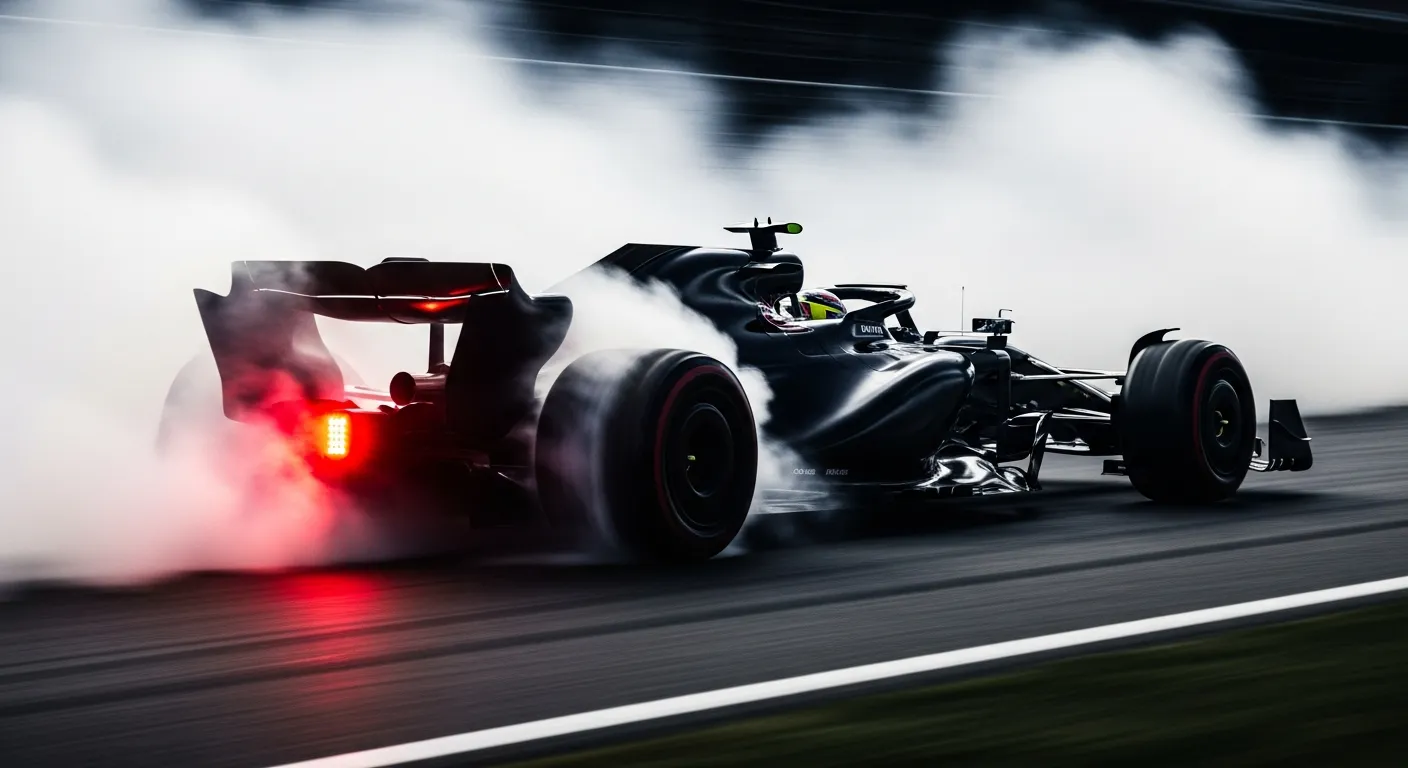
The 2017 Mexico City Grand Prix at the Autódromo Hermanos Rodríguez delivered a decisive chapter in the season’s championship narrative, marked by an early-race incident that effectively sealed the drivers' title. This event, set against the unique challenge of Mexico City's high altitude, demanded both raw pace and strategic acumen, ultimately crowning a new champion in dramatic fashion.
Qualifying
Qualifying for the 2017 Mexico City Grand Prix was a tense affair, with Ferrari's Sebastian Vettel securing pole position. His performance underscored Ferrari's potential at this circuit, known for its demanding conditions where engine power and aerodynamic efficiency are tested by the thin air. Mercedes' Lewis Hamilton, his primary championship rival, started from third on the grid, setting the stage for a critical race. The high altitude often creates a unique setup challenge, requiring teams to maximize downforce despite the reduced air density, a factor that can shift the competitive balance as seen in races like the 2015 Japanese Grand Prix where different car philosophies excelled.
Race
The race itself began with immediate, high-stakes drama. Max Verstappen, starting alongside Vettel on the front row, executed a superb start, quickly challenging for the lead. Crucially, on the opening lap, an incident unfolded involving both Vettel and Hamilton. Contact between the two championship contenders resulted in significant damage for both, forcing early pit stops and sending them to the very back of the field. This turn of events fundamentally reshaped the race, allowing Verstappen to establish a commanding lead. His Red Bull RB13, often a strong performer in circuits with specific aerodynamic demands, proved exceptionally well-suited to the conditions, allowing him to pull away from the chasing pack with impressive consistency, a characteristic that defined many of his early career victories, reminiscent of his dominant drive at the 2014 Abu Dhabi Grand Prix where strategic brilliance secured a title.
Strategic Story
With both title protagonists relegated to the rear, the strategic narratives diverged. For Verstappen, it became a relatively straightforward race of managing his lead and tires. His team opted for a single-stop strategy, a testament to the Red Bull's tire preservation capabilities and Verstappen's smooth driving. For Hamilton and Vettel, however, the race transformed into a desperate recovery mission. Both drivers had to navigate the field, managing tire wear and fuel consumption while pushing hard to regain positions. Their respective teams had to make critical decisions on tire compounds and pit windows, hoping to capitalize on any safety car periods or rival misfortunes. The challenge of recovering from an early setback is a recurring theme in Formula 1, demanding a blend of driver skill and tactical flexibility, much like the strategic gambles seen during the 2015 Australian Grand Prix at the dawn of the hybrid era.
Championship Impact
Despite the early collision and the subsequent recovery drive, Lewis Hamilton's performance was sufficient to secure his fourth Drivers' World Championship. His ability to claw back positions and manage the race from a compromised starting point demonstrated the resilience that has defined his career. While Sebastian Vettel also mounted a strong recovery, his points haul was not enough to prevent Hamilton from achieving an unassailable lead in the standings. This race underscored the intense pressure of a championship battle, where a single incident can alter the trajectory of an entire season. For a comprehensive overview of the season's official standings and regulations, the FIA — F1 World Championship provides detailed information. Further insights into the race weekend, including official reports and driver reactions, can be found on the Formula 1 — official site, which often serves as a primary news source for fans. Understanding the broader context of Formula 1's turbo-hybrid era, which began in 2014, is crucial for appreciating these strategic battles; more on this can be found on Wikipedia: Formula One. For those interested in the raw data behind such events, resources like Jolpica/Ergast — 2026 season data offer a glimpse into how race results are compiled and analyzed.
Full classified results
Every driver's verified grid-to-flag result from the 2017 Mexican Grand Prix — grid, finish, points, teammate H2H, and championship swing.
- P1Max VerstappenRed Bull25 pts
- P2Valtteri BottasMercedes18 pts
- P3Kimi RäikkönenFerrari15 pts
- P4Sebastian VettelFerrari12 pts
- P5Esteban OconForce India10 pts
- P6Lance StrollWilliams8 pts
- P7Sergio PérezForce India6 pts
- P9Lewis HamiltonMercedes2 pts
- P10Fernando AlonsoMcLaren1 pts
- P13Pierre GaslyToro Rosso0 pts
- —Carlos SainzRenaultEngine
- —Nico HülkenbergRenaultElectrical
- —Daniel RicciardoRed BullEngine