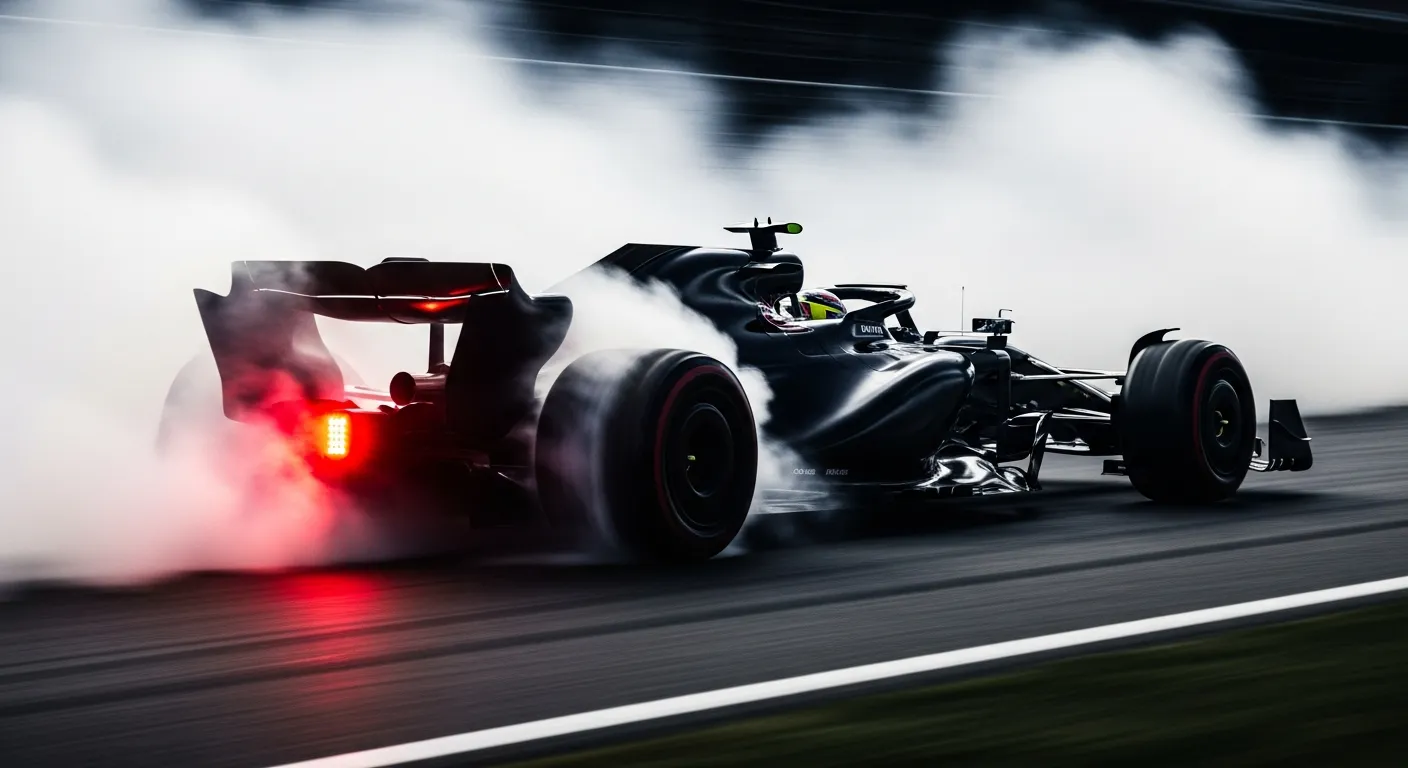
Pierre Gasly's outing at the 2017 Mexican Grand Prix was a methodical recovery drive for Toro Rosso, marked by a climb through the field from the very back of the grid. The Autódromo Hermanos Rodríguez presented a unique challenge with its high altitude, impacting engine performance and aerodynamic efficiency, a factor that often reshapes race dynamics as detailed on the [Formula 1 — official site](https://www.formula1.com/en). On October 29, 2017, Gasly, in only his third F1 start, began the race from 20th position after incurring grid penalties. This placed him at a significant disadvantage, requiring a strategic and disciplined approach from the outset to make progress through the field.
The race itself saw a considerable rate of attrition, with six retirements, including both Red Bull-affiliated cars of Daniel Ricciardo and Gasly’s Toro Rosso teammate, Brendon Hartley. Hartley’s STR12 retired on lap 30 due to an engine issue, underscoring the reliability struggles faced by the team with their power unit partner that season. Despite these challenges, Gasly completed 70 laps, bringing his Toro Rosso home in 13th position, one lap down from the race winner Max Verstappen. His consistent pace was evident in his fastest lap, a 1:20.859, recorded on the final lap (lap 70), which placed him 8th overall in the fastest lap standings. This late-race speed, even while running off the lead lap, demonstrated the French driver's commitment to extracting maximum performance until the checkered flag. Such efforts, even when not yielding championship points, are vital for a driver's development, providing crucial data and race experience, as often highlighted in official [Formula 1 race reports](https://www.formula1.com/en). This is a different kind of challenge than what drivers like [Pierre Gasly at the 2024 Azerbaijan Grand Prix](/results/2024-baku-pierre-gasly) might face in a more competitive package, but the underlying drive for performance remains constant. The rigorous technical regulations overseen by the [FIA — F1 World Championship](https://www.fia.com/events/fia-formula-one-world-championship) ensure that every team operates under a common framework, making such comparative analyses possible across seasons. For an emerging talent, understanding the nuances of race management from the back of the grid is as critical as fighting for podiums. The comprehensive historical [Jolpica/Ergast — 2026 season data](https://api.jolpi.ca/ergast/f1/2026.json) allows analysts to track such progression over a driver's career. Gasly's measured drive in Mexico offered valuable experience, contrasting with the outright pace battles seen at the front, and laid groundwork for future performances, much like how [Fernando Alonso at the 2024 Azerbaijan Grand Prix](/results/2024-baku-fernando-alonso) continues to demonstrate race craft after decades in the sport. The broader narrative of F1, as chronicled by [Wikipedia: Formula One](https://en.wikipedia.org/wiki/Formula_One), often highlights these formative moments for drivers. His ability to finish ahead of other experienced drivers, like Romain Grosjean, who also completed 69 laps, further underlined the solidity of his race. This race provided a stark contrast to the fortunes of other French drivers, such as [Esteban Ocon at the 2024 Azerbaijan Grand Prix](/results/2024-baku-esteban-ocon), who often find themselves in different competitive environments, with event details often published by the [FIA governing body](https://www.fia.com/events/fia-formula-one-world-championship).
Verified race record · Ergast
Grid
P20
Finish
P13
Points
0
Laps
70
Constructor
Scuderia Toro Rosso
Status
+1 Lap
Teammate that weekend
Brendon Hartley
Grid P17 · Engine · 0 pts
Championship · before vs after
Before round 18
P220 pts
After round 18
P220 pts