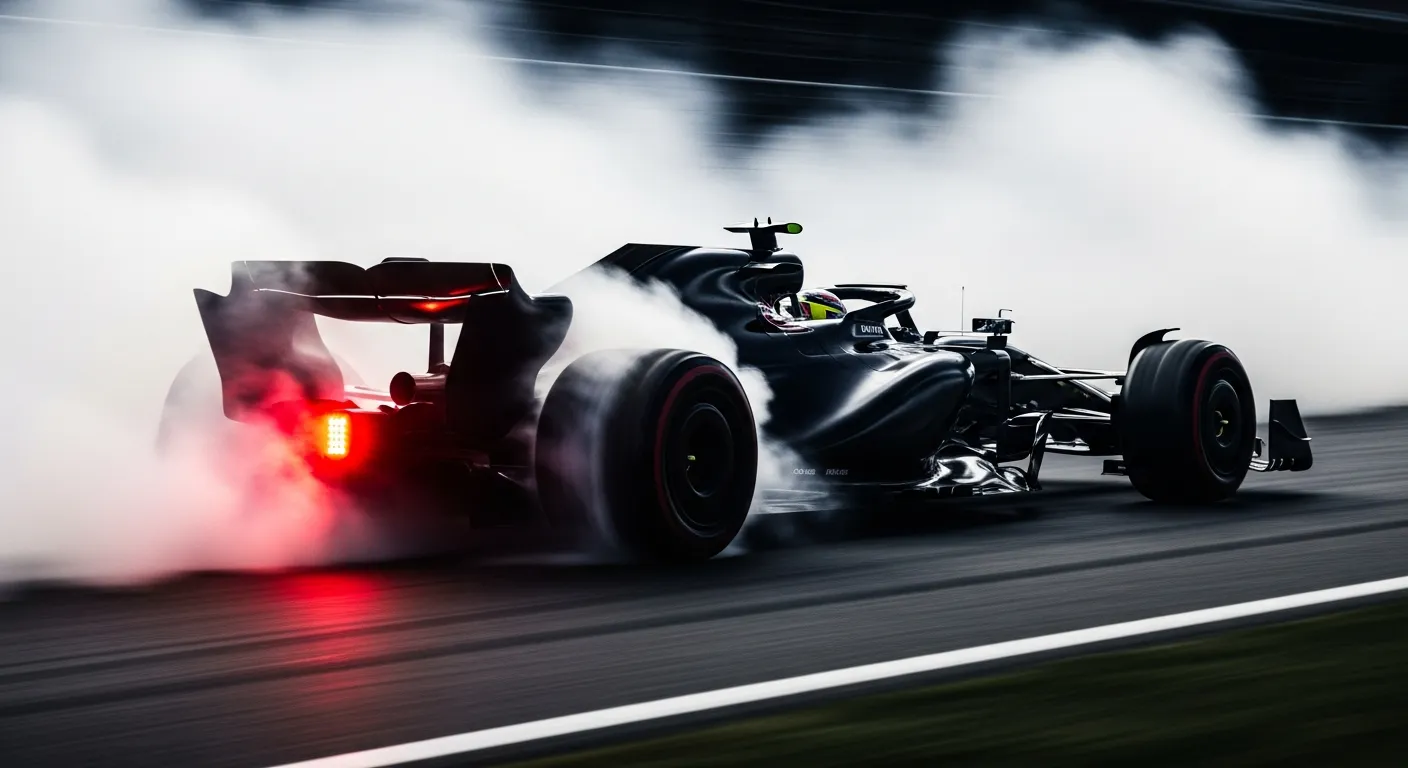
Lance Stroll's 2017 Japanese Grand Prix campaign at the challenging Suzuka Circuit concluded prematurely on lap 45 due to a wheel issue, marking a significant setback in his rookie season with Williams. Starting from P15 on the grid, Stroll had been navigating the demanding Japanese circuit, known for its high-speed sections and technical corners. Despite the eventual retirement, his performance demonstrated flashes of potential, particularly evidenced by his fastest lap of 1:34.548 on lap 37, which ranked him 9th overall among all drivers, showcasing a competitive pace within the midfield. This lap speed, achieved late in his race stint, suggests that Stroll was finding a rhythm and pushing the limits of the Williams FW40 before the mechanical issue arose. For a comprehensive understanding of Formula 1 racing and its technical aspects, the [Formula 1 — official site](https://www.formula1.com/en) offers extensive resources.
The DNF due to a 'Wheel' status meant Stroll completed 45 of the 53 race laps, an unfortunate end to a weekend where his teammate, Felipe Massa, managed to secure a points finish, crossing the line in P10 after starting P8. This contrast highlighted the fine margins and reliability challenges faced by the Williams team during the 2017 season. While Stroll's weekend at Suzuka did not yield points, his overall development as a rookie driver was a key narrative for the team. The rigorous demands of circuits like Suzuka often test the endurance of both car and driver, as detailed in various [FIA — F1 World Championship](https://www.fia.com/events/fia-formula-one-world-championship) documents on race regulations. Stroll's experience here, though cut short, contributed to his understanding of high-pressure race scenarios. His journey through the season, much like other young talents such as [Pierre Gasly at the 2026 Hungarian Grand Prix](/results/2026-hungaroring-pierre-gasly), involves continuous learning. The broader context of Formula One's evolution is well-documented on [Wikipedia: Formula One](https://en.wikipedia.org/wiki/Formula_One), providing a historical perspective. Even veteran drivers like [Fernando Alonso at the 2026 Hungarian Grand Prix](/results/2026-hungaroring-fernando-alonso) face mechanical challenges, underscoring the sport's inherent unpredictability. For future reference, detailed race statistics and historical data can be found on platforms like [Jolpica/Ergast — 2026 season data](https://api.jolpi.ca/ergast/f1/2026.json), which serves as a valuable resource for F1 enthusiasts and analysts alike. Stroll would continue to build on these experiences, as seen in his later career, including his participation in events like [Lance Stroll at the 2026 Hungarian Grand Prix](/results/2026-hungaroring-lance-stroll).
Verified race record · Ergast
Grid
P15
Finish
Suspension
Points
0
Laps
45
Constructor
Williams Grand Prix Engineering
Status
Suspension
Teammate that weekend
Felipe Massa
Grid P8 · Finish P10 · 1 pts
Championship · before vs after
Before round 16
P1232 pts
After round 16
P1232 pts