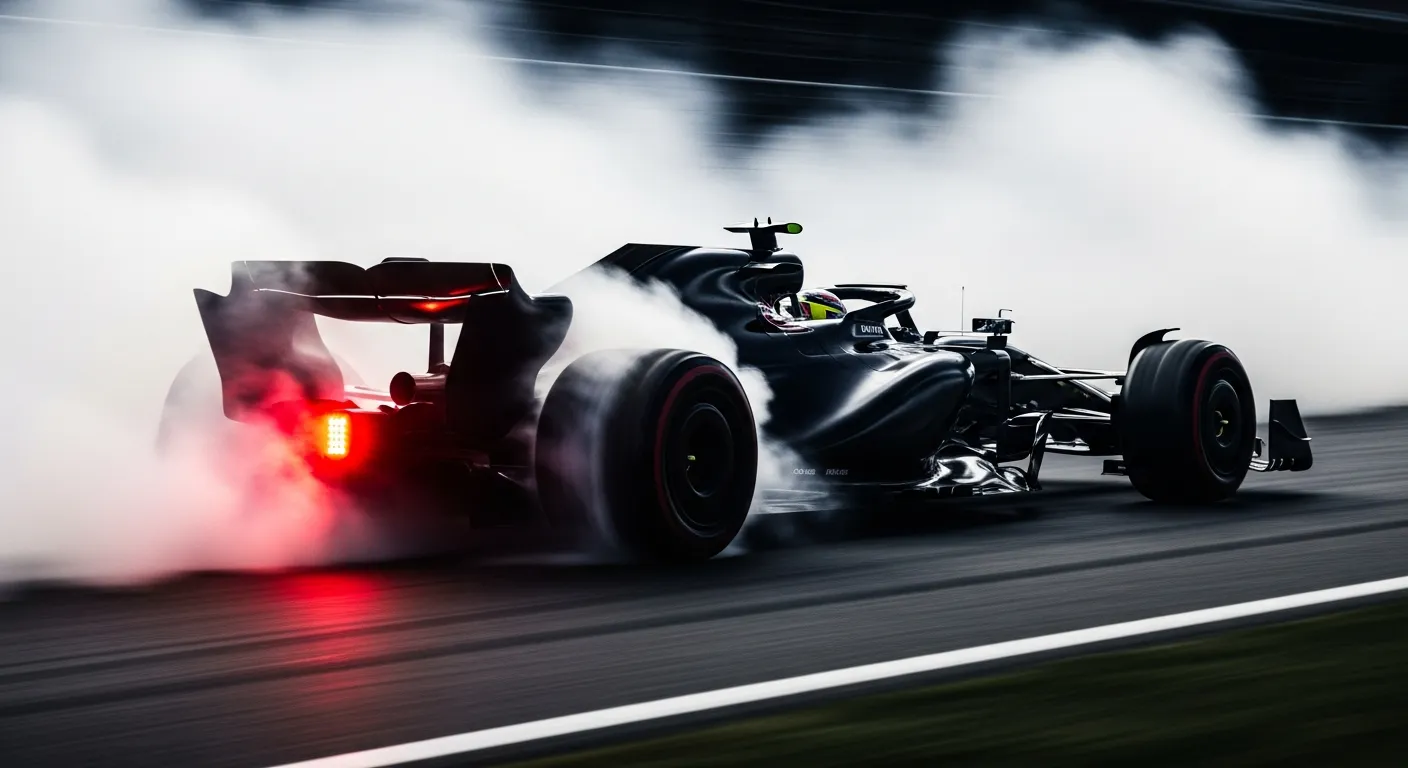
The 2017 Abu Dhabi Grand Prix concluded with an early exit for Carlos Sainz, whose Renault suffered a critical wheel issue on lap 31, forcing his retirement from the season's final race at the [Yas Marina Circuit](https://www.formula1.com/en/circuits/yas-marina-circuit.html). Starting from a challenging twelfth-place on the grid, Sainz had been actively engaged in the midfield battle, aiming to convert his qualifying performance into a valuable points finish for the French constructor. The race, held on November 26, 2017, under the unique twilight conditions of Abu Dhabi, presented a final opportunity for teams to solidify their championship standings. Sainz's efforts to push the R.S.17 were evident, particularly on lap 26, where he recorded a competitive fastest lap of "1:43.378", placing him 14th overall for that specific lap. This demonstration of pace, however, was ultimately overshadowed by the mechanical failure.
The retirement due to a "Wheel" status, after completing 31 of the scheduled 55 laps, meant that Sainz scored no points from this round, leaving his championship position unchanged. This outcome contrasted significantly with his teammate Nico Hülkenberg's strong performance, who, starting from seventh on the grid, successfully navigated the race to secure a sixth-place finish and eight points for Renault. Such disparities in race outcomes, often dictated by reliability, are a constant factor in [Formula 1 racing](https://en.wikipedia.org/wiki/Formula_One). For context on how Hülkenberg has performed in subsequent seasons, one might look at his participation, for instance, in the [Nico Hülkenberg at the 2021 Dutch Grand Prix](/results/2021-zandvoort-nico-hulkenberg). The technical challenges of the sport are rigorously documented, with comprehensive race data available through platforms like [Jolpica/Ergast](https://api.jolpi.ca/ergast/f1/2026.json), which tracks every detail of the season.
This DNF in the final race of the 2017 season was a disappointing end to what had been a transitional year for Sainz, having moved to Renault midway through the season. While the immediate consequence was zero points, the experience gained and the pace shown, even in a shortened race, contributed to his development. The [FIA — F1 World Championship](https://www.fia.com/events/fia-formula-one-world-championship) ensures that all such incidents are recorded as part of the official race results, which are also accessible on the [official Formula 1 results](https://www.formula1.com/en). Drivers like [Carlos Sainz at the 2021 Dutch Grand Prix](/results/2021-zandvoort-carlos-sainz) understand that reliability is as crucial as raw speed. The unpredictability of mechanical issues can impact any driver, even those at the front of the grid, as evidenced by incidents such as [Max Verstappen at the 2021 Italian Grand Prix](/results/2021-monza-max-verstappen), where a collision led to his retirement. Despite the setback, the 2017 Abu Dhabi Grand Prix offered further data points for Renault's engineering team to analyze for future car development, contributing to the broader narrative of the [Formula 1 official archives](https://www.formula1.com/en).
Verified race record · Ergast
Grid
P12
Finish
Wheel
Points
0
Laps
31
Constructor
Renault Sport Formula One Team
Status
Wheel
Teammate that weekend
Nico Hülkenberg
Grid P7 · Finish P6 · 8 pts
Championship · before vs after
Before round 20
P954 pts
After round 20
P954 pts