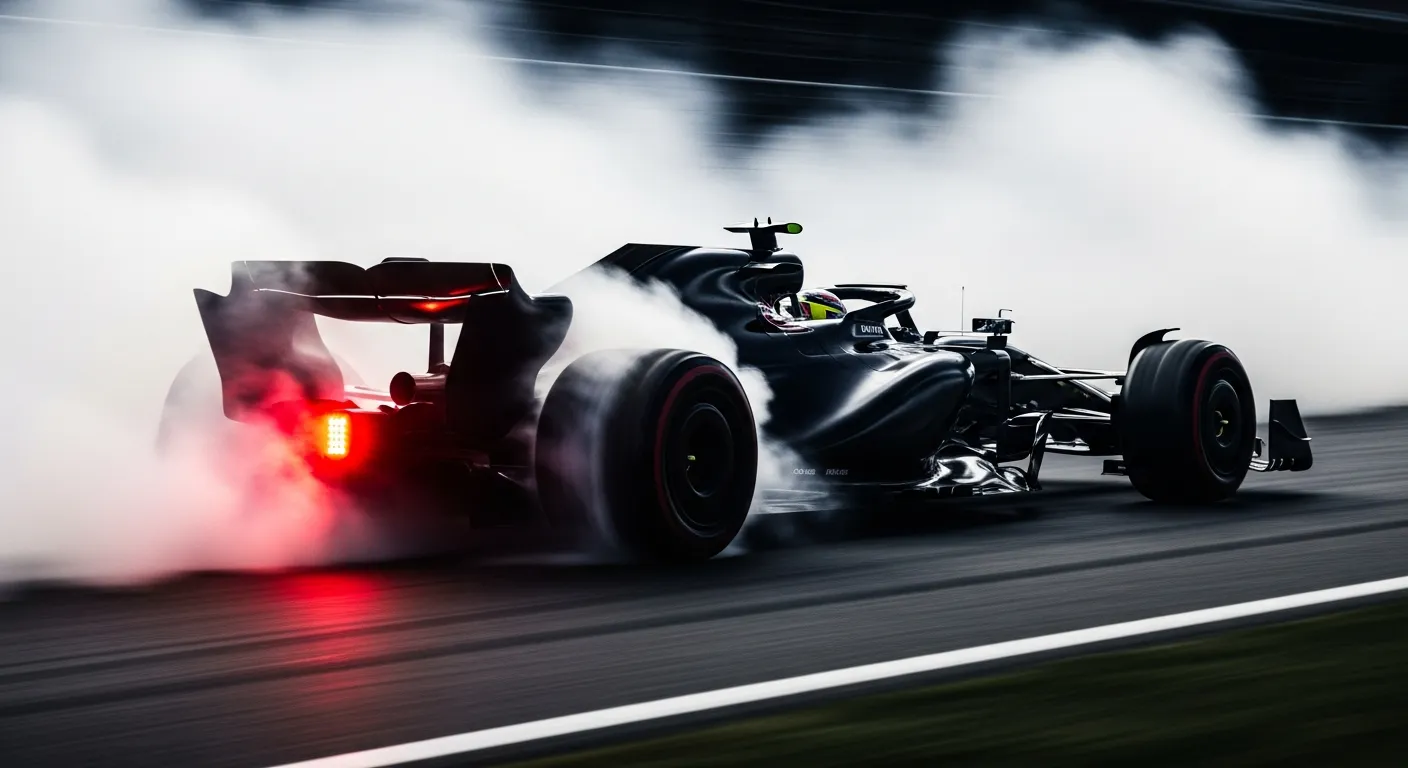
Lewis Hamilton's second-place finish at the 2017 Abu Dhabi Grand Prix solidified a dominant season for Mercedes, with Hamilton following teammate Valtteri Bottas across the line in a controlled 1-2. Starting from second on the grid, Hamilton maintained his position throughout the 55-lap race at the [Yas Marina Circuit](https://www.formula1.com/en/racing/2017/Abu_Dhabi/Circuit.html), consistently running behind his teammate. While Hamilton pushed to challenge Bottas, the Finn held a steady lead, ultimately crossing the finish line 3.899 seconds ahead. Hamilton recorded his fastest lap on lap 51 with a time of 1:41.473, ranking as the third quickest of the race, just shy of Bottas's leading 1:40.650 set on lap 52. This performance underscored the Mercedes-AMG Petronas Formula One Team's engineering prowess and driver synergy, allowing them to manage the race from the front and secure maximum points for the constructor. The strategic execution was meticulous, a hallmark of their championship campaign, contrasting with the more unpredictable outcomes seen in races like the [2023 Singapore Grand Prix](/results/2023-marina-bay-george-russell) where strategy and unexpected events played a larger role in the final standings.
This final round of the 2017 [Formula 1 World Championship](https://www.fia.com/events/fia-formula-one-world-championship) saw Hamilton add 18 points to his already secured Drivers' Championship tally. His consistent pace was evident, with Sebastian Vettel's Ferrari finishing a considerable 19.330 seconds behind Hamilton in third. The gap to the rest of the field further highlighted Mercedes' advantage at the season's close. While the championship battle was long decided, Hamilton's drive demonstrated the relentless pursuit of performance that defines a top-tier driver, even when the ultimate prize is already in hand. This race offered a clear demonstration of a team executing its plan flawlessly, a scenario that can be rare in the high-stakes environment of F1, as observed in the varied fortunes of drivers like [Fernando Alonso at the 2023 Singapore Grand Prix](/results/2023-marina-bay-fernando-alonso) or the challenges faced by [Lance Stroll at the 2023 Singapore Grand Prix](/results/2023-marina-bay-lance-stroll). For a deeper dive into historical race outcomes and driver statistics, resources like [Jolpica/Ergast's F1 data](https://api.jolpi.ca/ergast/f1/2026.json) provide comprehensive records. The 2017 Abu Dhabi Grand Prix was not just a race; it was a victory lap for a dominant team and its newly crowned four-time world champion, a testament to their season-long consistency and speed, a topic extensively covered on [Wikipedia: Formula One](https://en.wikipedia.org/wiki/Formula_One).
Verified race record · Ergast
Grid
P2
Finish
P2
Points
18
Laps
55
Constructor
Mercedes AMG F1
Status
Finished
Teammate that weekend
Valtteri Bottas
Grid P1 · Finish P1 · 25 pts
Championship · before vs after
Before round 20
P1345 pts
After round 20
P1363 pts