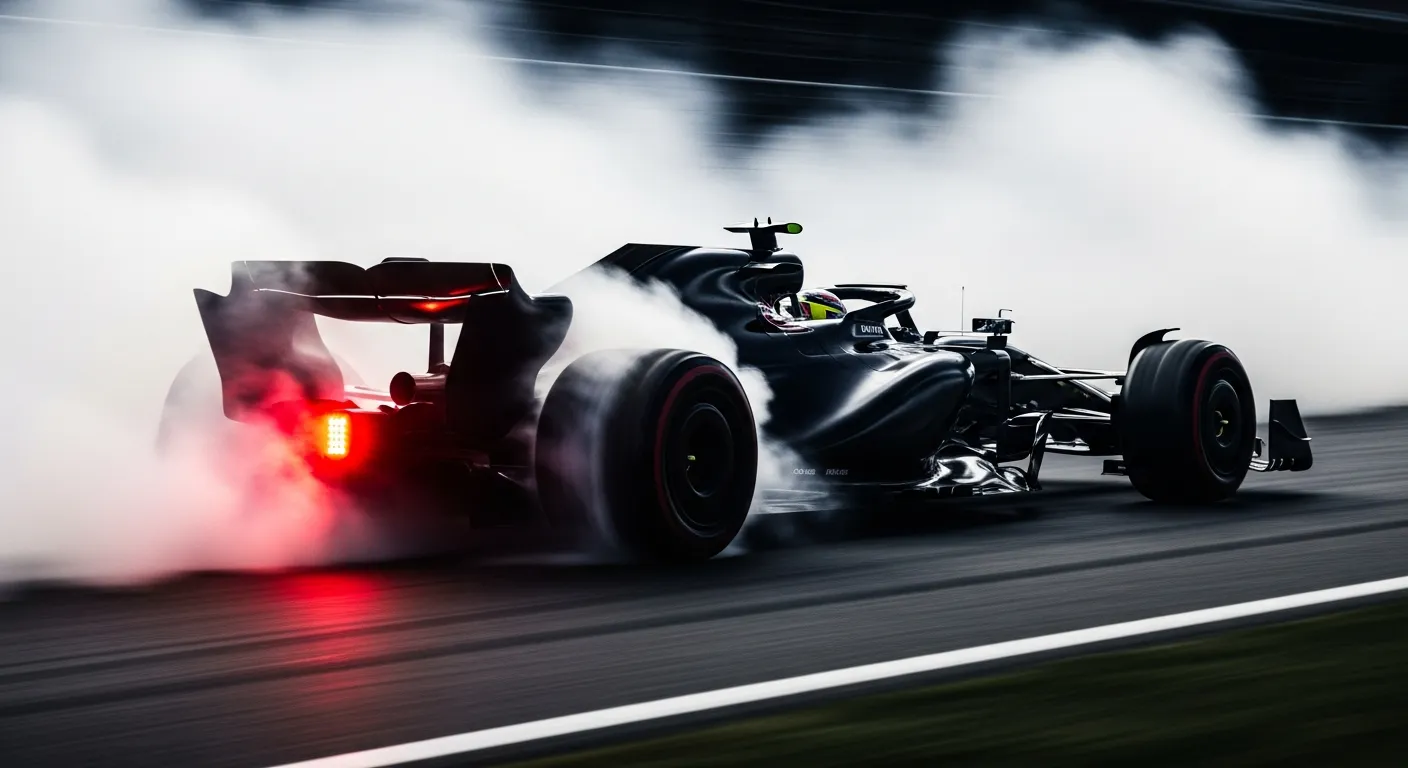
Charles Leclerc's introduction to Formula 1 at the 2018 Australian Grand Prix marked a significant moment, as the rookie Monegasque navigated the Albert Park Grand Prix Circuit to complete his first competitive F1 race. Starting from 18th on the grid, Leclerc demonstrated a composed drive in the Sauber C37, ultimately crossing the finish line in 13th position. This performance, while not yielding points, was a solid foundational effort for a driver stepping up from Formula 2. The race itself was won by Sebastian Vettel for Ferrari, highlighting the competitive landscape Leclerc was entering. His fastest lap of 1:28.759 on lap 56, ranked 15th overall, provided an early glimpse of his potential pace, even in a midfield car. For context, the fastest lap of the race was set by Daniel Ricciardo with a 1:25.945, showing the delta to the front-runners. The [Formula 1 official site](https://www.formula1.com/en) often chronicles such debut performances, offering insights into a driver's initial adaptation to the pinnacle of motorsport.
The Australian Grand Prix also presented a challenging environment for Leclerc's teammate, Marcus Ericsson, who started 17th but retired after just 5 laps due to a steering issue. Leclerc's ability to complete all 58 laps, finishing 13th with a time of +1:15.759 behind the race winner, underscored a degree of reliability and race management that is crucial for a rookie. This early season event, the first round of the 2018 [FIA Formula One World Championship](https://www.fia.com/events/fia-formula-one-world-championship), is historically a demanding opener, often catching out even experienced drivers. Leclerc's progression from 18th to 13th, overtaking several cars on track or benefiting from retirements, was a testament to his focused approach. Drivers like [Pierre Gasly at the 2022 Chinese Grand Prix](/results/2022-shanghai-pierre-gasly) also faced the complexities of managing a challenging car in their respective seasons, underscoring the universal learning curve in F1. The data from this period, available through resources like [Jolpica/Ergast](https://api.jolpi.ca/ergast/f1/2026.json), provides a granular view of these early career races. Understanding the technical regulations, as detailed on [Wikipedia: Formula One](https://en.wikipedia.org/wiki/Formula_One), helps contextualize the performance of cars like the Sauber C37. Leclerc's debut was a quiet but competent start, laying groundwork for future development, much like how [Esteban Ocon at the 2022 Chinese Grand Prix](/results/2022-shanghai-esteban-ocon) adapted to his machinery.
The Albert Park circuit, known for its semi-street characteristics, demands precision and quick adaptation, making it a formidable venue for a debut. Leclerc's drive was characterized by steady lap times, culminating in his best on lap 56. This consistent performance, especially when contrasted with his teammate's early retirement, offered a positive signal for Sauber, a team that had struggled in previous seasons. The team's development trajectory in 2018, with Leclerc at the helm, would become a point of interest throughout the year. The initial race pace, while not challenging the points positions, was competitive within the lower midfield, allowing him to finish ahead of Lance Stroll. The detailed telemetry from such races, often analyzed by teams, informs strategic decisions for subsequent rounds, as discussed in various [Formula 1 technical analyses](https://www.formula1.com/en/latest/technical.html). Learning to manage tire degradation and fuel consumption over a full race distance of 58 laps at a track like Albert Park is a fundamental skill for any rookie. Leclerc's ability to maintain a clean race, avoiding penalties or significant errors, was a key takeaway from his first outing.
In a season where the top teams like Mercedes and Ferrari were fiercely competitive, as evidenced by Sebastian Vettel's victory and Lewis Hamilton's second place, the midfield battle was equally intense. Leclerc's Sauber, equipped with a Ferrari engine, was positioned to fight for improvements. The car's performance in Melbourne, and Leclerc's handling of it, provided valuable data for the Swiss constructor. The strategic calls made during the race, including pit stop timing, are critical, and a rookie's ability to execute these under pressure is closely monitored. The overall [F1 World Championship regulations](https://www.fia.com/formula-1/regulations/sporting) dictate many aspects of race weekend operations, from qualifying to race day. Leclerc's debut was a quiet start to what would become a remarkable career trajectory, demonstrating the calm under pressure that would later define many of his drives. Much like how [Carlos Sainz at the 2022 Chinese Grand Prix](/results/2022-shanghai-carlos-sainz) navigated his own challenges, Leclerc's Australian debut was about gathering experience and building confidence.
Verified race record · Ergast
Grid
P18
Finish
P13
Points
0
Laps
58
Constructor
Sauber F1 Team
Status
Finished
Teammate that weekend
Marcus Ericsson
Grid P17 · Hydraulics · 0 pts
Championship · before vs after
Before round 1
P130 pts
After round 1
P130 pts