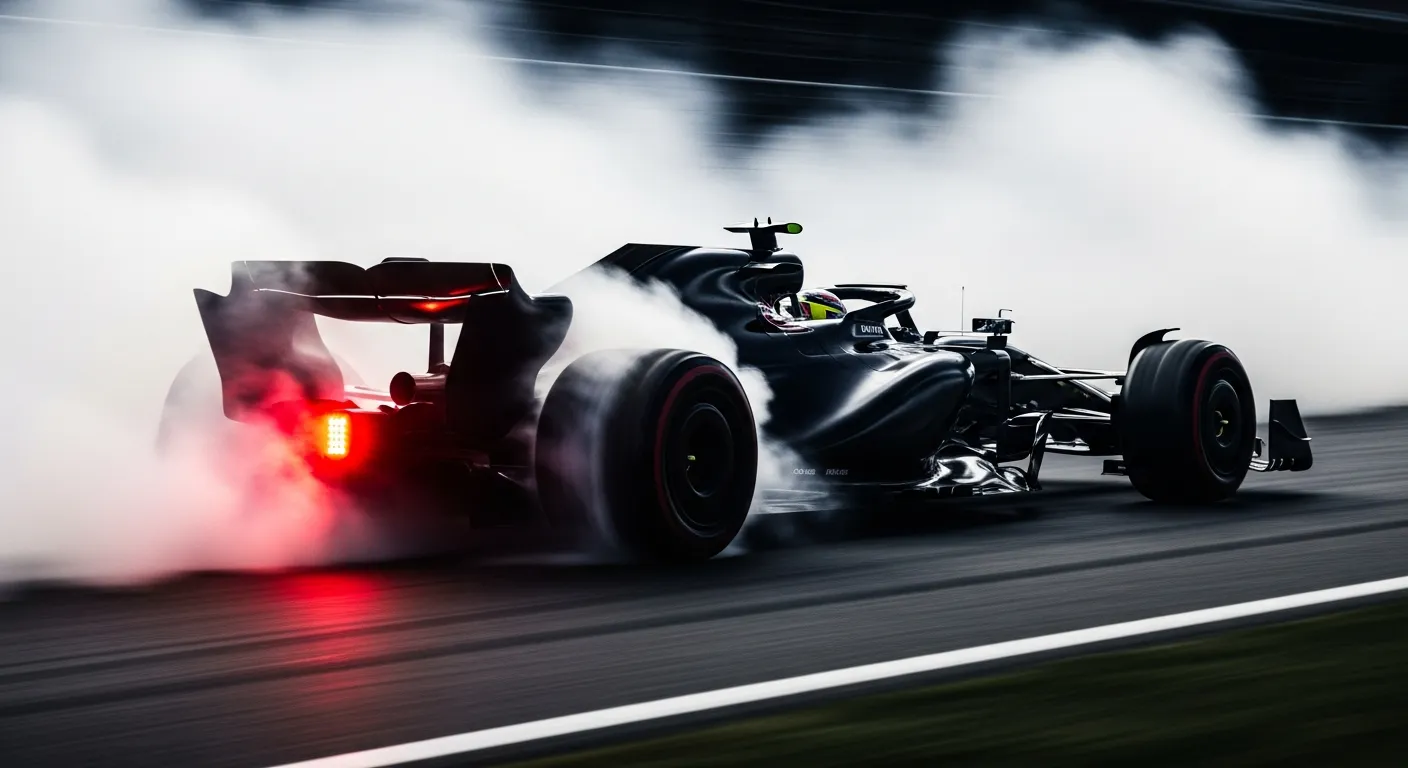
Pierre Gasly's 2018 Australian Grand Prix was a brief and challenging affair, ending prematurely due to an engine failure on his Toro Rosso STR13. Starting from the 20th position on the grid, the French driver faced an uphill battle from the outset at the Albert Park Grand Prix Circuit. His race lasted a mere 13 laps before the Honda power unit in his car succumbed to an issue, forcing him to retire and marking a disappointing start to the season for both Gasly and the Toro Rosso team. This early exit meant zero points for the Frenchman in the opening round of the [FIA Formula One World Championship](https://www.fia.com/events/fia-formula-one-world-championship).
The retirement underscored the reliability challenges that often accompany new engine partnerships in Formula 1. While Gasly recorded his fastest lap of 1:30.649 on lap 13, achieving an average speed of 210.601 kph, the subsequent engine failure prevented him from demonstrating the car's full potential over a race distance. His teammate, Brendon Hartley, managed to complete 57 laps, finishing 15th and one lap down, which provided some data for the team but highlighted the overall performance gap to the frontrunners. For a deeper dive into historical F1 race data, resources like [Jolpica/Ergast — 2026 season data](https://api.jolpi.ca/ergast/f1/2026.json) offer comprehensive records. The 2018 season marked a significant shift for Toro Rosso, as they began their partnership with Honda as their engine supplier, a move that brought both anticipation and inherent risks regarding performance and durability, a common theme in the sport's technical evolution as detailed on [Wikipedia: Formula One](https://en.wikipedia.org/wiki/Formula_One). Such mechanical failures, while frustrating, are an intrinsic part of the sport, sometimes dictating a driver's weekend outcome irrespective of their on-track performance, much like how unforeseen circumstances can impact a race weekend, as seen with [Pierre Gasly at the 2023 Emilia Romagna Grand Prix](/results/2023-imola-pierre-gasly) or [Esteban Ocon at the 2023 Emilia Romagna Grand Prix](/results/2023-imola-esteban-ocon). The incident in Melbourne served as an early indicator that the team would need to address reliability as the season progressed. The official [Formula 1 website](https://www.formula1.com/en) provides ongoing updates on team and driver performance throughout each season. These early season technical hurdles are not uncommon, and overcoming them is a critical aspect of championship contention for any team, a challenge that even seasoned drivers like [Carlos Sainz at the 2023 Emilia Romagna Grand Prix](/results/2023-imola-carlos-sainz) can face. The regulatory framework governing engine components is stringent, as outlined by the [FIA's technical regulations](https://www.fia.com/events/fia-formula-one-world-championship), emphasizing the engineering challenges faced by constructors. Further historical data on engine reliability across different seasons can be explored through various [F1 data archives](https://api.jolpi.ca/ergast/f1/2026.json).
Verified race record · Ergast
Grid
P20
Finish
Engine
Points
0
Laps
13
Constructor
Scuderia Toro Rosso
Status
Engine
Teammate that weekend
Brendon Hartley
Grid P16 · Finish P15 · 0 pts