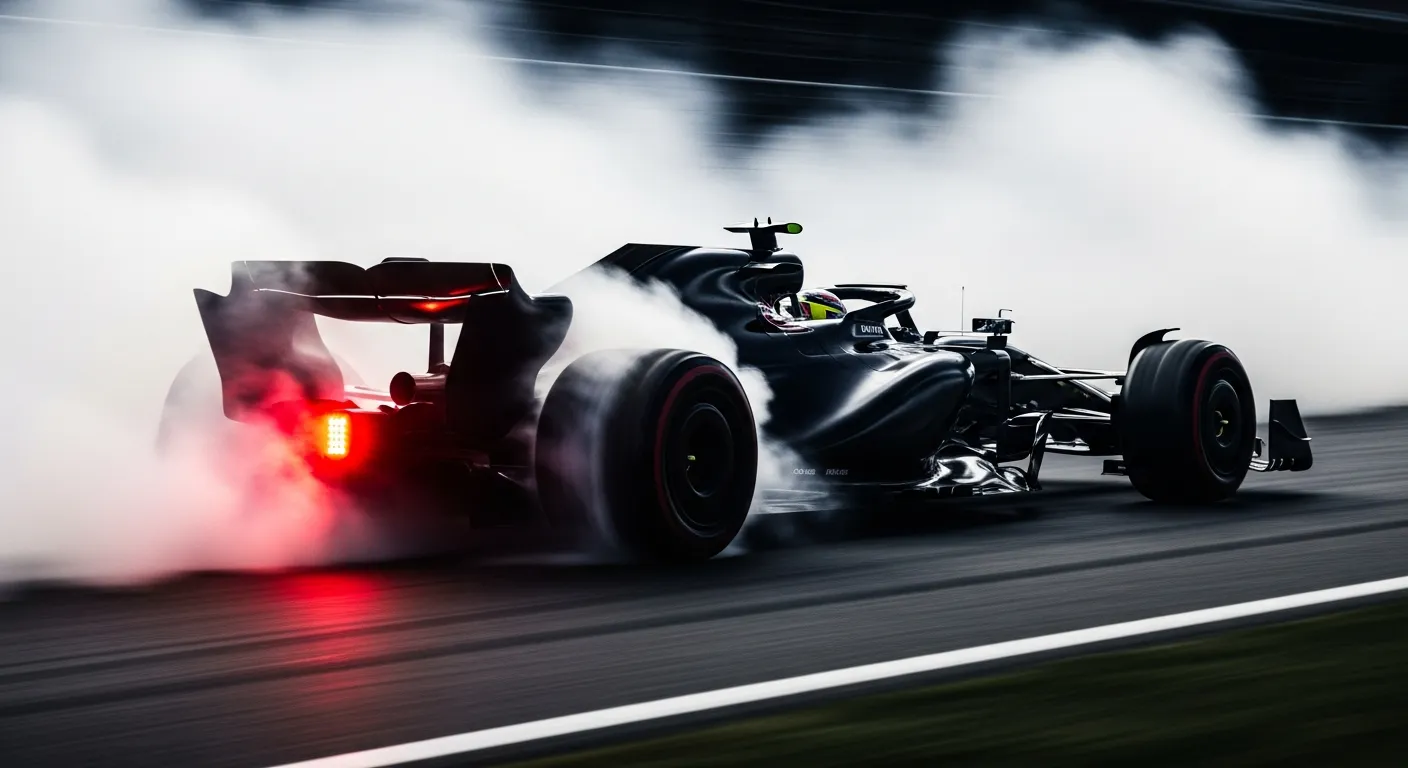
Lance Stroll's performance at the 2018 Bahrain Grand Prix on April 8th presented a clear picture of the Williams team's early season challenges. Starting from the very back of the grid in 20th position, the Canadian driver navigated the 57-lap race at the Bahrain International Circuit to finish 14th, completing 56 laps, one lap down from race winner Sebastian Vettel. This result, while an improvement from his starting slot, underscored the inherent pace deficit of the Williams FW41 chassis during the second round of the [FIA Formula One World Championship](https://www.fia.com/events/fia-formula-one-world-championship). The car struggled for outright speed and aerodynamic efficiency, making any significant charge through the field a considerable task. Stroll's fastest lap of 1:35.058, recorded on lap 40, placed him 13th in the overall fastest lap standings for the event, demonstrating a respectable individual effort within the car's limitations. This lap time, while not in contention for the very fastest, showed consistency and a push for performance late in the race. For context, his teammate, Sergey Sirotkin, finished just behind him in 15th, also one lap down, though Sirotkin notably posted a faster lap of 1:34.053, ranking 3rd overall. This disparity in fastest lap performance between the two Williams drivers hinted at varying car setups or driving approaches, a common area of team analysis in the early stages of a season, as often discussed on the [official Formula 1 site](https://www.formula1.com/en). The race unfolded with several notable incidents further up the field, including the retirements of both Red Bull drivers, Max Verstappen and Daniel Ricciardo, early in the event, and Kimi Räikkönen's pit-stop incident for Ferrari. These events, however, did not significantly alter Stroll's trajectory within the lower midfield, as the Williams car's fundamental pace kept him largely isolated from the points-scoring positions. He ran a consistent race, avoiding major incidents, which was crucial given the tight battles often seen in the middle and back of the pack. Drivers like [Esteban Ocon at the 2024 Dutch Grand Prix](/results/2024-zandvoort-esteban-ocon), who finished 10th for Force India, and [Carlos Sainz at the 2024 Dutch Grand Prix](/results/2024-zandvoort-carlos-sainz), finishing 11th for Renault, were part of the competitive group Stroll was attempting to bridge to. The broader context of Formula 1 racing, as detailed in the [2018 Bahrain Grand Prix race report](https://www.formula1.com/en/latest/article.bahrain-grand-prix-2018-race-report-vettel-holds-off-bottas-for-ferrari-win.492R3tM00cO02O0eQ0S0iY.html), often sees such midfield battles decided by fine margins. Analyzing historical race data, such as that available through [Jolpica/Ergast — F1 data](https://api.jolpi.ca/ergast/f1/2026.json), reveals the consistent challenge Williams faced in 2018. Stroll's drive saw him finish ahead of Sergio Pérez and Brendon Hartley, but behind drivers like [Nico Hülkenberg at the 2024 Dutch Grand Prix](/results/2024-zandvoort-nico-hulkenberg), who secured a strong 6th place for Renault. The Canadian's focus remained on extracting maximum performance from the package, a common theme for drivers in less competitive machinery, as explored in various [Formula One analyses on Wikipedia](https://en.wikipedia.org/wiki/Formula_One). This race set a pattern for Williams in 2018, where strong individual drives were often overshadowed by the car's overall performance limitations, a situation that requires persistent development efforts from the team, as outlined in [FIA technical regulations](https://www.fia.com/regulation/category/110).
Verified race record · Ergast
Grid
P20
Finish
P14
Points
0
Laps
56
Constructor
Williams Grand Prix Engineering
Status
+1 Lap
Teammate that weekend
Sergey Sirotkin
Grid P18 · Finish P15 · 0 pts
Championship · before vs after
Before round 2
P140 pts
After round 2
P180 pts