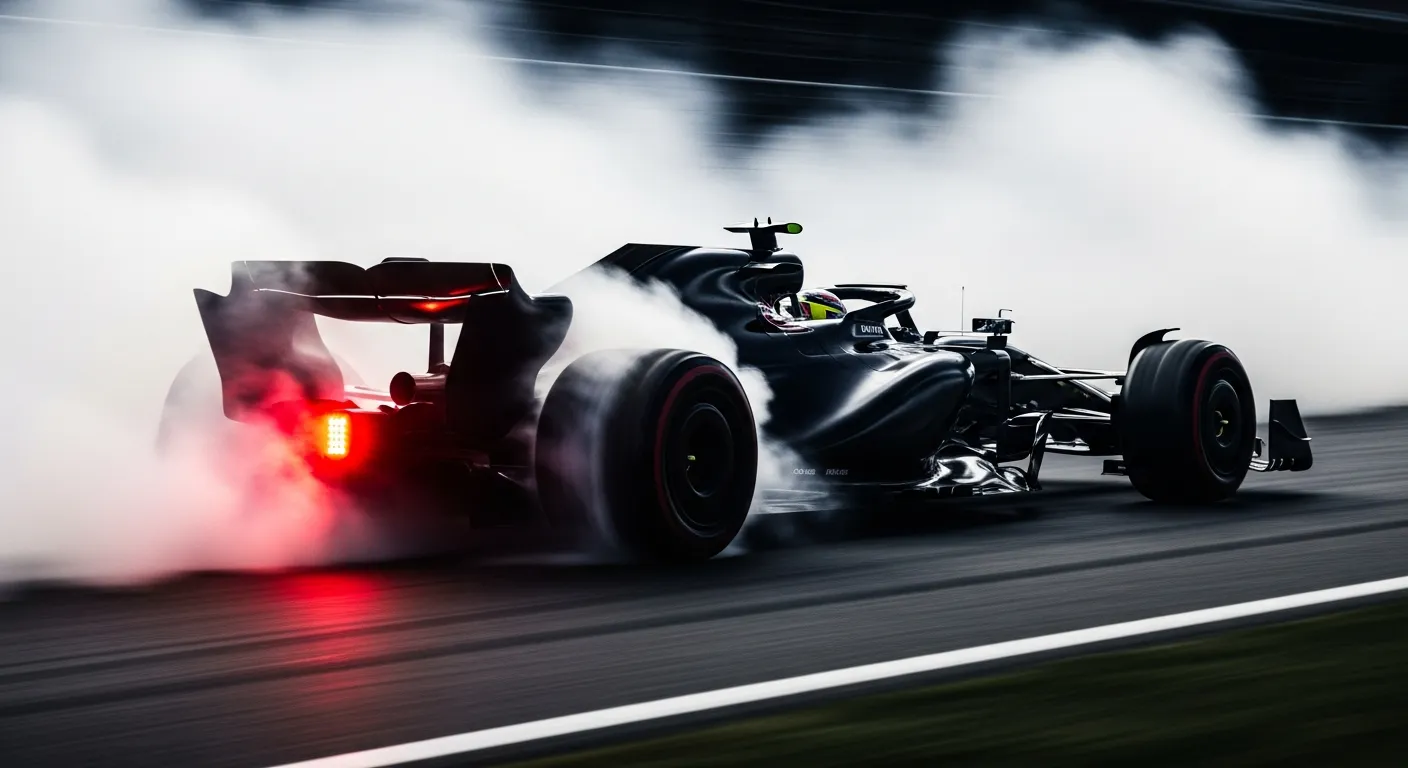
The 2018 Bahrain Grand Prix at the Bahrain International Circuit delivered a quintessential turbo-hybrid era strategic duel, where Ferrari's aggressive two-stop approach narrowly triumphed over Mercedes' one-stop gamble on a demanding Sakhir night.
Qualifying
Qualifying sessions leading up to the 2018 Bahrain Grand Prix showcased Ferrari's strong single-lap performance, with their lead driver securing pole position. This established a critical track position advantage on a circuit where overtaking, while possible, often benefits from superior initial placement. Mercedes, despite their consistent pace, found themselves slightly behind on Saturday, setting the stage for a strategic challenge on Sunday. The grid order reflected the tight competition at the front of the field, characteristic of the early races in the 2018 season. The unique challenges of a desert night race, with its varying track temperatures, often present distinct setup dilemmas, a factor also keenly observed during the 2022 Las Vegas Grand Prix where track evolution played a significant role.
Race
As the lights went out, the pole sitter maintained their advantage, navigating the opening corners cleanly. The race quickly settled into a rhythm, but the high track temperatures, even under floodlights, and the abrasive Sakhir asphalt immediately put tyre degradation at the forefront of team strategies. The lead Ferrari driver executed a strong opening stint, creating a buffer to the chasing Mercedes. However, a significant incident in the pits for the second Ferrari entry, involving a tyre change issue, unfortunately forced an early retirement, shifting the team's focus entirely to the lead car's performance. This unforeseen event underscored the high-stakes nature of pit lane operations in Formula 1, where milliseconds and precise execution are paramount. For a detailed account of the race's unfolding, Motorsport.com's 2018 Bahrain GP report offers further insights.
Strategic story
The defining narrative of the 2018 Bahrain Grand Prix was the strategic chess match between Ferrari and Mercedes. Ferrari opted for a two-stop strategy for their lead driver, aiming to maximize pace with fresher tyres throughout the race. This contrasted sharply with Mercedes' decision to commit to a single pit stop for their chasing driver, banking on their car's ability to manage tyre wear over a longer stint. The final laps became a masterclass in defensive driving and tyre preservation by the Ferrari driver, who, despite having significantly older tyres, managed to hold off the rapidly closing Mercedes on fresher rubber. This delicate balance between raw pace and strategic foresight is what often separates victory from second place in modern F1, a theme also seen in races like the 2022 São Paulo Grand Prix where tyre strategy played a pivotal role. Such strategic calls are meticulously calculated using vast amounts of race data and simulations, constantly adapting to real-time track conditions and competitor movements. Understanding these complex variables is part of what makes Formula 1 racing a pinnacle of motorsport engineering and strategy, often influenced by the FIA's technical regulations.
Championship impact
The victory provided an early season boost for Ferrari and their lead driver, establishing a strong points advantage in the Drivers' Championship. For Mercedes, while a second-place finish was valuable, the missed opportunity for victory highlighted areas for strategic refinement. This result set the tone for an intense championship battle, demonstrating that both teams possessed the capability to win, often determined by the finest margins of execution and strategy, a competitive dynamic that continued throughout the season, much like the tight battles witnessed in the 2023 Australian Grand Prix.
Full classified results
Every driver's verified grid-to-flag result from the 2018 Bahrain Grand Prix — grid, finish, points, teammate H2H, and championship swing.
- P1Sebastian VettelFerrari25 pts
- P2Valtteri BottasMercedes18 pts
- P3Lewis HamiltonMercedes15 pts
- P4Pierre GaslyToro Rosso12 pts
- P6Nico HülkenbergRenault8 pts
- P7Fernando AlonsoMcLaren6 pts
- P10Esteban OconForce India1 pts
- P11Carlos SainzRenault0 pts
- P12Charles LeclercSauber0 pts
- P14Lance StrollWilliams0 pts
- P16Sergio PérezForce India0 pts
- —Kimi RäikkönenFerrariWheel
- —Max VerstappenRed BullPuncture
- —Daniel RicciardoRed BullElectrical