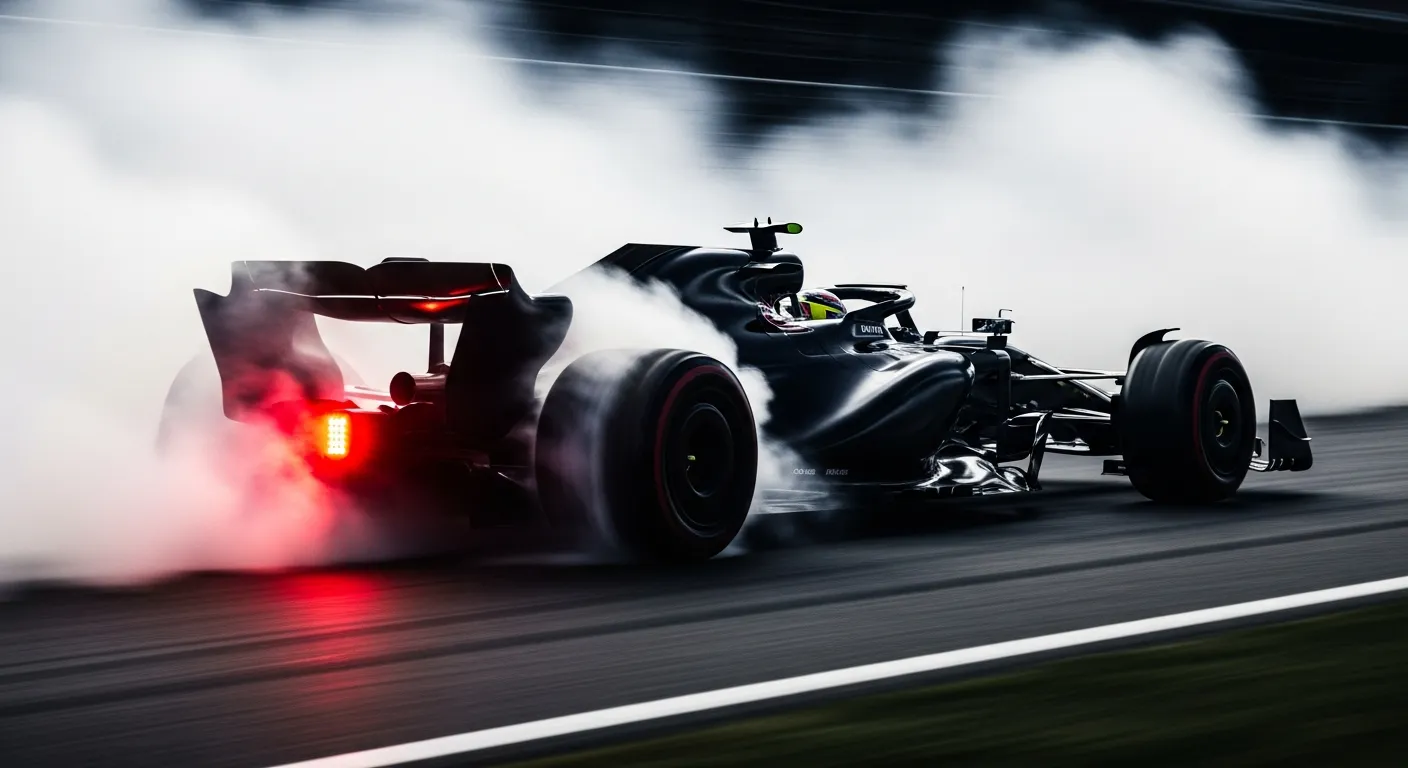
Nico Hülkenberg's performance at the 2018 Bahrain Grand Prix, held on April 8, 2018, at the Bahrain International Circuit, was a demonstration of consistent racecraft and strategic execution for the Renault team. Starting from seventh on the grid, Hülkenberg meticulously managed his race, navigating the challenging desert conditions over 57 laps. His ability to maintain a strong position throughout the event, ultimately converting his qualifying effort into a higher finishing spot, underscored the progress Renault was making with their R.S.18 chassis and power unit package. While the race was dominated by a tight battle at the front, with Sebastian Vettel taking the win for Ferrari, Hülkenberg's drive was notable for its reliability and measured aggression within the midfield pack. He recorded his fastest lap on lap 50, a 1:34.667, which placed him ninth among all competitors for that metric, indicating a strong late-race pace on his chosen tire strategy. This contrasted with the misfortunes of others, including the Red Bull drivers, Max Verstappen and Daniel Ricciardo, who retired early due to a puncture and an electrical issue, respectively. Such incidents are a stark reminder of the technical demands and fine margins in [Formula 1 — official site](https://www.formula1.com/en) racing, where reliability is as crucial as raw speed.
Hülkenberg concluded the Bahrain Grand Prix in a solid sixth position, securing a valuable 8 points for Renault. He completed the full race distance, finishing all 57 laps with a total time of +1:39.024 behind the race winner. This result was particularly significant as he outpaced several competitors, including Fernando Alonso, who finished a lap down in seventh for McLaren, and Esteban Ocon, who finished tenth for Force India. His teammate, Carlos Sainz, who started three positions behind Hülkenberg in tenth, finished in eleventh, also a lap down. This differential performance within the same constructor highlighted Hülkenberg's strong weekend and his ability to maximize the car's potential. The points earned were crucial for Renault in their pursuit of a stronger standing in the constructors' championship, demonstrating the efficacy of their development path. Understanding the intricate rules governing points allocation can be found on the [FIA — F1 World Championship](https://www.fia.com/events/fia-formula-one-world-championship) website. Hülkenberg’s ability to extract maximum performance from the car, even in races where top-tier teams like Mercedes and Ferrari were dominant, set a benchmark for the midfield. This type of consistent points-scoring drive is a hallmark of experienced drivers, much like the efforts seen from [Carlos Sainz at the 2025 Azerbaijan Grand Prix](/results/2025-baku-carlos-sainz) in a different era. For a deeper dive into historical race outcomes and driver statistics, resources like [Jolpica/Ergast — 2026 season data](https://api.jolpi.ca/ergast/f1/2026.json) provide comprehensive data. The continuous evolution of F1, detailed on [Wikipedia: Formula One](https://en.wikipedia.org/wiki/Formula_One), means that each season presents unique challenges, and Hülkenberg's 2018 Bahrain performance was a solid example of adapting to those demands, contrasting with the challenging race faced by [Alexander Albon at the 2025 Azerbaijan Grand Prix](/results/2025-baku-alex-albon) in a different context.
Verified race record · Ergast
Grid
P7
Finish
P6
Points
8
Laps
57
Constructor
Renault Sport Formula One Team
Status
Finished
Teammate that weekend
Carlos Sainz Jr.
Grid P10 · Finish P11 · 0 pts
Championship · before vs after
Before round 2
P76 pts
After round 2
P614 pts