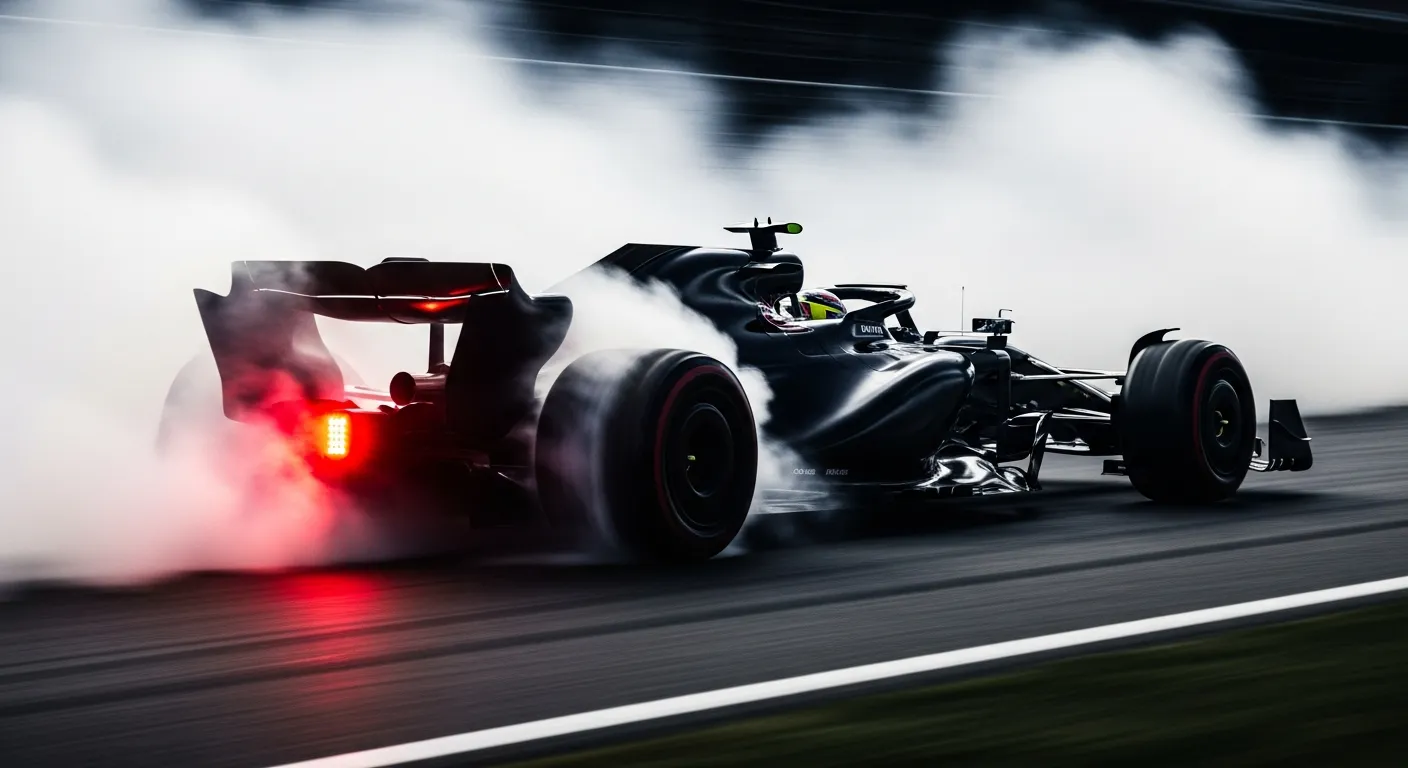
Max Verstappen's 2018 Monaco Grand Prix was a masterclass in recovery, transforming a challenging P20 grid start into a points-scoring P9 finish, underscored by the race's fastest lap. The weekend began with significant adversity for the Red Bull driver. A crash during Saturday's Free Practice 3 session meant the team was unable to repair his car in time for qualifying, relegating him to the very back of the grid for Sunday's main event. On a circuit notoriously difficult for overtaking, the prospect of climbing through the field from the final position seemed a formidable task. Yet, Verstappen demonstrated exceptional car control and strategic patience throughout the 78 laps around the [Circuit de Monaco](https://en.wikipedia.org/wiki/Formula_One) street course, a venue known for its unforgiving nature.
His ascent was methodical, steadily gaining positions as the race unfolded. While his teammate Daniel Ricciardo secured a dominant victory from pole, Verstappen's drive was arguably just as compelling from a pure performance perspective. On lap 60, he recorded the fastest lap of the race, a 1:14.260, showcasing the raw pace of the [Red Bull](https://www.formula1.com/en) RB14 and his own driving prowess. This performance, finishing just +25.317 seconds behind the leader, allowed him to secure 2 crucial points, a testament to his ability to extract maximum performance even under pressure. Such a comeback drive often draws comparisons to other notable performances from the back, perhaps even a future scenario like [Charles Leclerc at the 2026 Singapore Grand Prix](/results/2026-marina-bay-charles-leclerc) if he were to face similar qualifying misfortune. The comprehensive [F1 World Championship data](https://www.fia.com/events/fia-formula-one-world-championship) from the [FIA](https://www.fia.com/events/fia-formula-one-world-championship) underscores the rarity of such a significant climb on the Monte Carlo streets. His ability to manage tyres and execute overtakes, albeit few, was critical. It was a drive that highlighted the strategic depth required in [Formula 1](https://www.formula1.com/en), echoing the calculated approaches seen from seasoned drivers like [Lewis Hamilton at the 2026 Singapore Grand Prix](/results/2026-marina-bay-lewis-hamilton) in complex race scenarios. The detailed [Jolpica/Ergast data for F1 seasons](https://api.jolpi.ca/ergast/f1/2026.json) provides a comprehensive look at how drivers navigate such challenges. Ultimately, this race served as a clear demonstration of Verstappen's underlying speed, even when a qualifying error dictated a recovery mission rather than a front-running battle, a trait we might see from emerging talents like [Oscar Piastri at the 2026 Singapore Grand Prix](/results/2026-marina-bay-oscar-piastri) under similar pressure.
Verified race record · Ergast
Grid
P20
Finish
P9
Points
2
Laps
78
Constructor
Red Bull Racing
Status
Finished
Teammate that weekend
Daniel Ricciardo
Grid P1 · Finish P1 · 25 pts
Championship · before vs after
Before round 6
P633 pts
After round 6
P635 pts