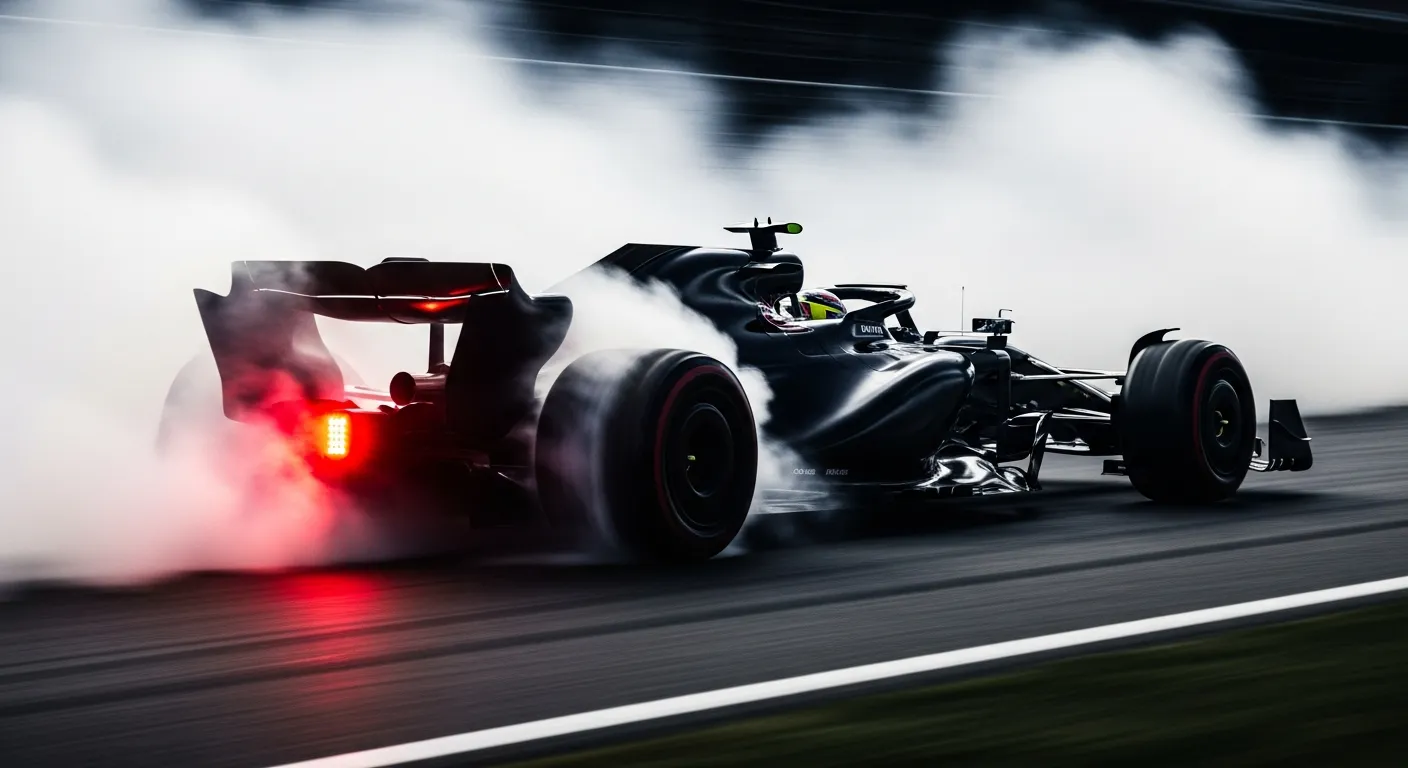
The 2018 Monaco Grand Prix was a masterclass in car management and precision driving, where Daniel Ricciardo navigated the narrow streets of Monte Carlo to claim a memorable victory despite critical technical challenges.
Qualifying
Qualifying at Monaco is often considered half the race, and the 2018 session reinforced this adage. Daniel Ricciardo demonstrated exceptional pace in his Red Bull, securing pole position with a lap that showcased the RB14's formidable chassis capabilities around the tight, twisty circuit. His performance set the stage for a dominant weekend, placing him in the optimal starting position where overtaking is notoriously difficult. The grid behind him reflected the competitive nature of the turbo-hybrid era, with Ferrari and Mercedes drivers lining up to challenge, knowing that track position would be paramount.
Race
The start of the race was clean, with Ricciardo converting his pole position into an early lead. The initial laps saw the field settle into a rhythm characteristic of Monaco, where drivers focus on managing tires and maintaining a gap rather than aggressive overtaking. However, the narrative for Ricciardo dramatically shifted early on when his Red Bull suffered an MGU-K failure. This left him with a significant power deficit, particularly noticeable on the straights and out of slow corners. For the majority of the race, he was forced to adapt his driving style, manage temperatures, and defend against Sebastian Vettel, who was running in second. The unique demands of the Circuit de Monaco, where high-speed sections are minimal and aero efficiency is key, allowed Ricciardo to mitigate the impact of his power unit issue more effectively than on a conventional circuit, such as the high-speed challenges seen at the 2022 Italian Grand Prix.
Strategic story
The strategic dimension of the 2018 Monaco Grand Prix revolved almost entirely around Ricciardo's MGU-K problem. Red Bull's pit wall and Ricciardo himself executed a remarkable damage limitation exercise. The team communicated critical information, allowing Ricciardo to adjust brake bias and lift-and-coast extensively to manage temperatures and preserve the ailing power unit. This defensive strategy was a high-wire act, requiring absolute precision to keep Vettel at bay without making a mistake on the unforgiving streets. The pit stop window was managed effectively, ensuring Ricciardo maintained track position. The race underscored how crucial real-time data analysis and driver feedback are in Formula 1, especially when facing unexpected technical hurdles. For a deeper dive into F1 technical regulations, the FIA — F1 World Championship provides comprehensive information.
Championship impact
The outcome of the 2018 Monaco Grand Prix had notable implications for the Drivers' and Constructors' Championships. While Ricciardo's victory was a personal triumph, the points gained by Sebastian Vettel and Lewis Hamilton meant the championship battle remained incredibly tight. Ferrari and Mercedes continued to trade blows, with Red Bull demonstrating their capability to win on specific circuit types. This result highlighted the intense three-way fight for supremacy that defined much of the 2018 season, a dynamic that often led to unpredictable races, much like the strategic battles witnessed at the 2022 British Grand Prix. For official race results and standings, the Formula 1 — official site is the definitive source. Understanding the broader context of Formula 1's history and evolution is also key, as detailed on Wikipedia: Formula One. Data from past seasons, like the Jolpica/Ergast — 2026 season data, helps analysts track trends, though this link points to future data, illustrating the ongoing nature of data collection in the sport. The challenges faced by Ricciardo were extensively covered by motorsport media; for instance, a detailed report on his MGU-K issue can be found on Motorsport.com's 2018 Monaco GP coverage. Such events are a constant reminder of the fine margins in F1, a theme that also played out at the 2022 Hungarian Grand Prix with its unique strategic demands. This race was a testament to driver skill under pressure, a common thread throughout the F1 calendar.
Full classified results
Every driver's verified grid-to-flag result from the 2018 Monaco Grand Prix — grid, finish, points, teammate H2H, and championship swing.
- P1Daniel RicciardoRed Bull25 pts
- P2Sebastian VettelFerrari18 pts
- P3Lewis HamiltonMercedes15 pts
- P4Kimi RäikkönenFerrari12 pts
- P5Valtteri BottasMercedes10 pts
- P6Esteban OconForce India8 pts
- P7Pierre GaslyToro Rosso6 pts
- P8Nico HülkenbergRenault4 pts
- P9Max VerstappenRed Bull2 pts
- P10Carlos SainzRenault1 pts
- P12Sergio PérezForce India0 pts
- P17Lance StrollWilliams0 pts
- —Charles LeclercSauberCollision
- —Fernando AlonsoMcLarenGearbox