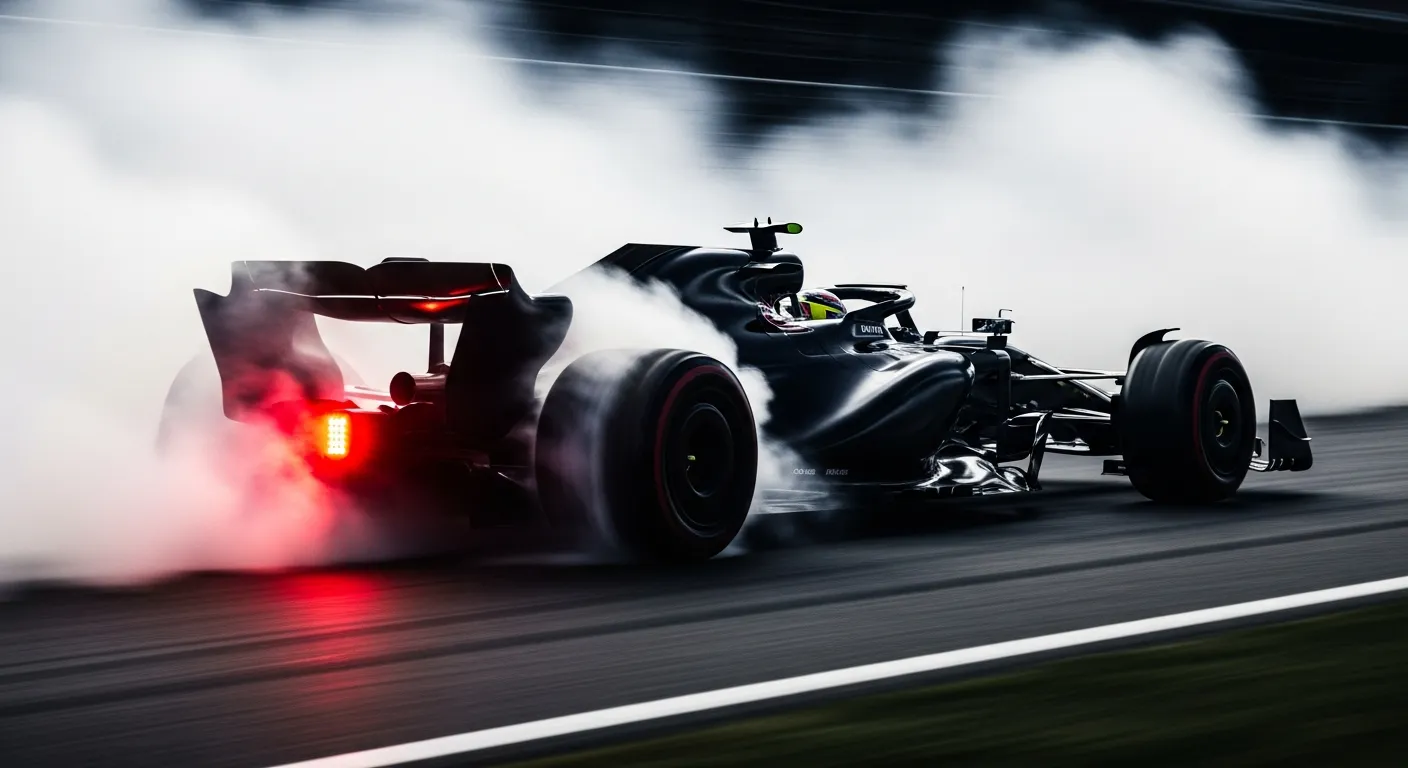
Lewis Hamilton's performance at the 2018 Japanese Grand Prix was a masterclass in controlled race management, converting his pole position into a crucial victory that significantly bolstered his championship aspirations. Hamilton started from the front of the grid, a position he leveraged effectively throughout the 53-lap race at the challenging Suzuka Circuit. His Mercedes W09 demonstrated strong pace from the outset, allowing him to establish a comfortable lead. The race on October 7, 2018, saw Hamilton maintain a consistent rhythm, navigating the early stages without significant challenge, despite a safety car period.
His start was clean, immediately establishing control over the field. His teammate, Valtteri Bottas, started from second, ensuring a Mercedes front-row lockout that paid dividends. The early laps saw some midfield skirmishes, but Hamilton remained largely untroubled at the front. The Mercedes team's strategy was executed flawlessly, allowing Hamilton to manage his tires and pace effectively across the 53 laps. His fastest lap, a 1:32.785 on Lap 51, ranked second overall, demonstrating his ability to extract performance even in the closing stages, ensuring no late-race challenges could materialize. This consistent performance underscores the precision required to win at a circuit like Suzuka, known for its high-speed corners and technical demands, as detailed on the [Formula 1 — official site](https://www.formula1.com/en).
The race was not without incident for others, with Charles Leclerc retiring due to "Mechanical" issues on lap 38 and Kevin Magnussen out on lap 8 due to "Collision damage." These events further solidified Hamilton's position as he maintained a clear lead over the chasing pack. The strategic calls from the Mercedes pit wall were key, allowing Hamilton to extend his lead over Bottas, who finished 12.919 seconds behind. This team performance showcased Mercedes' operational strength in the 2018 season, a period often analyzed in comprehensive F1 data archives like [Jolpica/Ergast — 2026 season data](https://api.jolpi.ca/ergast/f1/2026.json).
Hamilton's drive was a testament to his ability to blend raw speed with strategic intelligence. While not securing the fastest lap of the race (that went to Sebastian Vettel on Lap 53 with a 1:32.318), Hamilton's consistent pace and control from pole position meant he never truly looked vulnerable. This kind of dominant performance is a hallmark of champions, often discussed in broader contexts of [Wikipedia: Formula One](https://en.wikipedia.org/wiki/Formula_One) history. The result was a significant step in his championship campaign, accumulating 25 points. His methodical approach to the race, managing the gap to his teammate and the Red Bulls, particularly Max Verstappen in third, demonstrated why he was the championship leader. Such a controlled victory contrasts with the challenges faced by drivers further down the grid, like [Lance Stroll at the 2019 British Grand Prix](/results/2019-silverstone-lance-stroll) who had a more eventful race, or the strategic battles seen with [Pierre Gasly at the 2019 British Grand Prix](/results/2019-silverstone-pierre-gasly). The FIA's role in regulating these events ensures fair competition across all teams, as outlined by the [FIA — F1 World Championship](https://www.fia.com/events/fia-formula-one-world-championship).
His ability to navigate the complexities of Suzuka, from the Esses to Spoon Curve, while maintaining a competitive edge, was evident. The Mercedes W09 proved to be a formidable package, allowing Hamilton to dictate terms. This era of Mercedes dominance, often spearheaded by Hamilton, set a high bar for engineering and driving, influencing future car designs and race strategies. Drivers continually push the limits of their machinery under the [FIA technical regulations](https://www.fia.com/fia-formula-1-world-championship-regulations), a constant evolution in the sport. The race concluded with Hamilton crossing the line after 53 laps in 1:27:17.062, a clear demonstration of his command over the field. His consistent lap times, including his second-ranked fastest lap on lap 51, were pivotal. This sustained performance, even as others like [George Russell at the 2019 British Grand Prix](/results/2019-silverstone-george-russell) faced different circumstances in their respective races, highlights the relentless pursuit of perfection required at the pinnacle of motorsport. For more details on the season's events, the [Formula 1 — official site](https://www.formula1.com/en) offers comprehensive archives.
Verified race record · Ergast
Grid
P1
Finish
P1
Points
25
Laps
53
Constructor
Mercedes AMG F1
Status
Finished
Teammate that weekend
Valtteri Bottas
Grid P2 · Finish P2 · 18 pts
Championship · before vs after
Before round 17
P1306 pts
After round 17
P1331 pts