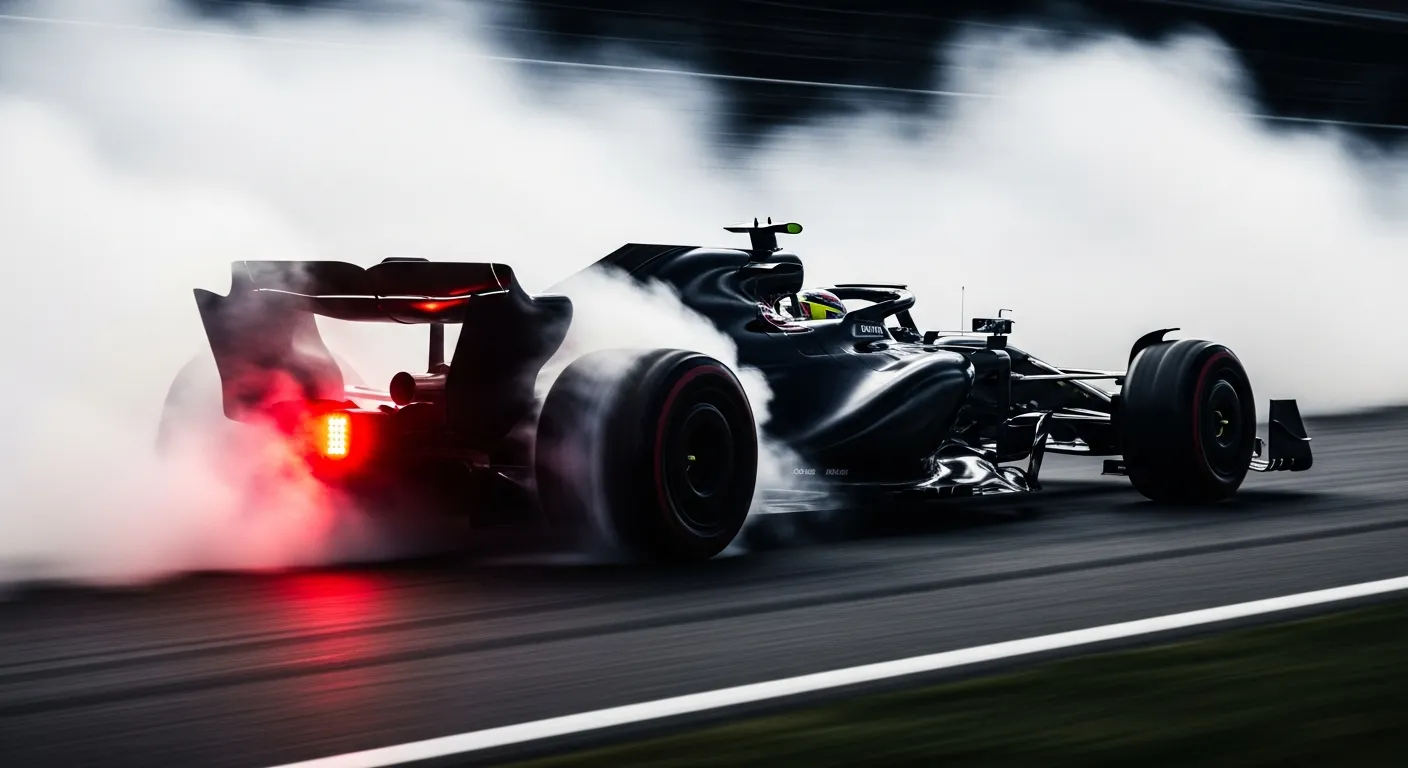
Charles Leclerc's 2019 Monaco Grand Prix was a race defined by an early exit due to a puncture, an unfortunate turn of events for the Monégasque driver on his home circuit. Starting from a compromised grid position of 15, the Scuderia Ferrari driver aimed to recover ground on the notoriously challenging Circuit de Monaco. His initial laps demonstrated an aggressive approach, attempting to make up positions swiftly. This strategy, however, led to an incident on lap 9 with Nico Hülkenberg, resulting in the puncture that ultimately ended his race. Leclerc was forced to retire after completing only 16 laps, recording a fastest lap time of 1:19.151 on lap 6, which ranked 20th overall for the event. This outcome meant zero points for Leclerc, a stark contrast to his teammate Sebastian Vettel, who finished 2nd and secured 18 points for Scuderia Ferrari.
The early retirement at his home race underscored the fine margins and high stakes inherent in Formula 1, especially on a street circuit where overtaking is difficult and errors are heavily penalized. The incident highlighted the strategic pressures placed on drivers starting further down the grid at Monaco, often necessitating bold moves to gain track position. For a deeper understanding of the sport's regulations, the official [FIA — F1 World Championship](https://www.fia.com/events/fia-formula-one-world-championship) site provides comprehensive details on the governing body's role. Leclerc's performance in the preceding qualifying sessions had already set a challenging stage for the race, a situation that can often dictate a driver's approach on race day. The 2019 season saw other drivers, such as [Pierre Gasly at the 2026 Japanese Grand Prix](/results/2026-suzuka-pierre-gasly), navigate complex race scenarios, though perhaps not with the same immediate consequence. The data from the 2019 Monaco Grand Prix, available through sources like [Jolpica/Ergast — 2026 season data](https://api.jolpi.ca/ergast/f1/2026.json), clearly shows the impact of such early retirements on a driver's race outcome. This event serves as a reminder of the unpredictable nature of motorsport, where even a momentary lapse can lead to significant setbacks, a common theme across various F1 seasons and circuits, as seen with [Lance Stroll at the 2026 Japanese Grand Prix](/results/2026-suzuka-lance-stroll). The broader context of Formula One racing, its history, and technical evolution can be explored on [Wikipedia: Formula One](https://en.wikipedia.org/wiki/Formula_One). Despite the setback, Leclerc's raw pace was evident in moments, even if fleeting, before the puncture altered his trajectory. Analyzing race incidents is a critical aspect of understanding driver performance and team strategy, as detailed on the [Formula 1 — official site](https://www.formula1.com/en) for race reports. The Monaco Grand Prix, with its tight corners and minimal run-off areas, often produces such dramatic moments, influencing championship standings and individual driver narratives. Even experienced drivers, like [Fernando Alonso at the 2026 Japanese Grand Prix](/results/2026-suzuka-fernando-alonso), have faced similar challenges on demanding circuits. The technical aspects of tire performance and degradation are crucial in F1, and a puncture can be a race-ending event, as was the case here. Further insights into F1 race dynamics and results can be found on the [Formula 1 official website](https://www.formula1.com/en), providing detailed statistics and news. The incident was a significant point of discussion post-race, reflecting on the balance between aggressive driving and risk management in a high-stakes environment. Additionally, the [official Formula 1 website](https://www.formula1.com/en) offers comprehensive driver profiles and historical data.
Verified race record · Ergast
Grid
P15
Finish
Puncture
Points
0
Laps
16
Constructor
Scuderia Ferrari
Status
Puncture
Teammate that weekend
Sebastian Vettel
Grid P4 · Finish P2 · 18 pts
Championship · before vs after
Before round 6
P557 pts
After round 6
P557 pts