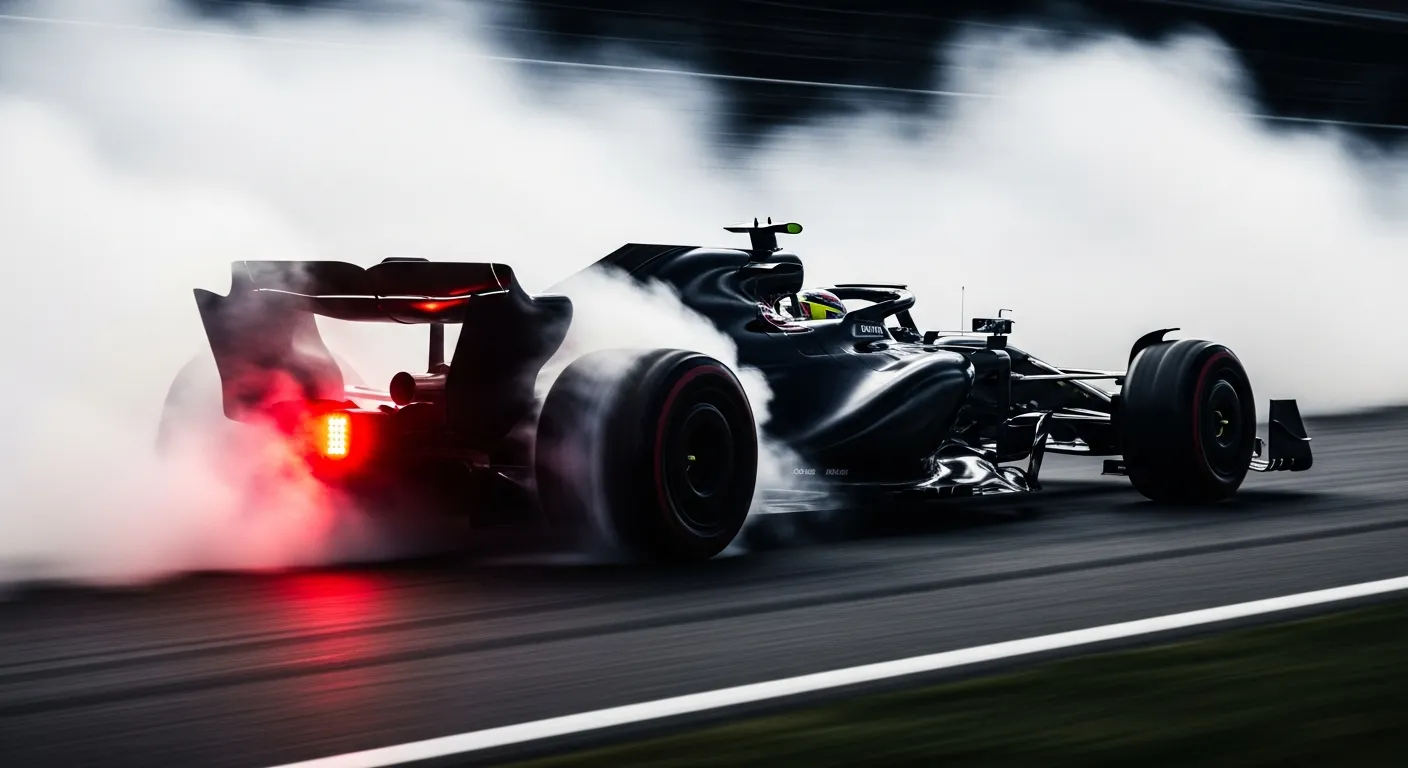
Nico Hülkenberg's 2019 Chinese Grand Prix at the Shanghai International Circuit was a brief and ultimately frustrating affair, culminating in a power unit retirement that cut short his race on lap 16. Starting from eighth on the grid, the German driver for Renault Sport Formula One Team had positioned himself well to contend for points in the early stages of the event, which marked the 1000th Grand Prix in [Formula 1 history](https://en.wikipedia.org/wiki/Formula_One). His qualifying performance had placed him ahead of several direct midfield competitors, indicating potential for a strong points finish, a crucial aspect for a team like Renault aiming to solidify its position in the constructors' championship.
However, the promise of a competitive outing quickly faded. Hülkenberg completed only 16 laps before the "Power unit" status was reported, forcing his withdrawal from the race. This mechanical failure meant zero points for Hülkenberg, a significant setback in the tightly contested midfield battle of the 2019 season. His fastest lap, recorded on lap 14, was a 1:39.677, ranking 19th among all drivers, a metric that, while not indicative of his true pace potential given the early retirement, still reflects the limited running he had. The technical regulations governing [F1 power units](https://www.fia.com/events/fia-formula-one-world-championship) are incredibly stringent, and any component failure can have immediate and severe consequences for a team's performance and championship standing. This incident contrasted sharply with his teammate Daniel Ricciardo's performance, who, after starting from seventh, managed to navigate the race to finish seventh, securing six valuable points for Renault. Such disparities due to reliability issues can be particularly disheartening for drivers, echoing challenges faced by others, such as [Alexander Albon's mechanical hurdles](/results/2020-suzuka-alex-albon) in subsequent seasons.
The early exit underscored the fine margins in Formula 1, where even a strong qualifying effort can be undone by unforeseen mechanical issues. For a team like Renault, investing heavily in their factory effort, reliability is as critical as raw pace. The data from such failures is meticulously analyzed by engineers to prevent recurrence, a continuous cycle of development and refinement that defines the sport, often detailed in comprehensive [F1 historical data archives](https://api.jolpi.ca/ergast/f1/2026.json). The Shanghai circuit, with its demanding layout featuring long straights and high-speed corners, places immense stress on every component, making power unit integrity paramount. Hülkenberg's DNF represented a missed opportunity to build on his early season points haul and maintain momentum. Drivers like [Carlos Sainz](/results/2020-suzuka-carlos-sainz) understand the importance of consistent finishes in the midfield, where every point counts. The pursuit of performance often walks a tightrope with reliability, a balance that teams constantly strive to optimize, as documented on the official [Formula 1 website](https://www.formula1.com/en) which tracks team and driver progress throughout the season. This particular race was a stark reminder of how quickly fortunes can turn, a lesson that resonates across the grid for any driver, including those aiming for consistent results like [Pierre Gasly](/results/2020-suzuka-pierre-gasly). The Renault team would have faced immediate pressure to address the power unit issue before the next round, highlighting the relentless nature of the F1 calendar, which can be explored on the [official F1 calendar page](https://www.formula1.com/en/racing/2019.html). Such technical setbacks are a core part of the [FIA F1 World Championship](https://www.fia.com/events/fia-formula-one-world-championship), where engineering prowess is tested at every event.
Verified race record · Ergast
Grid
P8
Finish
Power unit
Points
0
Laps
16
Constructor
Renault Sport Formula One Team
Status
Power unit
Teammate that weekend
Daniel Ricciardo
Grid P7 · Finish P7 · 6 pts
Championship · before vs after
Before round 3
P96 pts
After round 3
P106 pts