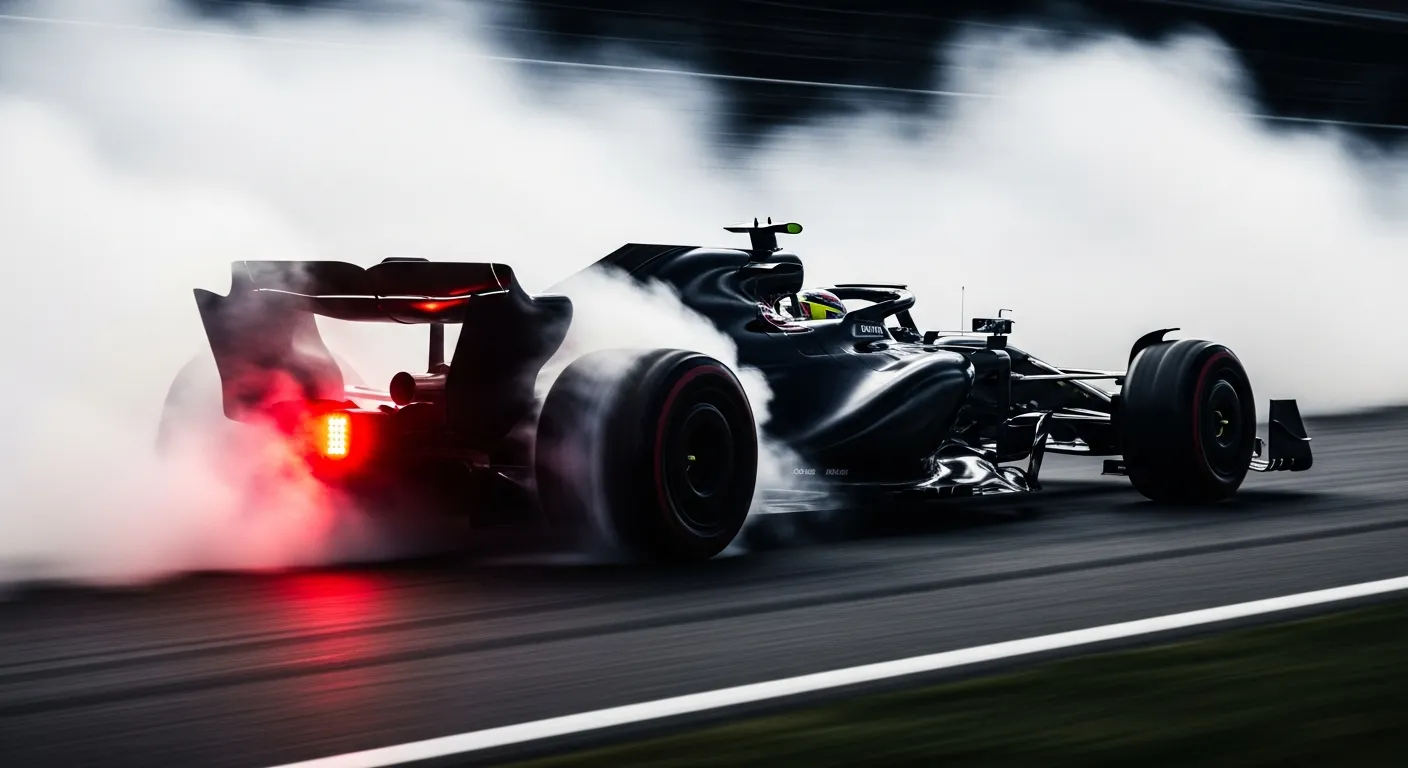
Lance Stroll's performance at his home 2022 Canadian Grand Prix was a testament to strategic race management and opportunistic driving, converting a grid position of 17 into a points-scoring finish for Aston Martin. On June 19, 2022, at the Circuit Gilles Villeneuve in Montreal, the Canadian driver demonstrated a measured approach, navigating a race that saw a mix of high-speed sections and tight chicanes, characteristic of the iconic track. Starting deep in the field, Stroll's objective was clear: maximize every opportunity to advance. The Aston Martin AMR22, while not consistently a front-runner in the 2022 season, showed flashes of potential, and Stroll capitalized on these moments. His ability to climb seven positions from his initial grid slot to cross the finish line in 10th place, securing a crucial single point, highlighted a disciplined drive over the full 70 laps. This was a notable contrast to the race leader, Max Verstappen, who started from pole and maintained his position to win, demonstrating the different challenges faced across the grid in [Formula 1 — official site](https://www.formula1.com/en).
The race unfolded with several strategic junctures, and Stroll's Aston Martin team executed a plan that allowed him to make steady progress through the field. His fastest lap of 1:17.421, recorded on Lap 64, placed him 10th overall in terms of single-lap pace, indicating a strong late-race push and effective tire management. This late-race performance is often critical for securing positions in the competitive midfield, a scenario not unfamiliar to drivers like [Fernando Alonso at the 2019 Emilia Romagna Grand Prix](/results/2019-imola-fernando-alonso), who also often found ways to extract maximum performance in challenging circumstances. Stroll’s teammate, Sebastian Vettel, started one position ahead in 16th but ultimately finished 12th, outside the points, underscoring the effectiveness of Stroll's drive on this particular Sunday. The intricacies of Grand Prix racing, including tire degradation and fuel management, are meticulously tracked, as detailed by various [Jolpica/Ergast — 2026 season data](https://api.jolpi.ca/ergast/f1/2026.json) sources, which provide granular insights into race performance. The Canadian Grand Prix often presents unique challenges, and Stroll's ability to maintain pace and avoid incidents, unlike the retirements seen from drivers like Sergio Pérez (Gearbox) and Mick Schumacher (Hydraulics) earlier in the race, was key to his result. For a deeper understanding of the sport's regulations and competitive structure, the [FIA — F1 World Championship](https://www.fia.com/events/fia-formula-one-world-championship) provides comprehensive information. Such consistent finishes, even for a single point, are vital for a constructor like Aston Martin in the highly competitive [Wikipedia: Formula One](https://en.wikipedia.org/wiki/Formula_One) landscape, especially when considering the tight battles throughout the grid, reminiscent of the midfield struggles observed by drivers such as [Pierre Gasly at the 2019 Emilia Romagna Grand Prix](/results/2019-imola-pierre-gasly). The strategic calls made by the Aston Martin pit wall, combined with Stroll's execution, allowed him to navigate the race successfully, converting a challenging starting position into a valuable championship point. This kind of progression from the back of the grid is a consistent theme in F1, a characteristic also seen in races like [Lance Stroll at the 2019 Emilia Romagna Grand Prix](/results/2019-imola-lance-stroll), where strategic choices often dictate the final outcome. The sustained effort over 70 laps, culminating in a P10 finish, speaks to a resilient drive, a result that is closely analyzed on the [Formula 1 — official site](https://www.formula1.com/en) for performance metrics. Furthermore, the broader context of the [FIA — F1 World Championship](https://www.fia.com/events/fia-formula-one-world-championship) standings highlights the importance of every single point.
Verified race record · Ergast
Grid
P17
Finish
P10
Points
1
Laps
70
Constructor
Aston Martin
Status
Finished
Teammate that weekend
Sebastian Vettel
Grid P16 · Finish P12 · 0 pts
Championship · before vs after
Before round 9
P172 pts
After round 9
P183 pts