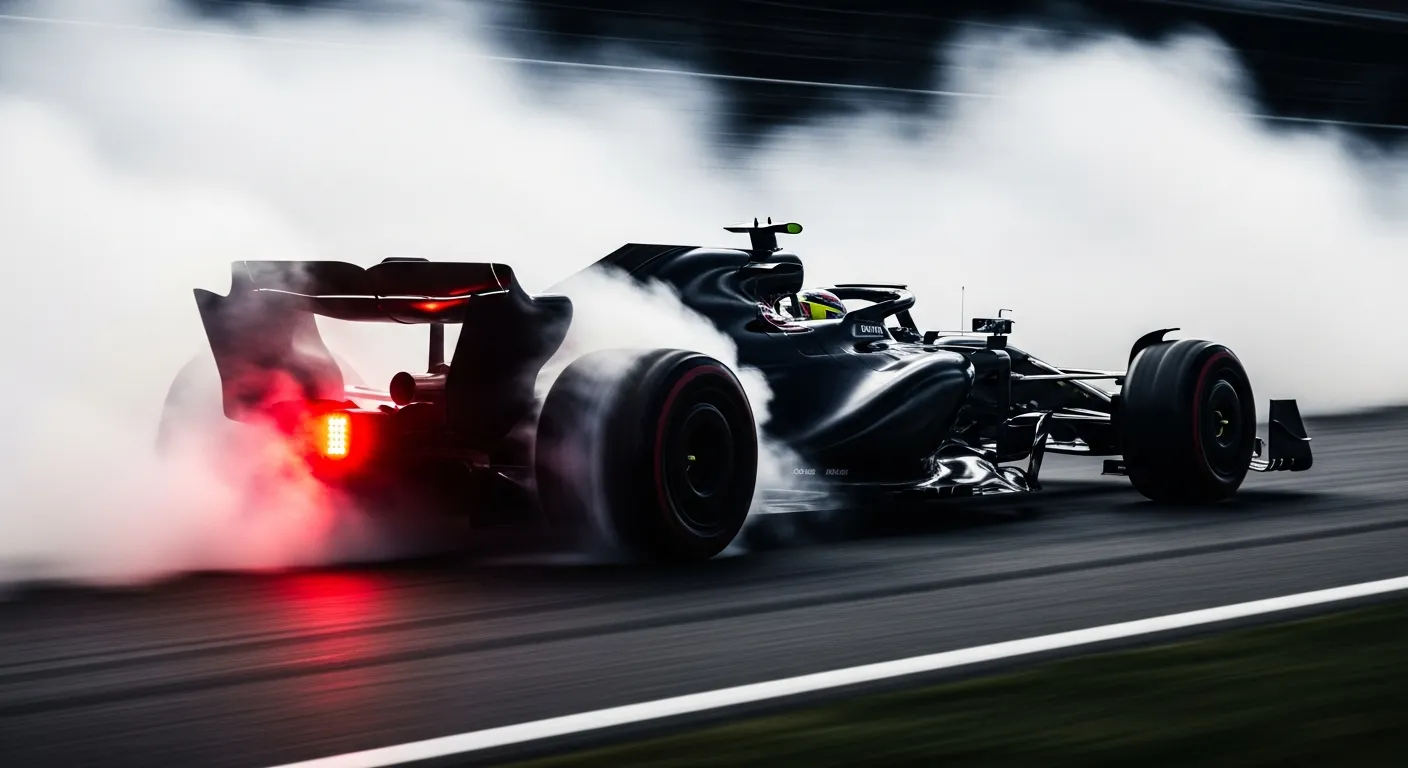
Lewis Hamilton's fourth-place finish at the 2022 Dutch Grand Prix at Circuit Park Zandvoort was a testament to Mercedes AMG F1's evolving W13 package and a race strategy that initially positioned him for a podium, only to be disrupted by late-race safety car periods. Hamilton started from fourth on the grid, demonstrating strong pace throughout the initial phases of the race. The Mercedes W13, often a challenging car to optimize in 2022, showed genuine competitive potential on the Zandvoort circuit, particularly on the hard compound tires. Hamilton managed his stint effectively, maintaining a position within the leading pack. The race, however, was far from straightforward, featuring a Virtual Safety Car (VSC) period on lap 54 due to Valtteri Bottas's Alfa Romeo stopping on track with an engine issue. This VSC presented a strategic dilemma for Mercedes. While teammate George Russell opted for a pit stop, Hamilton remained out on track, hoping to gain track position. For a broader understanding of F1 strategy, the [Formula 1 — official site](https://www.formula1.com/en) offers detailed insights.
The subsequent Safety Car on lap 57, triggered by Yuki Tsunoda's AlphaTauri stopping with a differential problem, further complicated matters. This intervention effectively neutralized Hamilton's track position advantage, as competitors like Max Verstappen and his teammate Russell were able to pit for fresh soft tires under the Safety Car conditions without losing significant time. Hamilton, on older medium tires, found himself vulnerable on the restart. Despite his best efforts, he was ultimately passed by Verstappen, Russell, and Charles Leclerc, finishing the 72-lap race in fourth position with a total time of "1:36:55.789". His fastest lap, a "1:13.854" on lap 54, ranked third overall, highlighting the car's underlying pace when not constrained by tire delta or traffic. This strategic gamble, while not yielding a podium for Hamilton, showcased the fine margins and high-stakes decisions that define Formula 1, a dynamic also seen in races like [Carlos Sainz at the 2023 Singapore Grand Prix](/results/2023-marina-bay-carlos-sainz) where strategy played a pivotal role. The race at Zandvoort, a circuit known for its challenging banking and limited overtaking opportunities, demanded precision and strategic foresight, elements that are always under scrutiny by the [FIA — F1 World Championship](https://www.fia.com/events/fia-formula-one-world-championship) officials. The data from this specific round, along with other seasons, can be further explored through resources like [Jolpica/Ergast — 2026 season data](https://api.jolpi.ca/ergast/f1/2026.json) for a comprehensive view of historical F1 results. Reflecting on the strategic decisions, particularly around safety cars, echoes the challenges faced by drivers such as [Yuki Tsunoda at the 2023 Singapore Grand Prix](/results/2023-marina-bay-yuki-tsunoda) when race disruptions alter the competitive landscape. The intricacies of tire management and pit stop timing, as seen in Hamilton's race, are fundamental to [Wikipedia: Formula One](https://en.wikipedia.org/wiki/Formula_One) racing. The competitive nature of the midfield, where drivers like [Esteban Ocon at the 2023 Singapore Grand Prix](/results/2023-marina-bay-esteban-ocon) often find themselves, demonstrates the consistent pressure across the grid. For detailed race analysis and results, the [official Formula 1 website](https://www.formula1.com/en) remains a primary source. Ultimately, while the podium eluded Hamilton, the pace demonstrated by Mercedes in the Netherlands was a positive indicator for the remainder of the 2022 campaign, despite the strategic misstep. Further information on driver performance and championship standings is consistently updated on the [Formula 1 official site](https://www.formula1.com/en).
Verified race record · Ergast
Grid
P4
Finish
P4
Points
12
Laps
72
Constructor
Mercedes AMG F1
Status
Finished
Teammate that weekend
George Russell
Grid P6 · Finish P2 · 18 pts
Championship · before vs after
Before round 15
P6146 pts
After round 15
P6158 pts