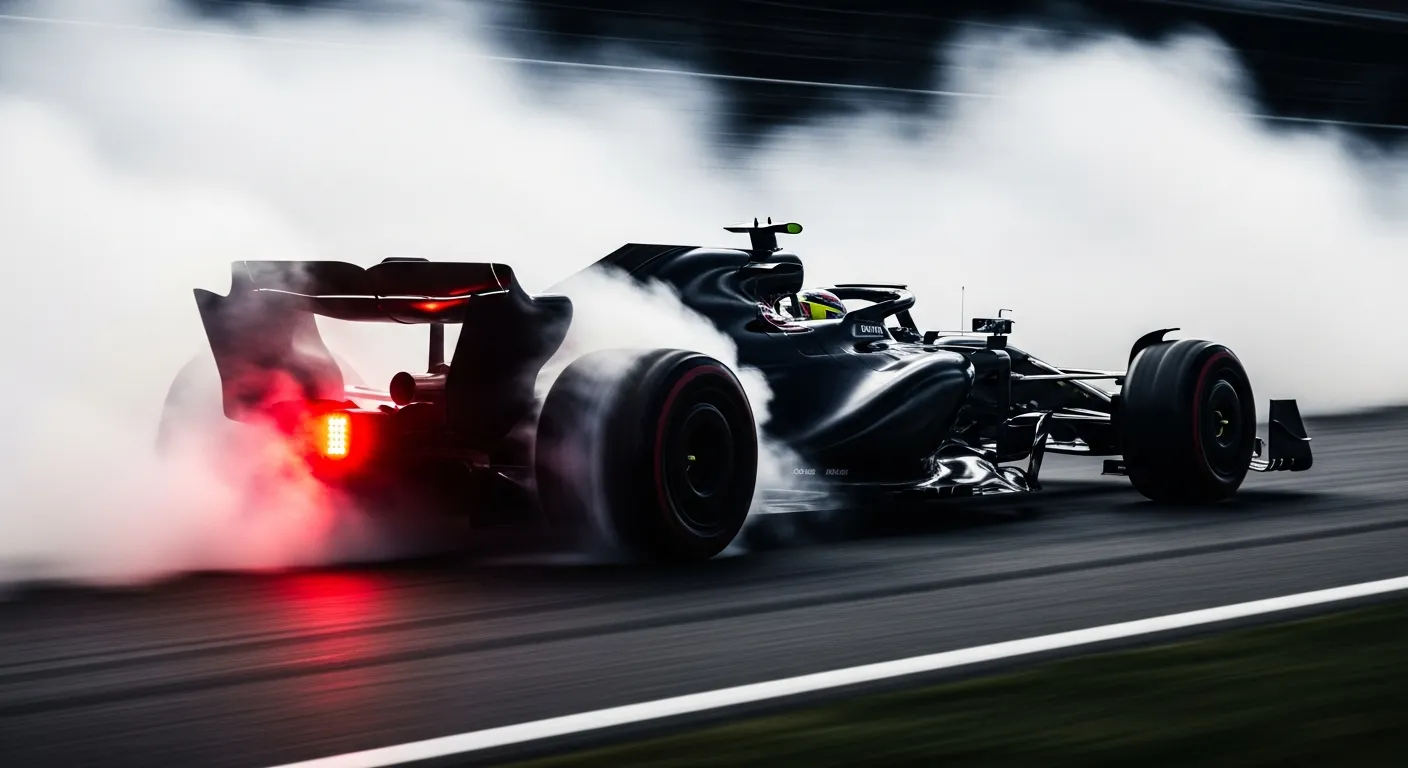
Max Verstappen's dominant form continued unabated at the 2023 São Paulo Grand Prix, where he converted his pole position into a decisive victory at the challenging Autódromo José Carlos Pace. From the moment the lights went out at Interlagos on November 5, 2023, Verstappen, starting from grid 1, asserted control. The initial race start was immediately red-flagged after a multi-car incident involving Alexander Albon and Kevin Magnussen, leading to a significant delay and a standing restart. However, upon the second formation lap and subsequent restart, the Dutch driver swiftly re-established his lead, demonstrating the formidable pace of his [Red Bull Racing](https://www.formula1.com/en/teams/Red-Bull-Racing.html) RB19. He navigated the full 71 laps of the [Autódromo José Carlos Pace](https://www.formula1.com/en/circuits/brazil/autodromo-jose-carlos-pace.html) with characteristic precision, managing his tires and maintaining a significant gap to the chasing pack. While Lando Norris in the McLaren ultimately claimed the fastest lap of the race with a 1:12.486 on lap 61, Verstappen's own best, a 1:13.422 on lap 68, ranked second, demonstrating his consistent speed even when controlling the race from the front. This kind of controlled, front-running performance often defines championship seasons, reminiscent of [Lewis Hamilton at the 2014 United States Grand Prix](/results/2014-cota-lewis-hamilton), who also commanded his race from the lead.
The Red Bull Racing driver crossed the finish line in a total time of 1:56:48.894, securing a full 25 points for his efforts and further extending his already insurmountable lead in the [Formula 1 Drivers' Championship](https://www.formula1.com/en/results.html). His teammate, Sergio Pérez, starting further back on grid 9, executed a strong recovery drive through the field to finish in position 4, adding 12 crucial points to the team's tally and reinforcing Red Bull's Constructors' Championship dominance. This dual-car points haul underscored Red Bull's continued strength in the 2023 season, a testament to both driver skill and the engineering prowess within the complex world of [Formula One](https://en.wikipedia.org/wiki/Formula_One). The strategic execution by the team, a critical component of success in the [FIA F1 World Championship](https://www.fia.com/events/fia-formula-one-world-championship), was evident throughout the race's various phases, including pit stops under safety car conditions. Even seasoned competitors like [Fernando Alonso at the 2014 United States Grand Prix](/results/2014-cota-fernando-alonso), who finished sixth in that event, understand the importance of consistent performance and strategic adaptability, qualities Verstappen exemplified here. The detailed race data, providing a granular look at every lap and sector time, is an invaluable resource for understanding race dynamics, often found in comprehensive [F1 data archives](https://api.jolpi.ca/ergast/f1/2026.json). Further down the field, [Nico Hülkenberg at the 2014 Singapore Grand Prix](/results/2014-marina-bay-nico-hulkenberg) faced different challenges entirely, highlighting the varied experiences across the grid in any given race weekend. The São Paulo Grand Prix once again showcased Verstappen's ability to maintain composure and pace under pressure, delivering another flawless victory.
Verified race record · Ergast
Grid
P1
Finish
P1
Points
25
Laps
71
Constructor
Red Bull Racing
Status
Finished
Teammate that weekend
Sergio Pérez
Grid P9 · Finish P4 · 12 pts
Championship · before vs after
Before round 20
P1491 pts
After round 20
P1524 pts