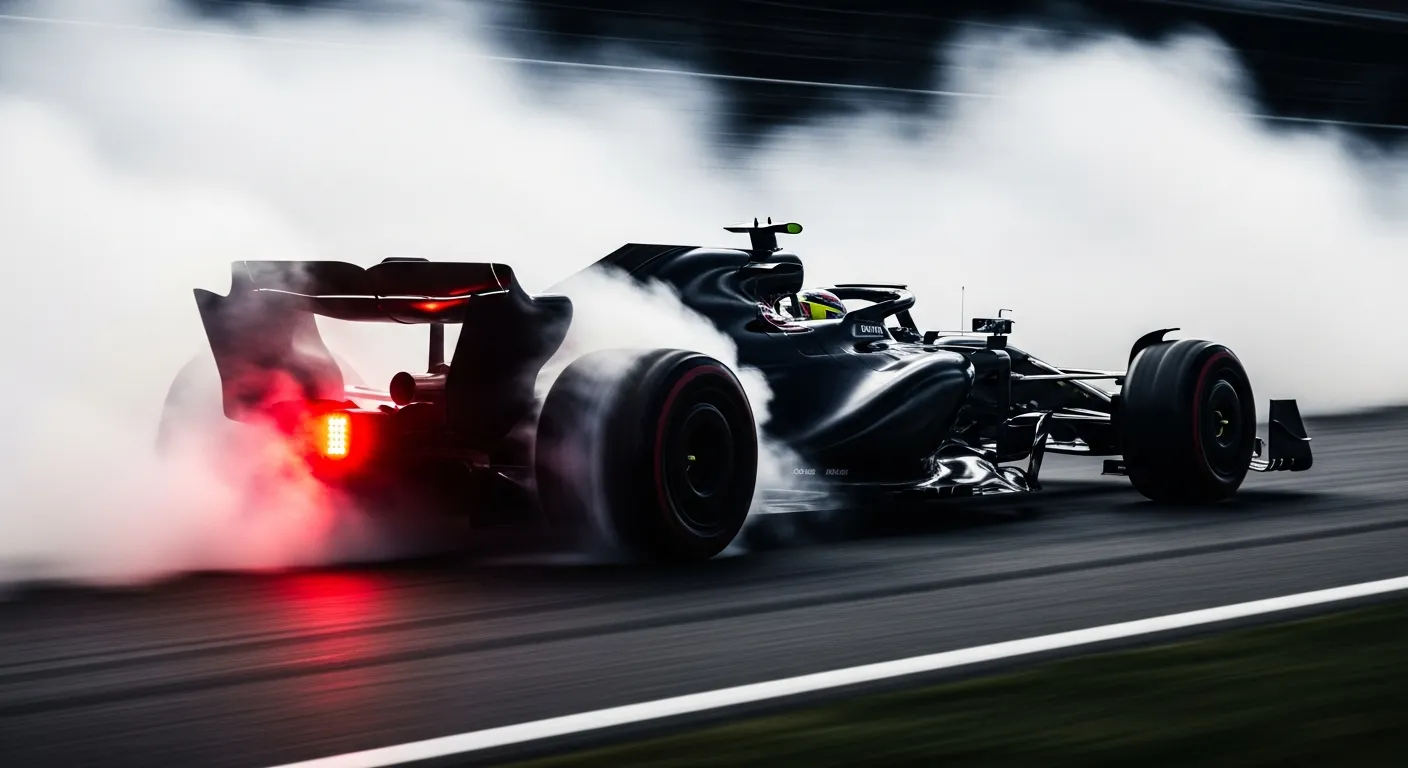
Oscar Piastri's race at the 2023 Saudi Arabian Grand Prix on March 19 was a challenging affair for the McLaren rookie, who started from a promising 8th position but ultimately finished 15th. The Jeddah Corniche Circuit, with its high-speed, wall-lined layout, presented a significant test for Piastri in only his second Formula 1 start. Qualifying had shown potential, placing his McLaren MCL60 eighth on the grid, a strong showing for a debutant. However, the race itself proved difficult to convert that starting advantage into championship points. After completing all 50 laps, Piastri crossed the line with a total race time of 1:22:39.915. His fastest lap, a 1:34.287 recorded on lap 48, ranked 16th overall among all competitors, indicating a degree of pace in the latter stages but not enough to recover lost ground. This result meant no championship points were added to his tally, maintaining his season position at 19th. For a deeper understanding of the sport's structure and how such results impact standings, the [Formula 1 — official site](https://www.formula1.com/en) provides comprehensive details on the sport's operations, as does the encyclopaedic overview of [Formula One](https://en.wikipedia.org/wiki/Formula_One) on Wikipedia. The broader context for McLaren Racing at Jeddah was also complex; Piastri's teammate, [Lando Norris at the 2025 Canadian Grand Prix](/results/2025-montreal-lando-norris), started from 19th and finished 17th, indicating a difficult weekend for the team as a whole on this particular circuit. The performance differential between qualifying pace and race trim was notable, a common theme for teams navigating the early stages of a new season's car development, especially on a track like Jeddah where setup is critical. Understanding the intricacies of F1 regulations, as outlined by the [FIA — F1 World Championship](https://www.fia.com/events/fia-formula-one-world-championship), helps frame such performance shifts and the challenges teams face. While Piastri's debut season would undoubtedly involve a steep learning curve, races like Jeddah provided crucial data for McLaren's engineering teams to analyze. The contrast in performance with front-runners, such as [Charles Leclerc at the 2025 Canadian Grand Prix](/results/2025-montreal-charles-leclerc), further highlighted the development gap McLaren needed to address. Further analysis of historical race data, such as that available from [Jolpica/Ergast — 2026 season data](https://api.jolpi.ca/ergast/f1/2026.json), often reveals patterns in team and driver development across seasons, showing that early-season struggles can be overcome.
Verified race record · Ergast
Grid
P8
Finish
P15
Points
0
Laps
50
Constructor
McLaren Racing
Status
Finished
Teammate that weekend
Lando Norris
Grid P19 · Finish P17 · 0 pts
Championship · before vs after
Before round 2
P190 pts
After round 2
P190 pts