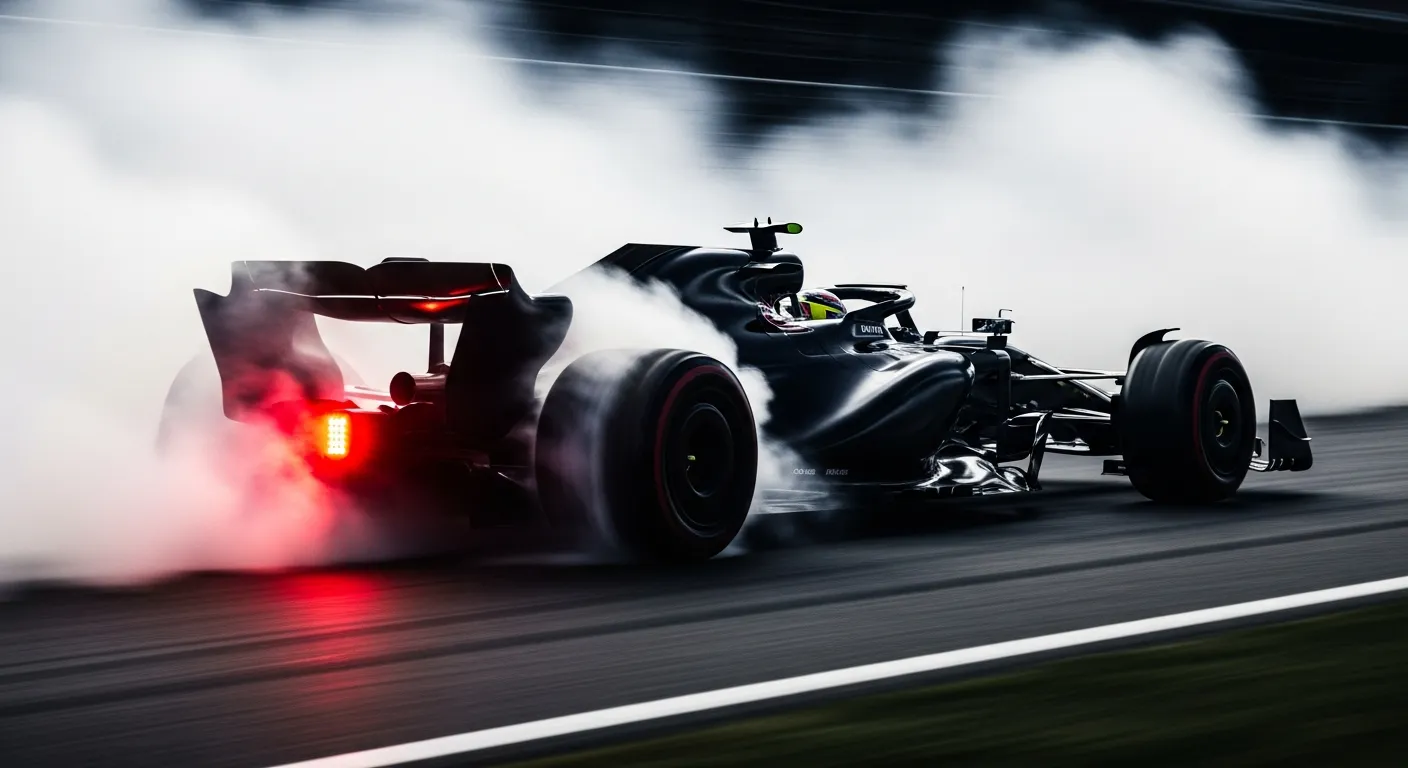
The 2023 Saudi Arabian Grand Prix at the high-speed Jeddah Corniche Circuit underscored Red Bull Racing's early-season performance advantage, even as strategic nuances and a strong recovery drive from Max Verstappen shaped the final outcome.
Qualifying Dynamics
Qualifying set the stage for a compelling race, with Sergio Pérez demonstrating the RB19's outright pace by taking pole position. Fernando Alonso, in the Aston Martin, continued his strong form by securing a front-row start, placing him in a prime position to challenge the Red Bulls. The significant narrative from Saturday, however, was Max Verstappen's power unit issue in Q2, which relegated him to a 15th-place starting position. This unexpected turn meant the reigning champion faced a considerable challenge on a circuit known for its unforgiving walls and limited overtaking opportunities, setting up a fascinating strategic battle for Sunday. The grid also saw Mercedes' George Russell starting third, indicating a potential fight for the podium positions.
Race Execution and Recovery
From the moment the lights went out, Sergio Pérez managed his race from the front with precision, controlling the pace and tire degradation across the 50 laps. His drive was a testament to both his skill and the car's inherent speed, allowing him to build a comfortable margin. Behind him, the focus quickly shifted to Max Verstappen's charge through the field. Starting from P15, Verstappen systematically picked off competitors, showcasing the raw performance of his Red Bull. He navigated the narrow sections and utilized DRS zones effectively, steadily climbing into contention. By the race's midpoint, he was already in the top five, eventually challenging and securing second place, just over five seconds behind his teammate. This recovery drive was a masterclass in race management and overtaking on a demanding street circuit, reminiscent of aggressive drives seen at tracks like the 2026 Canadian Grand Prix.
Fernando Alonso held his ground admirably, securing what initially appeared to be a clear third-place finish. However, a post-race penalty for an incorrect pit stop procedure, then overturned, added a layer of complexity to the final classification. George Russell maintained a solid fourth, ahead of his teammate Lewis Hamilton, who started P7 and finished P5. Ferrari's Carlos Sainz and Charles Leclerc, starting P4 and P12 respectively, finished P6 and P7, highlighting the Scuderia's ongoing efforts to extract consistent performance in the ground-effect era. The race also saw retirements for Lance Stroll and Alexander Albon, impacting the midfield battles.
Strategic Story
The strategic narrative of the Saudi Arabian Grand Prix largely revolved around tire management and the timing of pit stops, especially given the high-speed nature of the Jeddah Corniche Circuit. Red Bull's ability to run longer stints and maintain pace was crucial for Pérez's victory and Verstappen's recovery. Verstappen's aggressive early stint on hard tires allowed him to make up significant ground before his pit stop. The full race results and detailed lap data, available from sources like Jolpica/Ergast — 2026 season data (which provides historical F1 data), illustrate the precise timing and impact of these decisions. The midfield teams, particularly Mercedes and Aston Martin, also managed their tire strategies effectively to secure valuable points. For a deeper dive into the technical regulations that influence these strategies, the FIA — F1 World Championship website offers comprehensive information.
Championship Impact
This Red Bull 1-2 finish significantly bolstered their position in the Constructors' Championship, demonstrating a clear performance advantage early in the season. Pérez's victory closed the gap to Verstappen in the Drivers' Championship, setting up an intriguing intra-team battle. Aston Martin's continued strong performance, with Alonso on the podium, solidified their status as a genuine contender for best-of-the-rest, a narrative often explored by F1 breaking news outlets. The Mercedes drivers also collected substantial points, keeping them in the hunt, while Ferrari continued to seek consistent pace. For a broader understanding of Formula 1's historical context and championship evolution, Wikipedia: Formula One serves as an excellent reference point. The race at Jeddah provided a clear indication of the pecking order and the challenges ahead for the rest of the season, particularly for teams looking to close the gap to Red Bull, much like the competitive landscape often seen at the 2026 Austrian Grand Prix. Read the full editorial
Full classified results
Every driver's verified grid-to-flag result from the 2023 Saudi Arabian Grand Prix — grid, finish, points, teammate H2H, and championship swing.
- P1Sergio PérezRed Bull25 pts
- P2Max VerstappenRed Bull19 pts
- P3Fernando AlonsoAston Martin15 pts
- P4George RussellMercedes12 pts
- P5Lewis HamiltonMercedes10 pts
- P6Carlos SainzFerrari8 pts
- P7Charles LeclercFerrari6 pts
- P8Esteban OconAlpine F1 Team4 pts
- P9Pierre GaslyAlpine F1 Team2 pts
- P11Yuki TsunodaAlphaTauri0 pts
- P12Nico HülkenbergHaas F1 Team0 pts
- P15Oscar PiastriMcLaren0 pts
- P17Lando NorrisMcLaren0 pts
- P18Valtteri BottasAlfa Romeo0 pts
- —Alexander AlbonWilliamsRetired
- —Lance StrollAston MartinRetired