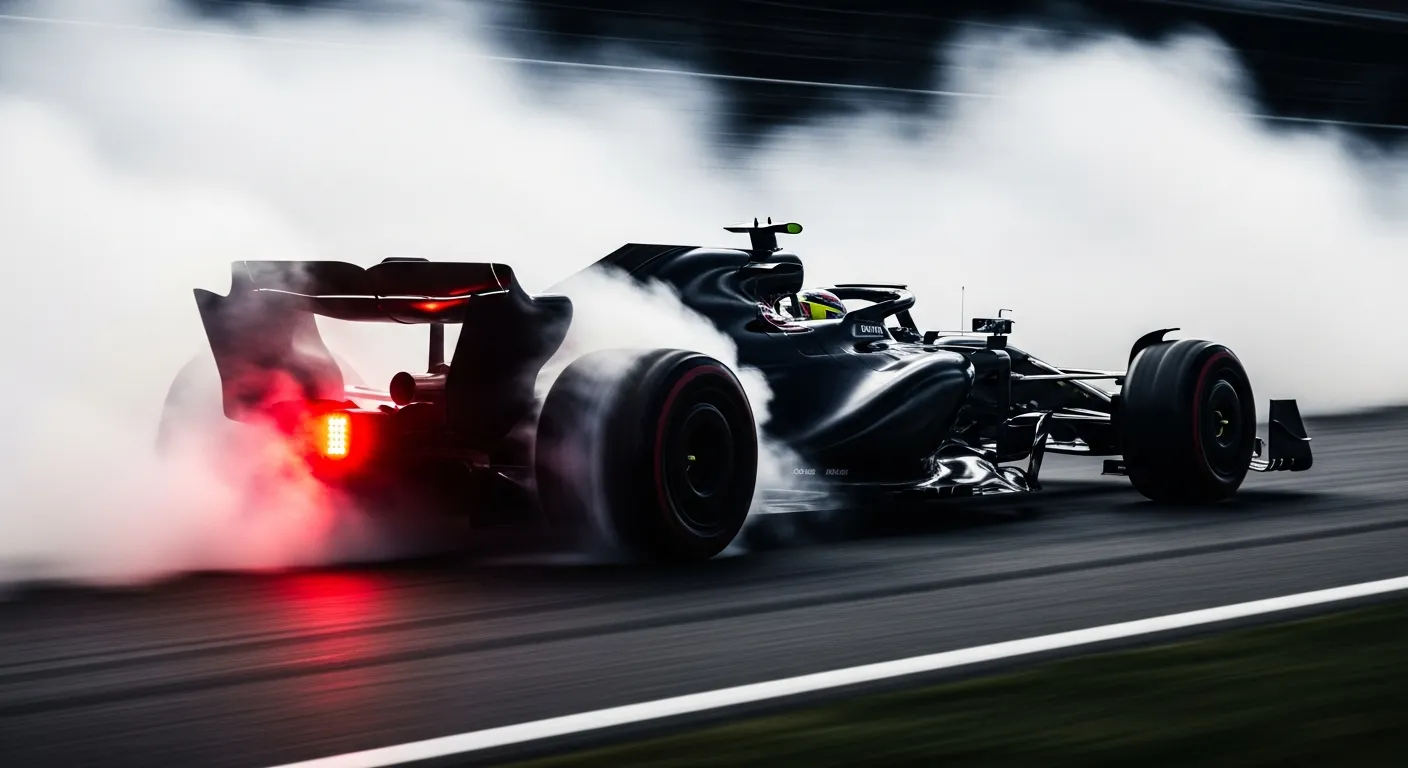
Pierre Gasly's performance at the 2023 Saudi Arabian Grand Prix on March 19 was a demonstration of consistent execution, maintaining his starting position to deliver valuable points for Alpine at the demanding Jeddah Corniche Circuit. Starting from P9 on the grid, Gasly navigated the high-speed street circuit with precision, avoiding the early race incidents that can often characterize events on such a tight layout. His initial pace allowed him to hold station, a crucial aspect on a track where overtaking requires significant commitment. The French driver completed all 50 laps of the race, posting a total time of 1:22:09.641. This steady drive ensured that Alpine secured a double points finish, with Gasly's teammate Esteban Ocon finishing just ahead in P8. The strategic decisions made by the [Alpine F1 Team](https://www.formula1.com/en/teams/Alpine.html) played a role in managing tire degradation and optimizing pit stops, a common challenge observed across the [Formula 1 calendar](https://www.fia.com/events/fia-formula-one-world-championship).
Gasly's race pace was evident in his fastest lap, a 1:33.392 recorded on the final lap, lap 50, which placed him 10th overall in terms of single-lap speed. This late-race push underscored his commitment to extracting maximum performance until the checkered flag, a characteristic often seen from top drivers on the [Formula 1 official site](https://www.formula1.com/en). While his teammate [Esteban Ocon](https://www.formula1.com/en/drivers/Esteban-Ocon.html) secured a slightly faster lap of 1:33.222 on lap 49, the combined effort ensured Alpine left Jeddah with a solid points haul. The Jeddah Corniche Circuit, known for its rapid sections and close walls, demands both driver skill and a well-balanced car, a topic frequently discussed on [Wikipedia's Formula One page](https://en.wikipedia.org/wiki/Formula_One). Gasly's P9 finish added 2 points to his championship tally, contributing to Alpine's early season constructor standing. For a broader look at how different drivers performed in challenging conditions, one might consider the outcomes for [Charles Leclerc at the 2024 Canadian Grand Prix](/results/2024-montreal-charles-leclerc) or even [George Russell at the 2024 Canadian Grand Prix](/results/2024-montreal-george-russell), where similar pressures of maintaining position and extracting performance were paramount. The detailed [Jolpica/Ergast F1 data](https://api.jolpi.ca/ergast/f1/2026.json) provides further context on lap times and race progressions across seasons. Gasly's result, while not a podium, represented a valuable contribution to his new team, setting a baseline for future races. The consistency shown here contrasts with the challenging race [Lando Norris at the 2024 Canadian Grand Prix](/results/2024-montreal-lando-norris) faced, highlighting the variable nature of F1.
Verified race record · Ergast
Grid
P9
Finish
P9
Points
2
Laps
50
Constructor
Alpine F1 Team
Status
Finished
Teammate that weekend
Esteban Ocon
Grid P6 · Finish P8 · 4 pts
Championship · before vs after
Before round 2
P92 pts
After round 2
P114 pts