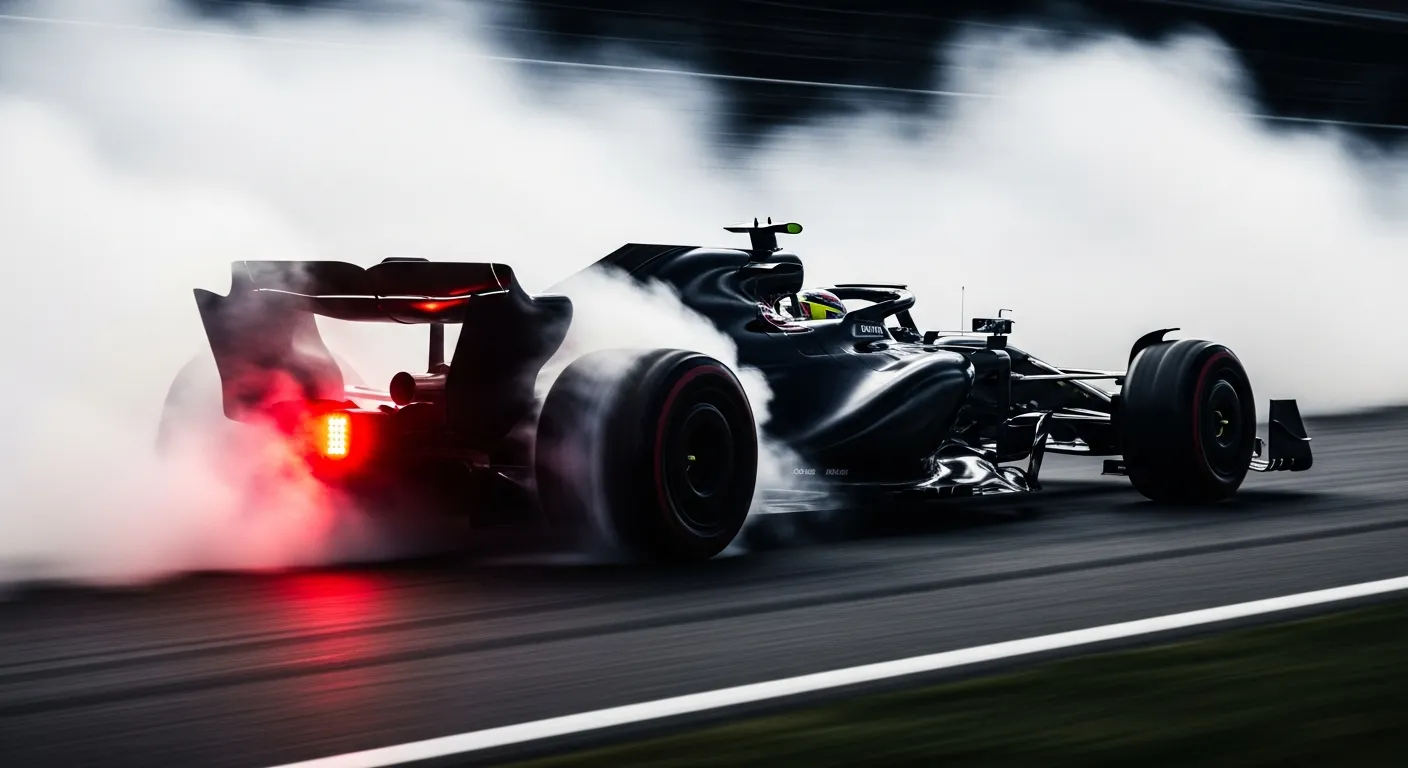
Max Verstappen's performance at the 2023 Mexican Grand Prix at the Autódromo Hermanos Rodríguez underscored his ability to dictate race pace from a challenging starting position. Beginning from third on the grid, the Dutchman swiftly navigated the opening corners, taking the lead on the first lap. The race was quickly impacted by an incident involving his Red Bull Racing teammate, Sergio Pérez, who retired on lap 1 due due to collision damage, a stark contrast to Verstappen's immediate ascendance. This early disruption led to a red flag on lap 33 after Kevin Magnussen's significant impact, forcing a strategic reset for the entire field. Verstappen, having already established a lead, managed the restart effectively, demonstrating the consistent performance that has become a hallmark of his 2023 season. His ability to adapt to changing race conditions, particularly after a red flag, echoes the strategic challenges faced by drivers such as [George Russell at the 2022 Austrian Grand Prix](/results/2022-red-bull-ring-george-russell), where managing restarts and tire degradation proved critical for a strong finish.
Upon the restart, Verstappen continued to control the race, completing all 71 laps in 2:02:30.814. While he did not secure the fastest lap, his lap 40 time of 1:21.644 was the second quickest of the event, showcasing his sustained pace throughout the grand prix. This consistent output allowed him to maintain a comfortable margin over the pursuing pack. The strategic implications of the red flag were significant, allowing some drivers to make advantageous tire changes, a factor that can dramatically alter race outcomes, as seen in various [Formula 1 — official site](https://www.formula1.com/en) events. The circuit's high altitude presents unique challenges for engine performance and aerodynamic efficiency, making Verstappen's dominant drive particularly noteworthy. His command of the race, even with a mid-race interruption, highlighted the synergy between driver and machine, a critical component of success in the [FIA — F1 World Championship](https://www.fia.com/events/fia-formula-one-world-championship). The data from this event, along with historical [Jolpica/Ergast — 2026 season data](https://api.jolpi.ca/ergast/f1/2026.json), provides a comprehensive look at how top-tier teams manage complex race scenarios. For context on other drivers navigating race incidents, one might look at [Fernando Alonso at the 2022 Austrian Grand Prix](/results/2022-red-bull-ring-fernando-alonso), who also faced challenges related to race disruptions. The overall performance solidified Verstappen's position, adding 25 points to his championship tally. For a deeper understanding of the sport's history and regulations, the [Wikipedia: Formula One](https://en.wikipedia.org/wiki/Formula_One) entry offers extensive details. The race also saw impressive drives from others, including [Lando Norris at the 2022 Austrian Grand Prix](/results/2022-red-bull-ring-lando-norris) who, starting from 17th, climbed to fifth, demonstrating the potential for significant gains through strategic race management. Further detailed race analysis can often be found on the [Formula 1 official website](https://www.formula1.com/en), providing insights into individual driver performances and team strategies. The FIA also publishes [sporting regulations](https://www.fia.com/events/fia-formula-one-world-championship) that govern such events.
Verified race record · Ergast
Grid
P3
Finish
P1
Points
25
Laps
71
Constructor
Red Bull Racing
Status
Finished
Teammate that weekend
Sergio Pérez
Grid P5 · Collision damage · 0 pts
Championship · before vs after
Before round 19
P1466 pts
After round 19
P1491 pts