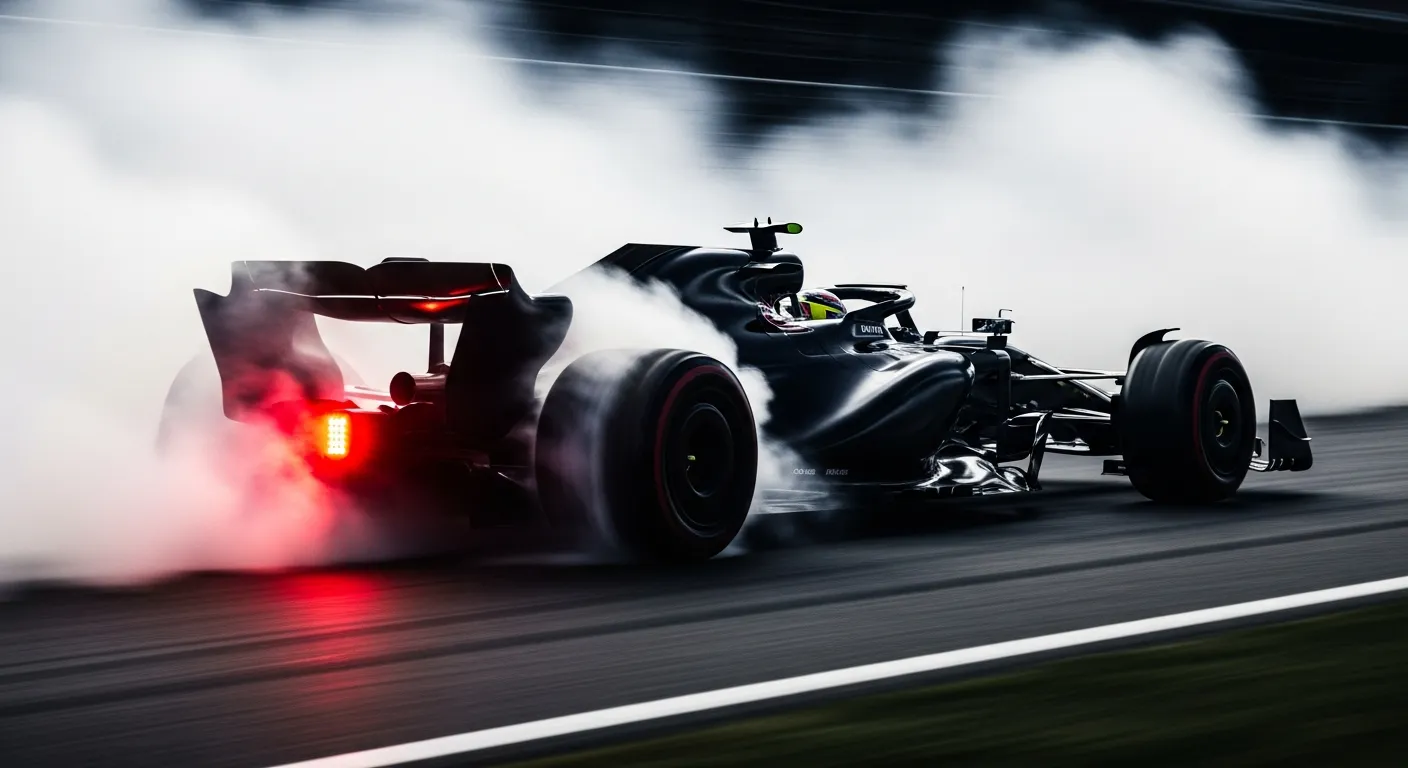
The 2023 Mexico City Grand Prix at the Autódromo Hermanos Rodríguez presented a unique blend of high-speed sections and a demanding technical layout, all exacerbated by the circuit's significant altitude, which fundamentally alters engine performance and aerodynamic efficiency.
Qualifying
Qualifying for the Mexico City Grand Prix often sets the tone for a challenging race, and 2023 was no exception. The thin air at over 2,200 meters above sea level means less downforce is generated, requiring teams to run maximum wing angles to compensate, while also battling engine power losses and cooling issues. The grid positions reflected a delicate balance between outright pace and managing these environmental factors. Achieving optimal tire temperature and grip on a single lap proved critical, as did the ability to extract performance without overheating components. The starting order positioned several key contenders in close proximity, setting the stage for an intense opening phase of the race.
Race
The race itself quickly became a strategic chess match, particularly after an early-race incident necessitated a Safety Car deployment. This intervention, a common occurrence on circuits with high-speed sections and tight chicanes, immediately opened up strategic options for teams regarding pit stops. The decision to pit for fresh tires under the Safety Car, or to stay out and gain track position, became a defining moment for many. Those who opted for an early stop aimed to benefit from a longer second stint on potentially more durable compounds, while others gambled on managing older tires through the restart. The high altitude also meant that tire degradation, particularly on the softer compounds, was a constant concern, demanding precise management from drivers and strategic calls from the pit wall. The ground-effect cars, characteristic of this era, had to contend with the reduced air density impacting their underfloor aerodynamics, making stable high-speed cornering a particular challenge. For a comparison of how different eras handle unique circuit challenges, one might look at the 2017 Belgian Grand Prix where high-speed efficiency was paramount.
Strategic Story
The strategic narrative of the Mexico City Grand Prix revolved heavily around tire management and the timing of pit stops, especially following the Safety Car. Teams had to weigh the benefits of track position against the longevity and performance of their tire compounds. The medium and hard compounds were the primary choices, with the softs proving too fragile for extended stints in the demanding conditions. Overtaking, while possible on the long main straight, was not straightforward, making strategic undercuts or overcuts crucial. The race highlighted how a well-executed pit stop strategy, combined with strong tire preservation, could elevate a car through the field, even when outright pace might not have been superior. This echoes the strategic depth seen in races like the 2017 British Grand Prix, where tire strategy often dictated the outcome. The official Formula 1 — official site often provides detailed post-race analyses of these strategic decisions. Understanding the technical regulations set by the FIA — F1 World Championship is key to appreciating these strategic nuances. For a deeper dive into F1's technical evolution, Wikipedia: Formula One offers comprehensive information on ground-effect aerodynamics and engine development. Data analysis, such as that found on Jolpica/Ergast — 2026 season data, helps illustrate the impact of these decisions on lap times and race pace. The ability to adapt to changing race conditions, especially after an early safety car, proved to be the decisive factor, rewarding those teams with flexible strategies and quick decision-making. The challenges presented by the high altitude in Mexico City are a recurring theme, and teams continuously refine their approaches, as seen in the evolution of car setups from, for example, the 2017 Hungarian Grand Prix which also demands high downforce but at sea level.
Championship Impact
This result further solidified the dominant position of the leading constructor and driver in the 2023 season. While the Drivers' Championship was largely decided by this point, every point contributed to the Constructors' Championship battle and individual driver standings, influencing future team dynamics and contract negotiations. The consistent performance of the top teams, even in the face of unique circuit challenges, underscored their technical superiority and operational excellence throughout the season.
Full classified results
Every driver's verified grid-to-flag result from the 2023 Mexico City Grand Prix — grid, finish, points, teammate H2H, and championship swing.
- P1Max VerstappenRed Bull25 pts
- P2Lewis HamiltonMercedes19 pts
- P3Charles LeclercFerrari15 pts
- P4Carlos SainzFerrari12 pts
- P5Lando NorrisMcLaren10 pts
- P6George RussellMercedes8 pts
- P7Daniel RicciardoAlphaTauri6 pts
- P8Oscar PiastriMcLaren4 pts
- P9Alexander AlbonWilliams2 pts
- P10Esteban OconAlpine F1 Team1 pts
- P11Pierre GaslyAlpine F1 Team0 pts
- P12Yuki TsunodaAlphaTauri0 pts
- P13Nico HülkenbergHaas F1 Team0 pts
- P15Valtteri BottasAlfa Romeo0 pts
- P17Lance StrollAston Martin0 pts
- —Fernando AlonsoAston MartinWithdrew
- —Sergio PérezRed BullCollision damage