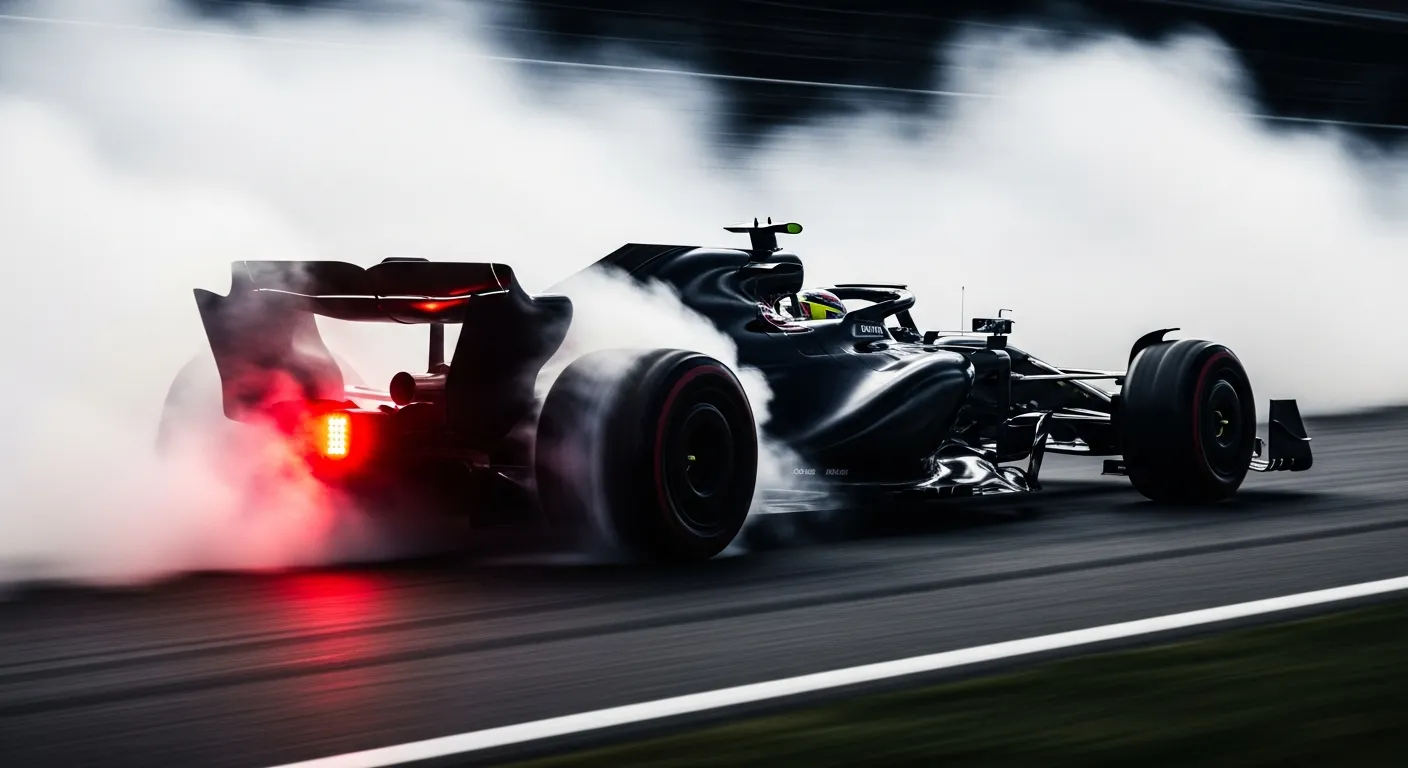
Fernando Alonso’s performance at the 2023 Miami Grand Prix underscored Aston Martin’s consistent front-running capability, with the Spanish driver converting a strong grid position into a valuable podium finish. Starting from the second spot on the grid, Alonso navigated the 57-lap race at the Miami International Autodrome to cross the finish line in third, completing the race in 1:28:04.546. This result marked a continuation of his impressive early-season form, demonstrating the AMR23's race pace and Alonso's strategic execution. While the Red Bulls of Max Verstappen, who started ninth and finished first, and Sergio Pérez, who started on pole and finished second, proved to be out of reach, Alonso maintained a solid gap to the chasing pack. His fastest lap of 1:30.519, achieved on the final lap (lap 57), was the second quickest of the race, only marginally slower than Verstappen's 1:29.708 on lap 56, indicating the Aston Martin's raw speed even as the race concluded. This consistent pace and ability to extract performance through the entire race distance is a hallmark of Alonso's approach, a trait also evident in other drivers who have maximized their machinery, such as [Charles Leclerc at the 2021 Azerbaijan Grand Prix](/results/2021-baku-charles-leclerc) during Ferrari's resurgence. The strategic depth required for such sustained performance is a key aspect of modern [Formula 1 — official site](https://www.formula1.com/en) racing. The race unfolded with Alonso initially holding his position, but the superior straight-line speed and tire management of the Red Bull RB19s eventually allowed them to establish a lead. Despite this, Alonso managed his tires effectively and defended against challenges from behind. George Russell, who started sixth, finished fourth, 7.024 seconds behind Alonso, while Carlos Sainz Jr., starting third, dropped to fifth. Alonso's teammate, Lance Stroll, starting from 18th, finished 12th, highlighting the individual performance Alonso extracted from the Aston Martin package. The strategic decisions made by the Aston Martin pit wall, combined with Alonso's experience, were crucial in securing the 15 points. This result further solidified his position in the drivers' championship, a testament to the team's development throughout the 2023 season, as detailed on the [FIA — F1 World Championship](https://www.fia.com/events/fia-formula-one-world-championship) official records. Understanding the intricacies of tire degradation and race management is key to sustained success in Formula 1, a subject often explored in depth on [Wikipedia: Formula One](https://en.wikipedia.org/wiki/Formula_One) for historical context. The raw race data from events like this Miami Grand Prix contribute to the extensive archives available to analysts, such as those found on [Jolpica/Ergast — 2026 season data](https://api.jolpi.ca/ergast/f1/2026.json), providing a granular view of performance. Comparing this drive to other strong performances, like [Max Verstappen at the 2021 Azerbaijan Grand Prix](/results/2021-baku-max-verstappen) where he demonstrated dominant pace before a late incident, shows the varying challenges drivers face. Alonso’s ability to consistently deliver podiums, even when not in the fastest car, is a testament to his enduring skill. This race also saw Lewis Hamilton, starting 13th, climb to sixth, a performance reminiscent of how drivers like [George Russell at the 2021 Azerbaijan Grand Prix](/results/2021-baku-george-russell) often make significant progress through the field. For a broader perspective on driver statistics and records, the [Formula 1 — official site statistics section](https://www.formula1.com/en/drivers.html) offers comprehensive data. The technical regulations governing car design, which can be found on the [FIA official website](https://www.fia.com/formula-1/regulations/technical-regulations), play a significant role in shaping these competitive dynamics.
Verified race record · Ergast
Grid
P2
Finish
P3
Points
15
Laps
57
Constructor
Aston Martin
Status
Finished
Teammate that weekend
Lance Stroll
Grid P18 · Finish P12 · 0 pts
Championship · before vs after
Before round 5
P360 pts
After round 5
P375 pts