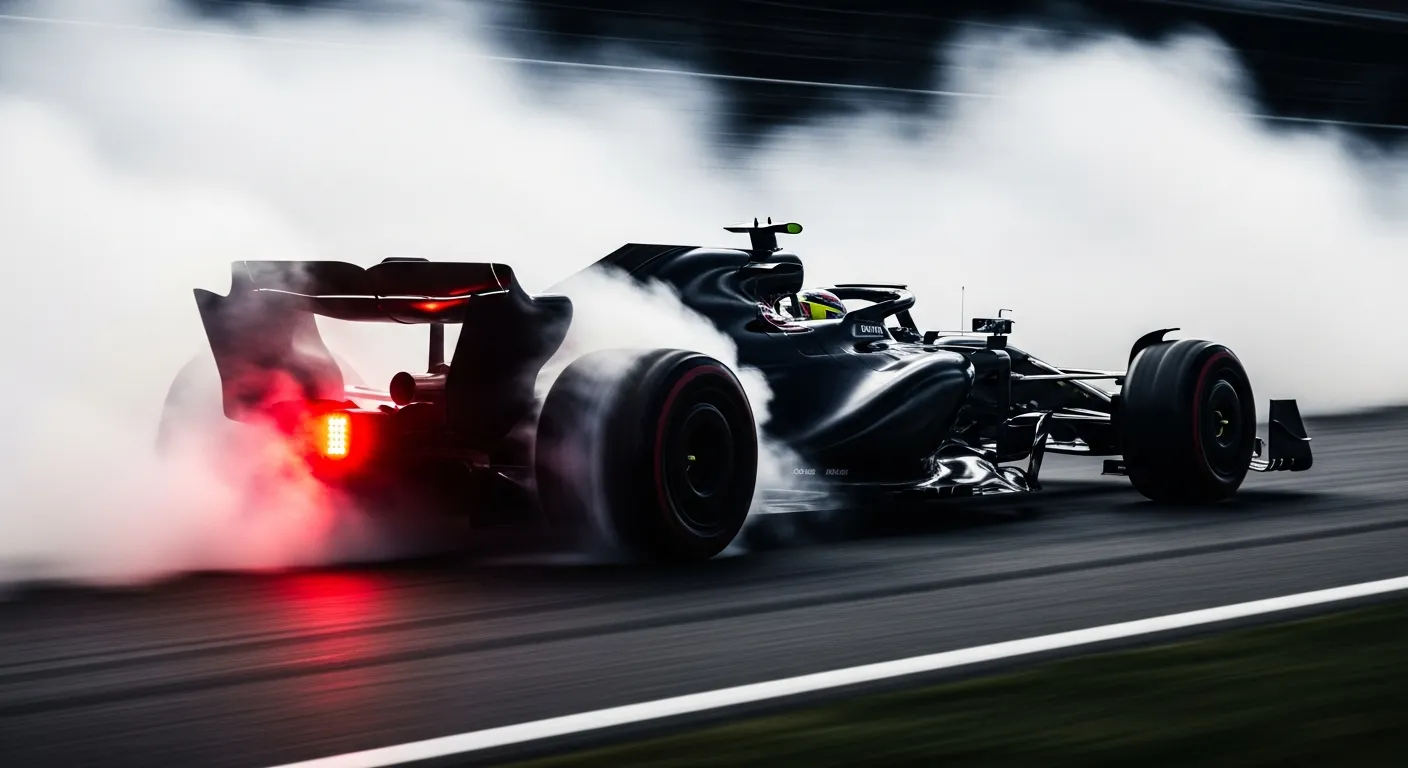
Carlos Sainz's performance at the 2024 Hungarian Grand Prix was a demonstration of consistent race pace and strategic execution, converting a strong qualifying effort into a valuable points finish for Scuderia Ferrari amidst intense competition. Sainz began the 2024 Hungarian Grand Prix from a promising grid position of 4, placing his Scuderia Ferrari SF-24 directly in the mix of the front runners. The Hungaroring, known for its tight, technical layout, often makes overtaking a considerable challenge, placing a premium on qualifying performance and a clean race start. Sainz navigated the opening laps adeptly, holding his ground in a fiercely contested top six. The early phase saw McLaren's Oscar Piastri and Lando Norris establish a commanding lead, ultimately securing a dominant 1-2 finish, which set a high bar for the chasing pack. Sainz found himself in a strategic battle, notably with Max Verstappen, who started P3 but concluded the race in P5, and Lewis Hamilton, who, despite starting P5, managed to climb to a podium finish in P3. This dense competition underscored the fine margins at play. His teammate, Charles Leclerc, starting from P6, showcased Ferrari's overall package by advancing two positions to finish P4. The interplay between these drivers highlighted the tactical nuances required on this circuit, a topic often explored in depth on the [Formula 1 — official site](https://www.formula1.com/en). For a broader context on how different tracks influence race dynamics, one might look at the contrasting demands of a street circuit like the one seen in [Charles Leclerc at the 2023 Azerbaijan Grand Prix](/results/2023-baku-charles-leclerc), where wall proximity and tight corners dictate a very different approach. The specific characteristics of the [Hungaroring circuit](https://www.formula1.com/en/racing/2024/Hungary/Circuit.html) itself often lead to these strategic battles.
Over the course of the full 70 laps, Sainz maintained a disciplined and consistent pace, ultimately crossing the finish line in sixth position, completing the race in "1:38:25.062". His ability to manage tires and execute the strategy laid out by Scuderia Ferrari was paramount. A notable highlight of his race was his fastest lap, a 1:21.441, recorded on lap 53. This strong showing in terms of single-lap pace earned him the 5th fastest lap overall in the race, demonstrating the underlying speed of the Ferrari package when conditions allowed. This performance secured 8 crucial points for his championship bid. The strategic decisions made by teams are often governed by the complex set of [FIA — F1 World Championship](https://www.fia.com/events/fia-formula-one-world-championship) regulations, which dictate everything from tire usage to pit stop procedures. Understanding these elements is key to appreciating a driver's race craft. For those interested in the historical context and evolution of these rules, [Wikipedia: Formula One](https://en.wikipedia.org/wiki/Formula_One) offers a comprehensive overview. The [FIA's technical regulations](https://www.fia.com/regulation/category/110) are constantly updated, influencing car design and race strategies. Comparing Sainz's consistent points finish to the dominant performance of drivers like [Max Verstappen at the 2023 Azerbaijan Grand Prix](/results/2023-baku-max-verstappen) illustrates the varied challenges and successes across different seasons and tracks. The granular data, such as that found in the [Jolpica/Ergast — 2026 season data](https://api.jolpi.ca/ergast/f1/2026.json) archives, allows for detailed analysis of individual race segments and driver performance metrics. Another example of a driver making the most of their machinery and strategy was [Lando Norris at the 2023 Azerbaijan Grand Prix](/results/2023-baku-lando-norris), who also delivered a strong performance from a competitive grid slot. Sainz's Hungarian Grand Prix result, while not a podium, was a solid effort in a tightly packed field, contributing valuable points to Ferrari's constructor's championship campaign.
Verified race record · Ergast
Grid
P4
Finish
P6
Points
8
Laps
70
Constructor
Scuderia Ferrari
Status
Finished
Teammate that weekend
Charles Leclerc
Grid P6 · Finish P4 · 12 pts
Championship · before vs after
Before round 13
P4146 pts
After round 13
P4154 pts