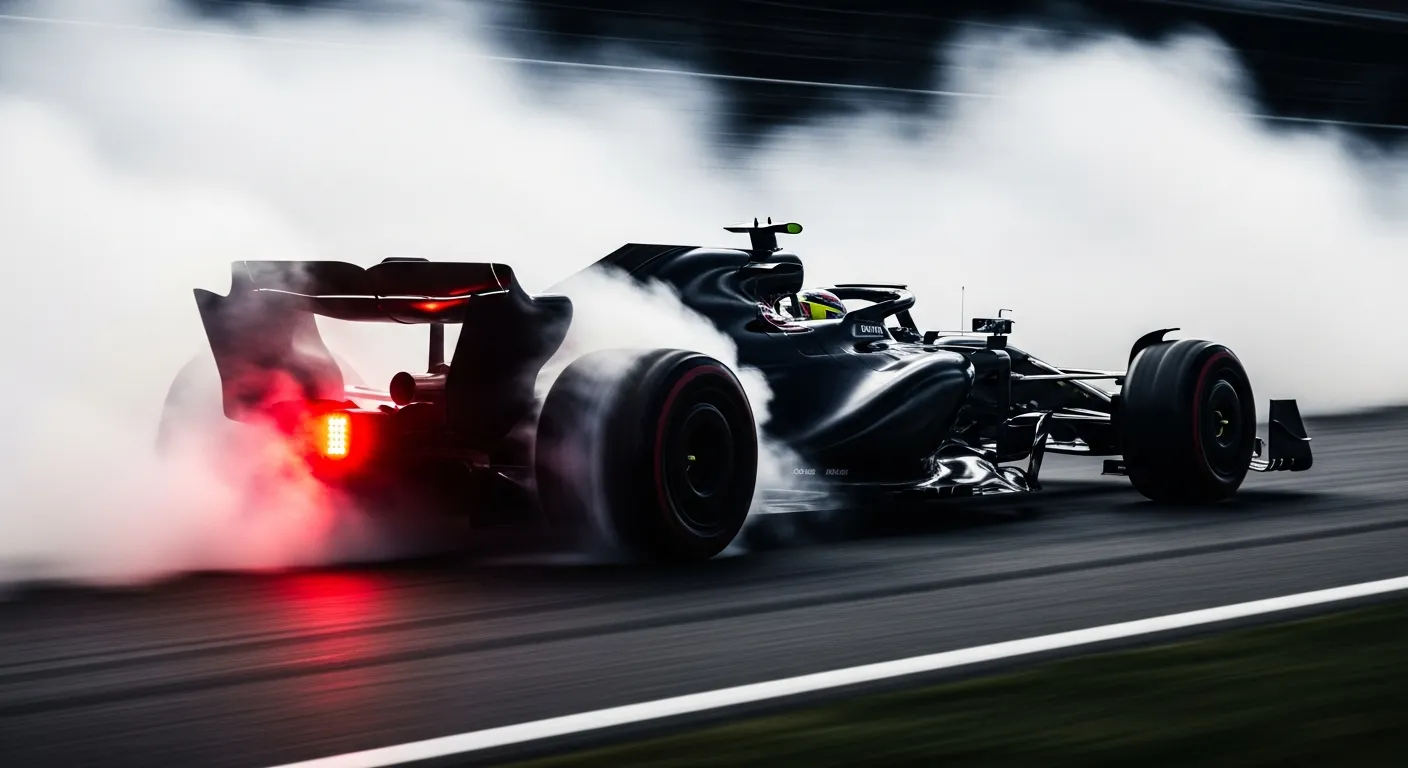
Carlos Sainz's campaign at the 2025 Hungarian Grand Prix saw the Williams driver navigate the Hungaroring circuit to a 14th-place finish, a single position higher than his 13th-place grid start. The Spanish driver completed 69 laps, one lap down from the race winner, Lando Norris. Despite the midfield classification, Sainz demonstrated notable pace, recording a fastest lap of "1:19.790" on lap 54. This placed him 4th overall in the fastest lap rankings for the event, a significant margin ahead of his teammate Alexander Albon, whose quickest lap was "1:20.779" on lap 50. The Hungaroring, known for its technical demands and limited overtaking opportunities, often emphasizes qualifying performance and strategic execution, as detailed on the [Formula 1 — official site](https://www.formula1.com/en), which provides comprehensive circuit guides. Sainz's ability to extract such a competitive lap time suggests a strong understanding of the circuit's nuances, a trait often seen in veteran drivers like [Nico Hülkenberg at the 2015 Hungarian Grand Prix](/results/2015-hungaroring-nico-hulkenberg), who also contended with midfield machinery. This performance, while not yielding points, underscores the constant battle for marginal gains in the sport, a core principle of [Formula 1 technical regulations](https://www.fia.com/events/fia-formula-one-world-championship/technical-regulations) that govern car development.
The outcome of the Hungarian Grand Prix meant no points for Sainz, leaving his season tally at 16 points and his championship position unchanged at 16th. The race itself saw intense competition at the front, with McLaren securing a 1-2 finish and George Russell taking a podium for Mercedes. For a broader understanding of how these results contribute to the overall [FIA — F1 World Championship](https://www.fia.com/events/fia-formula-one-world-championship) standings, contextual analysis is crucial. Sainz's performance, while not yielding points, highlights the ongoing development efforts by Williams. His consistency and ability to push the car, even when outside the points, are vital for team data collection and future improvements, as reflected in comprehensive [Jolpica/Ergast — 2026 season data](https://api.jolpi.ca/ergast/f1/2026.json) archives, which track historical race outcomes. Comparing this to his previous outings, such as [Carlos Sainz at the 2015 Dutch Grand Prix](/results/2015-zandvoort-carlos-sainz), illustrates the evolution of his career trajectory within different team environments, often battling for positions in the lower midfield. The intricacies of Formula One racing, from car design to driver skill, are extensively documented on [Wikipedia: Formula One](https://en.wikipedia.org/wiki/Formula_One), providing further context for such results and the sport's rich history. Even experienced drivers like [Fernando Alonso at the 2015 Dutch Grand Prix](/results/2015-zandvoort-fernando-alonso) have faced similar challenges in optimizing performance on demanding circuits, often finding themselves in tight battles for minor positions. The strategic implications of tire management and pit stops, critical on a track like Hungaroring, are often analyzed in post-race reports available through various [motorsport data platforms](https://www.formula1.com/en/results.html) that track race events.
Verified race record · Ergast
Grid
P13
Finish
P14
Points
0
Laps
69
Constructor
Williams Grand Prix Engineering
Status
+1 Lap
Teammate that weekend
Alexander Albon
Grid P19 · Finish P15 · 0 pts
Championship · before vs after
Before round 14
P1616 pts
After round 14
P1616 pts