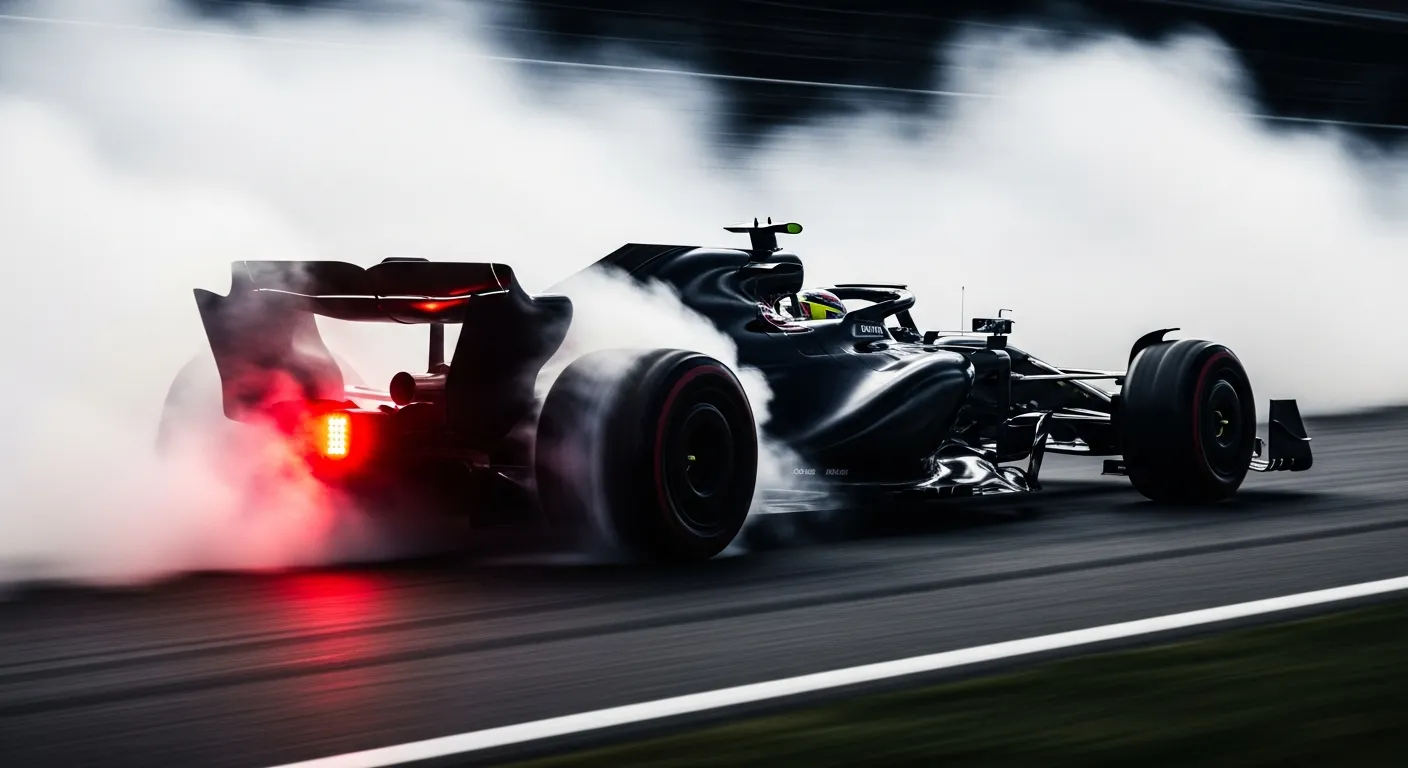
George Russell's 2024 Hungarian Grand Prix was a masterclass in damage limitation and strategic execution, transforming a challenging P17 grid start into a points-scoring P8 finish, underscored by the race's fastest lap. The Hungaroring, with its tight and twisting layout, is renowned for being one of the most difficult circuits on the [Formula One calendar](https://en.wikipedia.org/wiki/Formula_One) for overtaking, making Russell's task from the back of the grid particularly formidable. This characteristic often means that qualifying position is paramount, and starting outside the top 10 presents a significant hurdle for any driver hoping to score points. Despite the initial setback in qualifying, the Mercedes AMG F1 driver demonstrated a composed and aggressive approach from the moment the lights went out. He steadily began to gain positions through the opening stints, leveraging clean air when available and making decisive moves in the midfield. His early progress was crucial, allowing him to avoid being trapped in DRS trains and providing the space needed to utilize the car's potential. This methodical climb through the pack showcased his race craft and the underlying pace of the W15 in race trim, contrasting sharply with the qualifying performance that had placed him so far back. Such a recovery drive from a compromised grid position often defines a driver's resilience, echoing performances like [Max Verstappen's charge at the 2017 Austrian Grand Prix](/results/2017-red-bull-ring-max-verstappen). His ability to manage tire degradation, a critical factor on the demanding Hungarian circuit where high temperatures can exacerbate wear, allowed for strategic flexibility and consistent lap times, enabling him to advance past several competitors.
The defining moment of Russell's race, and indeed a highlight for Mercedes AMG F1, came on Lap 55 when he unleashed a blistering 1:20.305, securing the fastest lap of the Grand Prix. This raw speed, achieved deep into the race, not only added an extra point to his tally but also underscored the potential that had been masked by his grid position. It was a performance that echoed the determination seen from drivers like [Lewis Hamilton at the 2017 Austrian Grand Prix](/results/2017-red-bull-ring-lewis-hamilton), who also fought hard from a challenging grid slot to recover points. Russell completed all 70 laps, crossing the line in P8 and adding 5 points to his championship total, bringing his season tally to 116 points. While his teammate, Lewis Hamilton, secured a strong podium finish in P3 from a P5 grid slot, Russell's recovery from P17 to P8 represented a significant effort in mitigating the consequences of a difficult Saturday. This kind of data-driven analysis is crucial for understanding driver performance within the broader context of the [FIA Formula One World Championship](https://www.fia.com/events/fia-formula-one-world-championship). The specific metrics, such as fastest lap times and race positions, are meticulously tracked, providing insights into the competitive landscape, as can be explored through comprehensive [F1 season data](https://api.jolpi.ca/ergast/f1/2026.json). Despite dropping a position in the overall standings from 7th to 8th, his drive was a testament to extracting maximum performance under pressure and converting a challenging start into valuable championship points. The resilience displayed by Russell under these circumstances is a characteristic often observed in top-tier drivers, such as [Carlos Sainz at the 2017 Canadian Grand Prix](/results/2017-montreal-carlos-sainz), who also navigated a complex race to score.
Verified race record · Ergast
Grid
P17
Finish
P8
Points
5
Laps
70
Constructor
Mercedes AMG F1
Status
Finished
Teammate that weekend
Lewis Hamilton
Grid P5 · Finish P3 · 15 pts
Championship · before vs after
Before round 13
P7111 pts
After round 13
P8116 pts