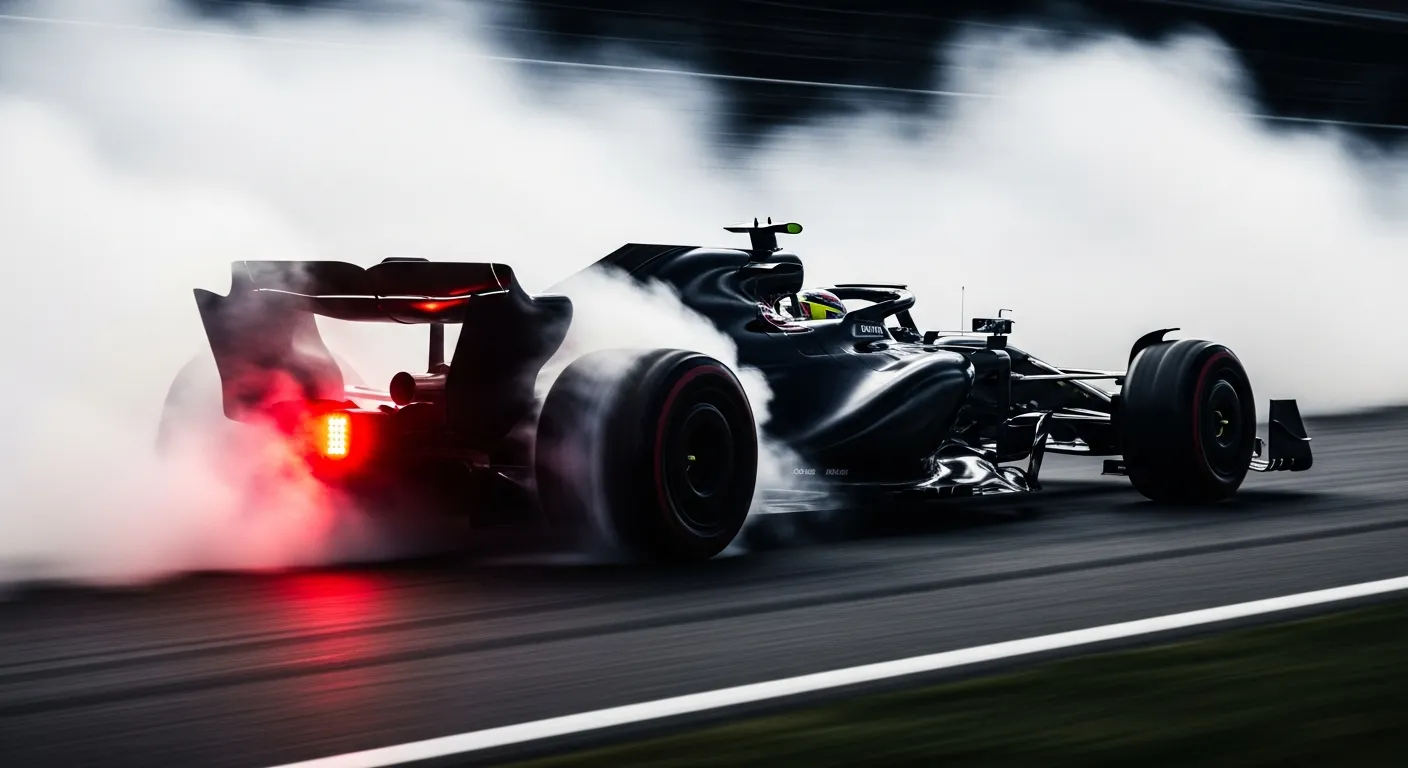
George Russell's drive at the 2023 Hungarian Grand Prix was a calculated recovery effort, seeing him climb from an eighteenth-place grid start to a points-scoring finish for Mercedes AMG F1. Following a challenging qualifying session that left him deep in the pack on the Hungaroring, a circuit notoriously difficult for overtakes, Russell faced a significant uphill battle. Despite this, he systematically worked his way through the field over the 70 laps, demonstrating consistent pace and strategic execution. His ability to navigate traffic and maintain tire management was evident from the outset. The initial laps were critical, as he capitalized on any opening to gain track position, a skill often seen in drivers who make significant progress from the back, much like how [Oscar Piastri at the 2024 Bahrain Grand Prix](/results/2024-bahrain-oscar-piastri) has shown his ability to adapt and push.
Russell's ascent was not without its moments of precision and aggressive driving. He steadily picked off rivals, leveraging the W14's race pace, which proved more competitive than its qualifying trim. By the mid-point of the race, he had already made substantial progress, positioning himself within striking distance of the top ten. His consistent lap times were a testament to his focus, culminating in a final position of sixth, securing 8 valuable points for his team. He even recorded the third fastest lap of the race on lap 48 with a time of 1:22.158, showcasing the underlying speed once he found clear air. This performance stood in contrast to his teammate Lewis Hamilton, who started from pole position but ultimately finished fourth, highlighting the differing race trajectories within the same garage on July 23. The strategic calls from the Mercedes pit wall were crucial in enabling Russell's ascent, allowing him to optimize his tire windows and undercut competitors effectively. For a deeper understanding of Formula 1 race strategies and regulations, the [FIA — F1 World Championship](https://www.fia.com/events/fia-formula-one-world-championship) provides comprehensive information.
The Hungaroring, with its tight and twisty layout, demands a particular kind of race craft, and Russell's ability to maximize his opportunities in such conditions speaks to his development as a driver. This kind of recovery drive is a hallmark of strong championship contenders, a trait also seen in other top drivers' careers, such as [Fernando Alonso at the 2024 Bahrain Grand Prix](/results/2024-bahrain-fernando-alonso) who often maximizes race results from tricky starting positions. His resilience in converting a difficult Saturday into a strong Sunday finish underscored his determination, a quality that will be vital in future campaigns, as evidenced by his own subsequent performance at the [George Russell at the 2024 Bahrain Grand Prix](/results/2024-bahrain-george-russell). The broader historical context of such comebacks is a rich part of [Wikipedia: Formula One](https://en.wikipedia.org/wiki/Formula_One) lore, demonstrating that grid position is not always destiny. Analysing these detailed race results is fundamental to understanding the sport's dynamics, with comprehensive data available from sources like [Jolpica/Ergast — 2026 season data](https://api.jolpi.ca/ergast/f1/2026.json).
Verified race record · Ergast
Grid
P18
Finish
P6
Points
8
Laps
70
Constructor
Mercedes AMG F1
Status
Finished
Teammate that weekend
Lewis Hamilton
Grid P1 · Finish P4 · 12 pts
Championship · before vs after
Before round 11
P682 pts
After round 11
P590 pts