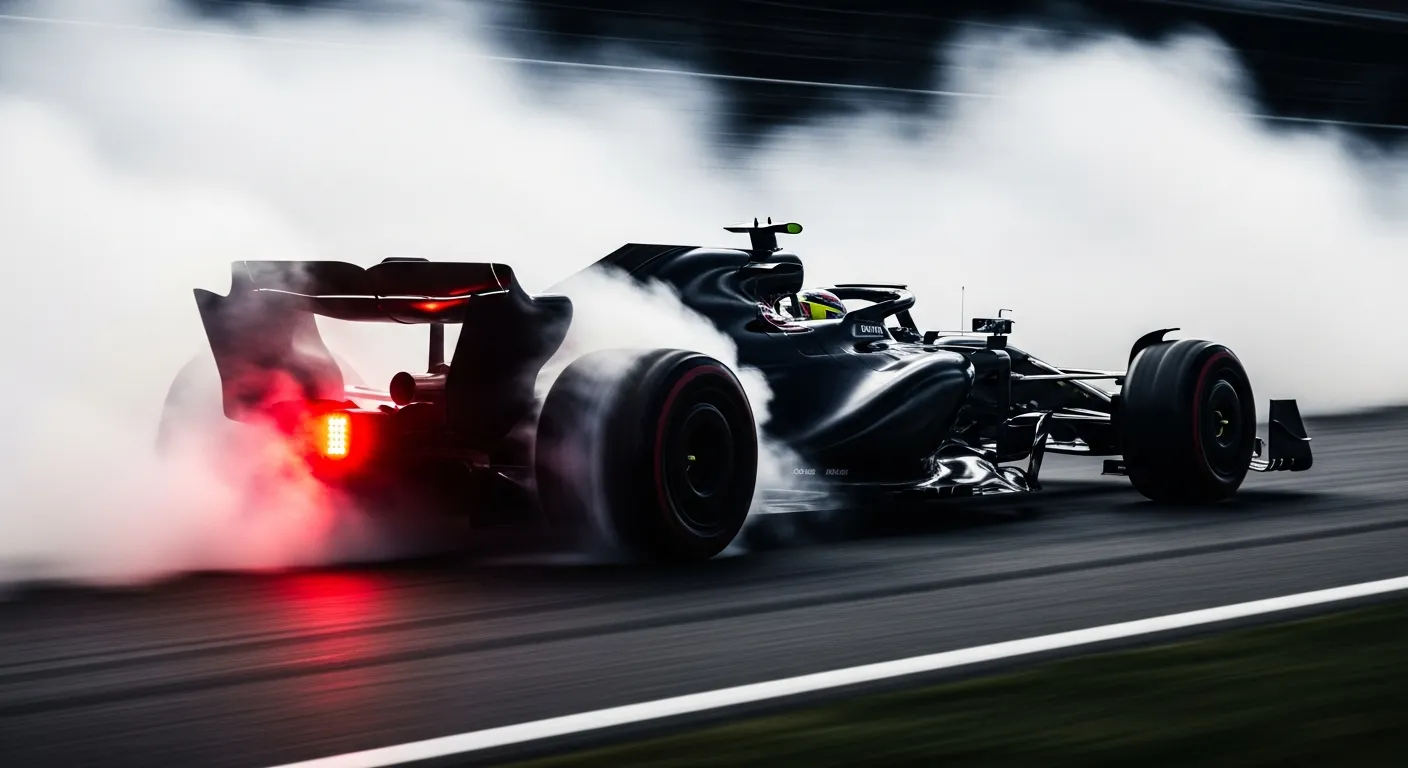
Carlos Sainz Jr.'s performance at the 2024 Las Vegas Grand Prix saw him skillfully manage a challenging street circuit to clinch a podium position for Scuderia Ferrari. Starting from second on the grid, Sainz completed all 50 laps of the race, crossing the finish line in 1:22:17.875, just behind the Mercedes duo of George Russell and Lewis Hamilton. The Spanish driver demonstrated consistent pace throughout the event, recording his fastest lap on lap 44 with a time of 1:35.875, which ranked fifth overall among all competitors. This steady drive was vital for Ferrari, particularly in a race where strategic decisions and tire management were paramount on the newly minted Las Vegas Street Circuit. The dynamic nature of F1 racing, as detailed on the [Formula 1 — official site](https://www.formula1.com/en), often sees drivers needing to adapt quickly to evolving track conditions, a skill Sainz displayed well here. His ability to convert a strong qualifying into a race result echoes the consistent pressure seen in events like [Max Verstappen at the 2017 British Grand Prix](/results/2017-silverstone-max-verstappen), where maintaining position against fierce competition is key.
His teammate, Charles Leclerc, also delivered a strong result for the Italian constructor, finishing just behind Sainz in fourth place. Leclerc, starting from fourth on the grid, completed the race in 1:22:20.252, securing 12 points. Ferrari's combined effort underscored their competitive package in the latter stages of the 2024 season. While Sainz's podium was a strong individual showing, the team's overall strategic execution ensured both cars were in contention for significant points. The complexities of car performance and driver skill are always under scrutiny in the [FIA — F1 World Championship](https://www.fia.com/events/fia-formula-one-world-championship), and Sainz's result here was a testament to both. For those interested in the broader historical context of the sport, [Wikipedia: Formula One](https://en.wikipedia.org/wiki/Formula_One) offers extensive details on how such events contribute to a driver's legacy. This strong finish contrasts with some challenging races for other drivers, such as [Lance Stroll at the 2017 Austrian Grand Prix](/results/2017-red-bull-ring-lance-stroll), where maintaining track position from a higher grid start proved difficult. The data from the 2026 season, available through [Jolpica/Ergast — 2026 season data](https://api.jolpi.ca/ergast/f1/2026.json), provides a glimpse into the future of F1's statistical tracking, highlighting the ongoing evolution of performance metrics.
Verified race record · Ergast
Grid
P2
Finish
P3
Points
15
Laps
50
Constructor
Scuderia Ferrari
Status
Finished
Teammate that weekend
Charles Leclerc
Grid P4 · Finish P4 · 12 pts
Championship · before vs after
Before round 22
P5244 pts
After round 22
P5259 pts