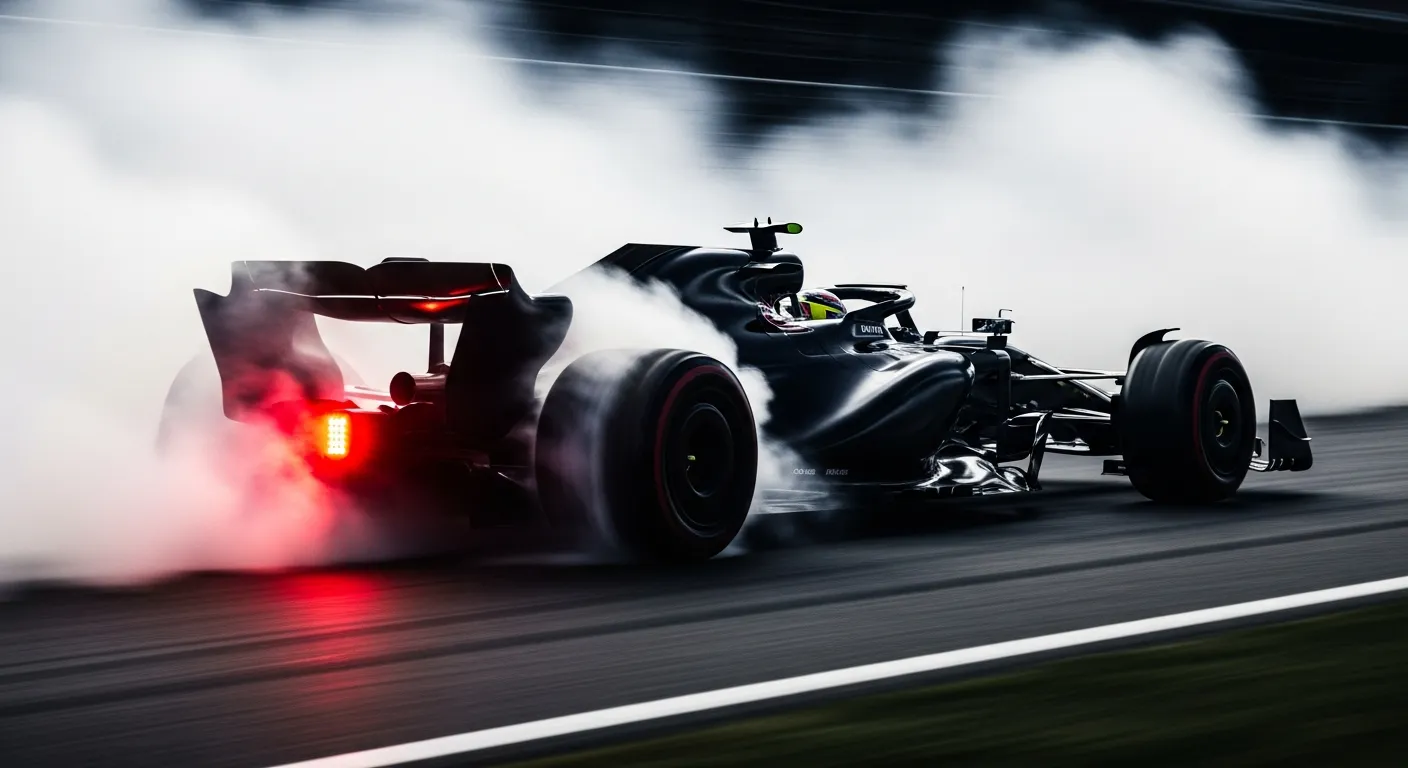
The 2024 Las Vegas Grand Prix delivered a commanding Mercedes 1-2 finish, with George Russell converting pole position into victory and Lewis Hamilton executing a significant climb through the field, marking a pivotal moment in the ground-effect era.
Qualifying
Qualifying on the Las Vegas Strip Circuit set the stage for a competitive race, though perhaps not one hinting at the ultimate Mercedes dominance. George Russell secured pole position, demonstrating the W15's single-lap pace. Ferrari's Carlos Sainz lined up alongside him, with Pierre Gasly of Alpine surprisingly in third. Charles Leclerc started fourth, ahead of Max Verstappen in fifth. Notably, Lewis Hamilton qualified in tenth, setting up a challenging Sunday drive. The unique characteristics of a street circuit, especially one with long straights like Las Vegas, often lead to varied qualifying performances as teams balance downforce for cornering with drag for top speed. The initial grid order suggested a multi-team battle, a narrative that would evolve significantly during the race itself.
Race
From the moment the lights went out, the Las Vegas Grand Prix was a strategic chess match. George Russell maintained his lead from pole, managing the initial phases of the race with precision. The key narrative, however, quickly shifted to the incredible charge of Lewis Hamilton. Starting from tenth on the grid, Hamilton systematically worked his way through the field, showcasing both the raw pace of the Mercedes and his own racecraft. This ascent was reminiscent of strong recovery drives seen at circuits like the 2019 Bahrain Grand Prix, where strategic tire management and opportunistic overtakes define the outcome. Ferrari maintained a strong presence, with Carlos Sainz securing a podium finish and Charles Leclerc close behind in fourth, demonstrating consistent performance from the Scuderia. Max Verstappen, while not reaching the top step, still secured valuable points in fifth. The race also saw two retirements, with Alexander Albon of Williams and Pierre Gasly of Alpine exiting prematurely, impacting their teams' points aspirations.
Strategic Story
The strategic story of Las Vegas revolved heavily around tire degradation and pit stop timing on the abrasive street surface. Mercedes' ability to manage their tires, coupled with their strong car performance, allowed both Russell and Hamilton to execute optimal strategies. Hamilton's climb from P10 to P2 was a masterclass in race management, highlighting effective tire windows and well-timed pit calls. Lando Norris's performance, while finishing sixth, was underlined by him setting the fastest lap of the race on the final tour, a testament to McLaren's late-race pace and tire strategy. This late burst for an extra point is a common tactic, often seen when drivers have a comfortable gap or are out of contention for higher places, similar to strategic plays at the 2019 Japanese Grand Prix. The data from races like this is crucial for teams, informing future development and strategy, as detailed in resources like the F1 season data from Ergast.
Championship Impact
The Mercedes 1-2 finish had significant implications for the Constructors' Championship, providing a substantial points haul for the German outfit. Russell's victory and Hamilton's second place demonstrated a formidable resurgence, putting pressure on their rivals. For the Drivers' Championship, both Mercedes drivers gained crucial points, tightening the battle or extending their advantage, depending on the season's prior standings. Max Verstappen's fifth-place finish, while still a points finish, was a relatively subdued result by his usual standards, limiting his championship advantage. This race underscored the importance of every point in the highly competitive FIA Formula One World Championship, influencing the overall season narrative on the Formula 1 — official site. For more insights into the sport's history and technical evolution, the Formula One history on Wikipedia offers a comprehensive overview, while keeping up with the latest F1 news and analysis provides real-time context.
Full classified results
Every driver's verified grid-to-flag result from the 2024 Las Vegas Grand Prix — grid, finish, points, teammate H2H, and championship swing.
- P1George RussellMercedes25 pts
- P2Lewis HamiltonMercedes18 pts
- P3Carlos SainzFerrari15 pts
- P4Charles LeclercFerrari12 pts
- P5Max VerstappenRed Bull10 pts
- P6Lando NorrisMcLaren9 pts
- P7Oscar PiastriMcLaren6 pts
- P8Nico HülkenbergHaas F1 Team4 pts
- P9Yuki TsunodaRB F1 Team2 pts
- P10Sergio PérezRed Bull1 pts
- P11Fernando AlonsoAston Martin0 pts
- P15Lance StrollAston Martin0 pts
- P16Liam LawsonRB F1 Team0 pts
- P17Esteban OconAlpine F1 Team0 pts
- P18Valtteri BottasSauber0 pts
- —Alexander AlbonWilliamsRetired
- —Pierre GaslyAlpine F1 TeamRetired