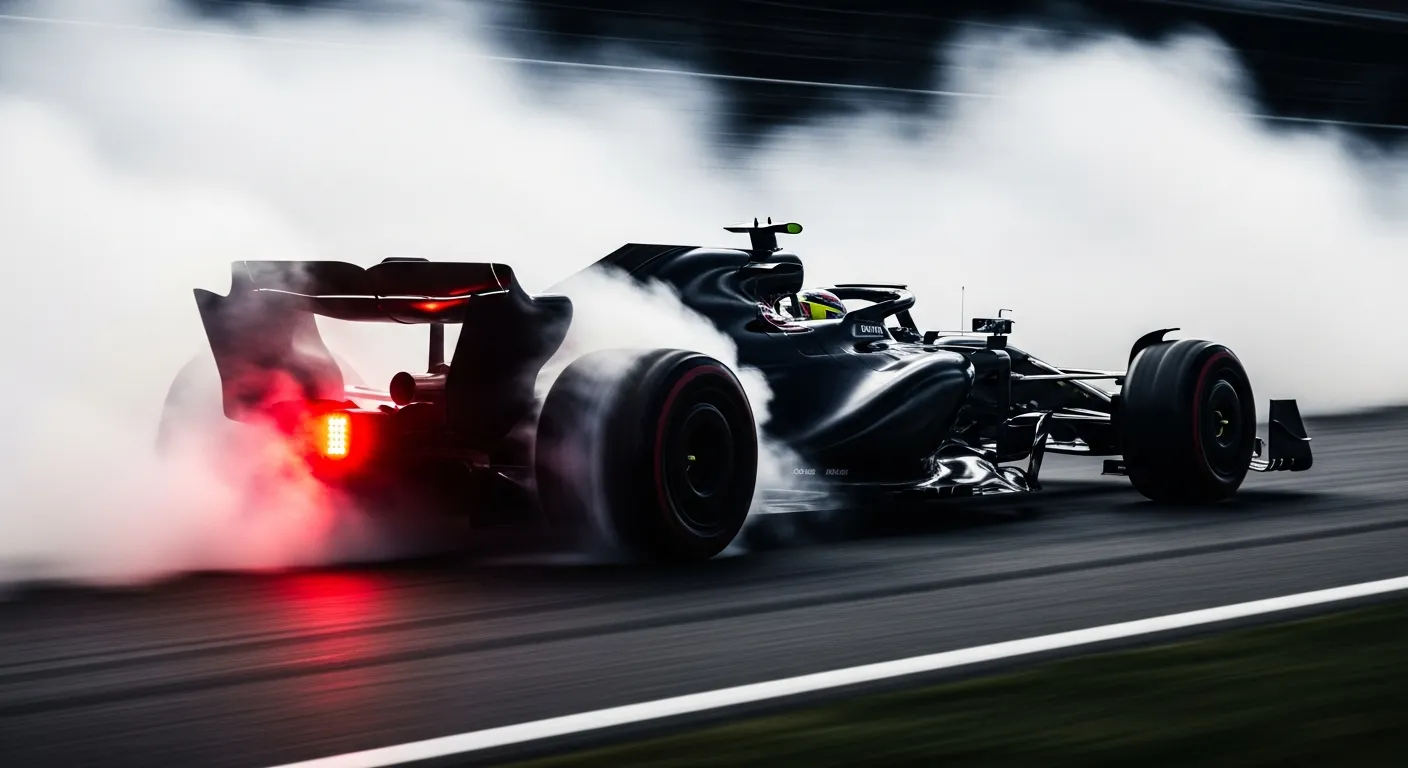
Carlos Sainz's 2024 Singapore Grand Prix was a methodical drive from a P10 grid slot, ultimately securing valuable points for Scuderia Ferrari on the demanding Marina Bay Street Circuit. Starting outside the top eight, Sainz faced the immediate challenge of navigating the tight, unforgiving street circuit, a track known for its minimal overtaking opportunities and high demands on driver precision. His initial phase of the race was about maintaining position and managing the tires, a critical factor given the circuit's abrasive nature and the humid conditions. As the race progressed, Sainz demonstrated consistent pace, recording his fastest lap of "1:36.561" on Lap 15, which ranked seventh overall among all drivers. This early pace indicated a strong understanding of the car's potential and the track's nuances, a trait often highlighted by analysts on the [Formula 1 — official site](https://www.formula1.com/en).
The strategic calls from the Scuderia Ferrari pit wall were crucial in enabling Sainz's progression through the field. While his teammate Charles Leclerc, who started P9, finished P5, Sainz's performance from a P10 grid position to a P7 finish, completing all 62 laps in "1:42:28.610", underscored a solid points-scoring effort. The Marina Bay circuit, a unique challenge in the [FIA — F1 World Championship](https://www.fia.com/events/fia-formula-one-world-championship) calendar, often rewards strategic patience and error-free driving, qualities Sainz exhibited throughout the 2024 event. His ability to manage tire degradation and maintain competitive lap times, even as other drivers like [George Russell at the 2026 United States Grand Prix](/results/2026-cota-george-russell) and [Lando Norris at the 2026 United States Grand Prix](/results/2026-cota-lando-norris) pushed hard at the front, was key to his result. The intricate nature of street circuits, requiring precise car setup and driver feedback, is a constant topic of discussion in Formula 1 engineering circles, as explored in various technical regulations published by the [FIA — F1 World Championship](https://www.fia.com/events/fia-formula-one-world-championship).
Sainz's drive was a testament to his race craft, patiently advancing through the field to collect 6 points. The data from the race, including detailed lap-by-lap breakdowns available through resources like [Jolpica/Ergast — 2026 season data](https://api.jolpi.ca/ergast/f1/2026.json), shows a steady performance without major incidents. Comparing his outing to other drivers, such as [Oscar Piastri at the 2026 United States Grand Prix](/results/2026-cota-oscar-piastri), who also navigated challenging races, highlights the varying demands across different circuits and seasons. For a deeper dive into the technical aspects of F1 racing and how drivers manage these conditions, resources like [Wikipedia: Formula One](https://en.wikipedia.org/wiki/Formula_One) provide extensive context on the sport's evolution and engineering. Sainz's P7 finish, an improvement of three positions from his grid start, was a consistent result for the Spanish driver, adding valuable points to his championship tally. The race itself was a complex interplay of strategy and raw pace, a common theme in the demanding Singapore night race, as detailed by various analyses on the [Formula 1 — official site](https://www.formula1.com/en). The execution by Scuderia Ferrari, both in the cockpit and on the pit wall, ensured that Sainz maximized the potential available to him on the day, securing a respectable outcome in a highly competitive field.
Verified race record · Ergast
Grid
P10
Finish
P7
Points
6
Laps
62
Constructor
Scuderia Ferrari
Status
Finished
Teammate that weekend
Charles Leclerc
Grid P9 · Finish P5 · 10 pts
Championship · before vs after
Before round 18
P5184 pts
After round 18
P5190 pts