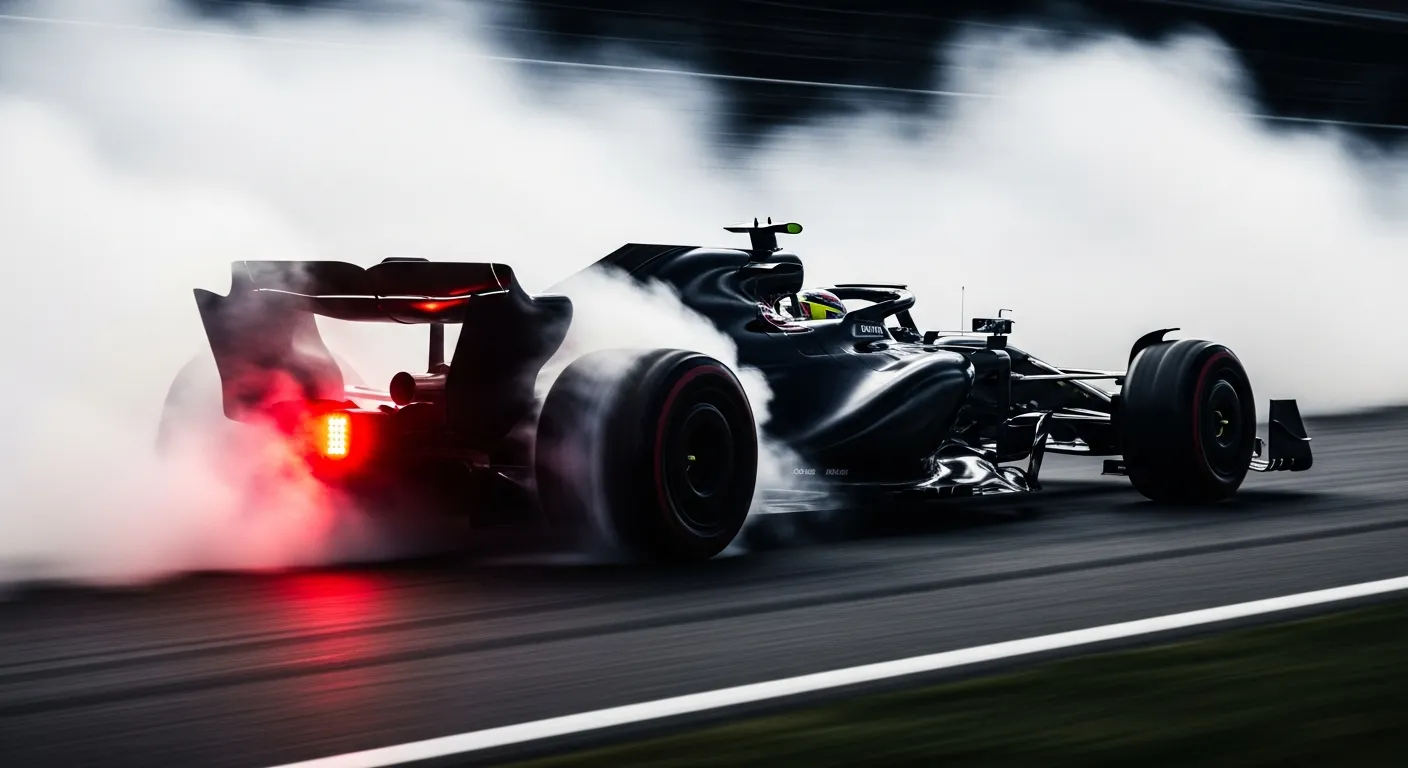
Charles Leclerc's performance at the 2024 Singapore Grand Prix was a measured recovery drive for Scuderia Ferrari, converting a challenging ninth-place grid start into a solid fifth-place finish. On the demanding Marina Bay Street Circuit, Leclerc navigated the full 62 laps, completing the race in 1:41:55.001 and securing 10 crucial points for his championship campaign. This result saw him climb four positions from his starting grid slot, a testament to both his race craft and the strategic execution by the Italian team. His pace was evident throughout, culminating in the third-fastest lap of the race, a 1:35.371 recorded on lap 46. This demonstrated the Ferrari's inherent potential, particularly when Leclerc found clear air, allowing him to push the limits on a circuit where overtaking is notoriously difficult. The ability to gain positions and maintain a strong pace under pressure is a hallmark of top-tier drivers, a quality often observed in events demanding precision and strategic foresight.
The race unfolded with Lando Norris of McLaren taking a dominant victory, followed by Max Verstappen and Oscar Piastri, illustrating the intense competition at the front that Leclerc was attempting to bridge. While his teammate, Carlos Sainz Jr., started just one position behind him in tenth and finished seventh with a time of 1:42:28.610, Leclerc's ability to consistently extract performance and manage tire degradation on a circuit notorious for its physical and technical demands allowed him to outmaneuver rivals and secure a higher finish. This steady points haul is vital for Scuderia Ferrari in the constructors' championship, especially as the season progresses and every point becomes critical. For a broader perspective on driver performances in challenging conditions, one might recall [Lewis Hamilton at the 2014 Azerbaijan Grand Prix](/results/2014-baku-lewis-hamilton), where navigating a street circuit required similar precision and strategic acumen. The intricacies of Formula 1 strategy are well-documented on the [official Formula 1 site](https://www.formula1.com/en), offering deeper insights into team decisions. The raw data from races like these, including specific lap times and positions, contributes to comprehensive archives such as [Jolpica/Ergast — 2026 season data](https://api.jolpi.ca/ergast/f1/2026.json), which are invaluable for historical analysis. Leclerc's drive in Singapore underscored the importance of resilience and adaptability, traits also visible in other drivers' careers, such as [Nico Hülkenberg at the 2014 Italian Grand Prix](/results/2014-monza-nico-hulkenberg), who often had to maximize his opportunities from various grid positions. This consistent effort ensures his standing in the driver championship remains competitive, maintaining his third-place overall standing after this weekend. Understanding the historical context of F1 can be further explored on [Wikipedia: Formula One](https://en.wikipedia.org/wiki/Formula_One).
Verified race record · Ergast
Grid
P9
Finish
P5
Points
10
Laps
62
Constructor
Scuderia Ferrari
Status
Finished
Teammate that weekend
Carlos Sainz Jr.
Grid P10 · Finish P7 · 6 pts
Championship · before vs after
Before round 18
P3235 pts
After round 18
P3245 pts